The Names I Answered To
A Life Told Through What I Was Called
A grandson who carried a borrowed surname, a boy named after a Russian word, a 'capitalist's grandson', a 'mainland boy' in Hong Kong, an office Boy, a salesman for American computers, an immigrant who sold people their own names, a dad, an 'Uncle Vic' on Twitter, a snowbird, and finally his father's son. Each chapter is named for what he was called at the time. Compiled from Vic Wong's own writing on Twitter, 2022–2024.
Modelled on:The Autobiography of Malcolm X (Malcolm X with Alex Haley) · Long Walk to Freedom (Nelson Mandela)
Not Even a Wong
A stranger on Twitter asks whether Vic donated to a Wong clan association. The honest answer opens the book: the surname was borrowed, and every name after it was handed to him by someone else.
Somebody on Twitter asked me a question one summer, and I nearly gave the true answer.
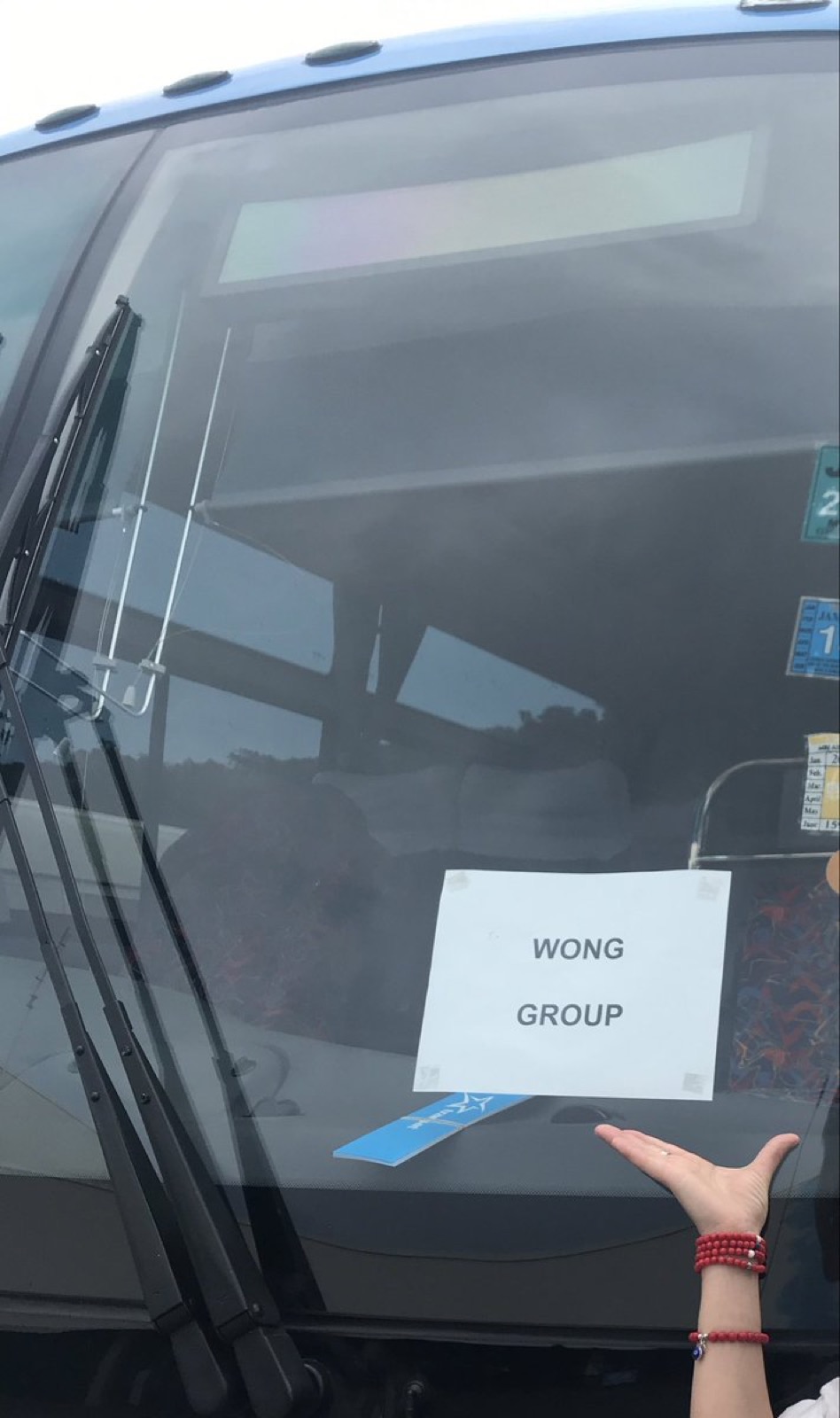
It was August 2023. A clan hall belonging to one of those Wong family associations in Guangdong had been pulled down, and a follower wanted to know: had I donated? Had I given money to my own people, my own surname, to keep the ancestral hall standing? It was a reasonable question. My name is Vic Wong. Wong is how they spell 黄 in Hong Kong, in Cantonese, and it has followed me around the world for most of my life. On immigration forms, on job titles, on a paper sign taped inside a bus windscreen in Jamaica. You would think a man with that name would care about a Wong clan hall.
What I wanted to write back was five words.
I am not even a Wong!
— August 20, 2023
So I wrote it, and then I explained. That is a habit of mine. I say the short thing first and then I can't stop myself from telling you why.
A borrowed surname
My grandfather grew up in an orphanage. He was adopted by a single woman whose surname was Huang, which is the same character as Wong, and the two of them moved to Shanghai and lived there, mother and son, leaning on each other. That is all I know of how the name came into my family. Nobody gave it to us at birth. It was given to a boy who had no other name to carry, by a woman who chose him.
Think about that for a moment, because I have thought about it for a long time. Our so-called big family never had a family tree. There is no village hall, no ancestor tablet, no book with generations written in it in brush and ink. There is just a name a woman lent to an orphan, and then the orphan lent it to his children, and they lent it to theirs, and here I am at the end of the line, in Canada, with a Twitter account and a follower asking me about donations.
We carried a borrowed surname all our lives. And not just one life. Generation after generation.
I am not complaining. I want to be clear about that from the first page. I am telling you this because it is the truest thing I know about names. A name is something other people decide to call you. Sometimes it is a gift. Sometimes it is a label stuck on your back that you cannot reach to pull off. Either way you learn to turn around when you hear it.
The names that came after
Here is a list. I made it one evening, half as a joke, and then I couldn't stop looking at it.
My first name came from a Russian word, Viktor, because my parents both spoke Russian and there was a Russian woman in the next bed when I was born. Then I became the capitalist's grandson, which in the China of my childhood was not a description but a verdict. In the Cultural Revolution our house was ransacked and the grown-ups had new names: the five black categories, the stinking ninth. In Sichuan I was mostly a Little Red Soldier, with nothing in my head that I had put there myself. In Hong Kong I was a mainland boy, a dai luk jai, someone people assumed had swum or sneaked across the border. Then I was "Boy," which was my actual job title in an office with round windows. Then a Chinese-American lady at the top of a computer company called me her little Shanghai friend. Then I was a salesman for American computers, a manager, a company of one. In Canada I learned I was a "water fish," Cantonese for a sucker, the kind of newcomer who pays whatever he's asked. And then, selling laptops in a big electronics store, I became Vic. Just Vic. A name customers could remember.
After that came Dad. Then, late in life, a stranger on the internet called me Uncle Vic, and another stranger called my profile picture an old white-left's funeral portrait. These days I am a snowbird when the winter gets too long. And when I fly to China now, I am my father's son, a man in his sixties pushing a wheelchair, listening to a ninety-something man explain how he plans to start an English class for the other residents.
That is a lot of names for one person. I answered to all of them.
Why tell it this way
When you write a life, the usual way is to go by years. Born here, went to school there, moved, married, retired. I will do some of that, because you need to know where you are. But the years in my case are a bit slippery. I am not even completely sure which year to put on the first page, and I'll explain why when we get there. The names are steadier. Every one of them came with a scene. Somebody said it out loud, in a doorway, on a train platform, across a counter, and I can still hear how they said it.
So each chapter in this book is named after what I was called at the time, and in each one I will try to do two things. I will try to tell you what it was like to be that person then, the boy or the young man who did not know how the story would go. And I will tell you what I think of him now, looking back from a camper van or my wife's kitchen in Ontario. Those two voices do not always agree. I think that is fine. A man who agrees with everything he did at twenty has not been paying attention.
People on Twitter like to stick a label on someone like me. White-left, they say, bai zuo, a soft-headed liberal. Do you think I mind? After everything on that list above, one more label is not going to keep me up at night. What I asked my followers that August, and what I'll ask you, is this: don't pay attention to the label. Pay attention to what's inside it. Good is good. Bad is bad. A name tells you who was doing the naming, more than it tells you about the person named.
A Russian word and a borrowed surname
I like to say my full name now, Vic Wong, and think about what is actually in it. The first part is the short English form of a Russian word chosen by two Chinese parents who believed in a future that did not come. The second part is a Cantonese spelling of a Shanghai surname that a single woman gave to an orphan boy. There is not one piece of it that belongs to me by blood.
And yet it is mine. I have signed it on mortgage papers and immigration forms and the backs of my sons' report cards. I have heard it called by customs officers and nurses and, once, over a loudspeaker in a border hall, when I didn't recognise it at all. I'll tell you about that too.
My grandfather is where this starts. He had beautiful handwriting, like a printed copybook. He spoke a pidgin English, played the two-stringed jinghu fiddle, and sang Peking opera to his own accompaniment. When he was rich I had no share in it. When he suffered, I was there. I was the one who walked beside him when he went out to sweep the streets of Shanghai in a suit and leather shoes.
But that's getting ahead. Let me start where my mother started me: in a maternity ward, next to a Russian woman.
Viktor
A first name taken from Russian, a birth year he can only narrow to 'the late 1950s', a newspaper from the day he was born, and a famine-year train ride on which his mother argued that a small child is still a person with a mouth to feed.
My first name is Russian. Most people who meet me in Canada assume Vic is short for Victor, and they are almost right. It is short for Viktor, with a k, Виктор, which is how my parents would have said it in the language they both spoke fluently.
That needs a little explaining, because nowadays nobody thinks of Chinese parents in the 1950s as Russian speakers. But in those years, if you were young and educated and you believed in the new China, Russian was the language of the future. My father had gone to a church middle school in Shanghai, where he did his schooling in English, and then he went on to study Russian too. My mother spoke it as well. In those years the Soviet Union was called China's big brother, and my parents had learned big brother's language well.
So Russian became my first foreign language. I have forgotten nearly all of it now. What I have not forgotten is the story my mother liked to tell me about the day I was born.
Even my own name comes from Russian. Viktor = Виктор. My mother told me that when I was born, the other woman in her ward was Russian.
— February 22, 2023
She would tell me about that Russian mother and her newborn baby. I don't know their names. I don't know where they went afterwards. I only know that my name has something to do with a woman in the next bed, in a hospital whose name nobody ever wrote down for me, in a year I am not completely sure about.
The year I can't quite pin down
I'll be honest with you about the year, because I want this book to be honest even about small things.
I have written in different places that the year I was born, my grandfather lost his business to the state. That was the joint state-private ownership campaign, and its high tide is usually put in the mid-1950s. I have also written, in 2023, that I was looking at a newspaper from "sixty-five years ago." And I have written that when the Cultural Revolution started in 1966, I was "not yet ten." Put those side by side and they don't land on exactly the same year. So let's say the late 1950s and leave it at that. I'm not hiding anything. I'm an old man counting backwards, and every one of those sentences was written to make a different point.
Where I was born is also a little blurred, for the same kind of reason. My parents were teachers inland, in Sichuan. My grandparents were in Shanghai. I grew up with two homes from the start, one at each end of a very long railway line, and I belonged to both of them and completely to neither. I'll tell you about the railway line in a minute.
A newspaper from the day I was born
Many years ago I was walking down one of those "culture streets" in Chengdu, the kind every Chinese city has, selling brushes and ink and calligraphy for tourists. One shop had a clever business. It sold old newspapers, one for every day in history, and once you chose your day they would put it in a very grand frame. I think some archive was behind it. They wanted a fortune. Tens of thousands of times the price printed on the masthead.
I chatted with the owner in Sichuanese. He obviously took me for a local, which pleased me more than it should have. I told him my date of birth. He asked which paper. I said the Shanghai Wenhui Bao. And from that mountain of old newsprint he actually found the day. I told him I was just a tourist, I wanted the paper and not the frame.
In the end I paid what I would call serious money for several of the big national papers from the day I was born. I took them home and read them for weeks.
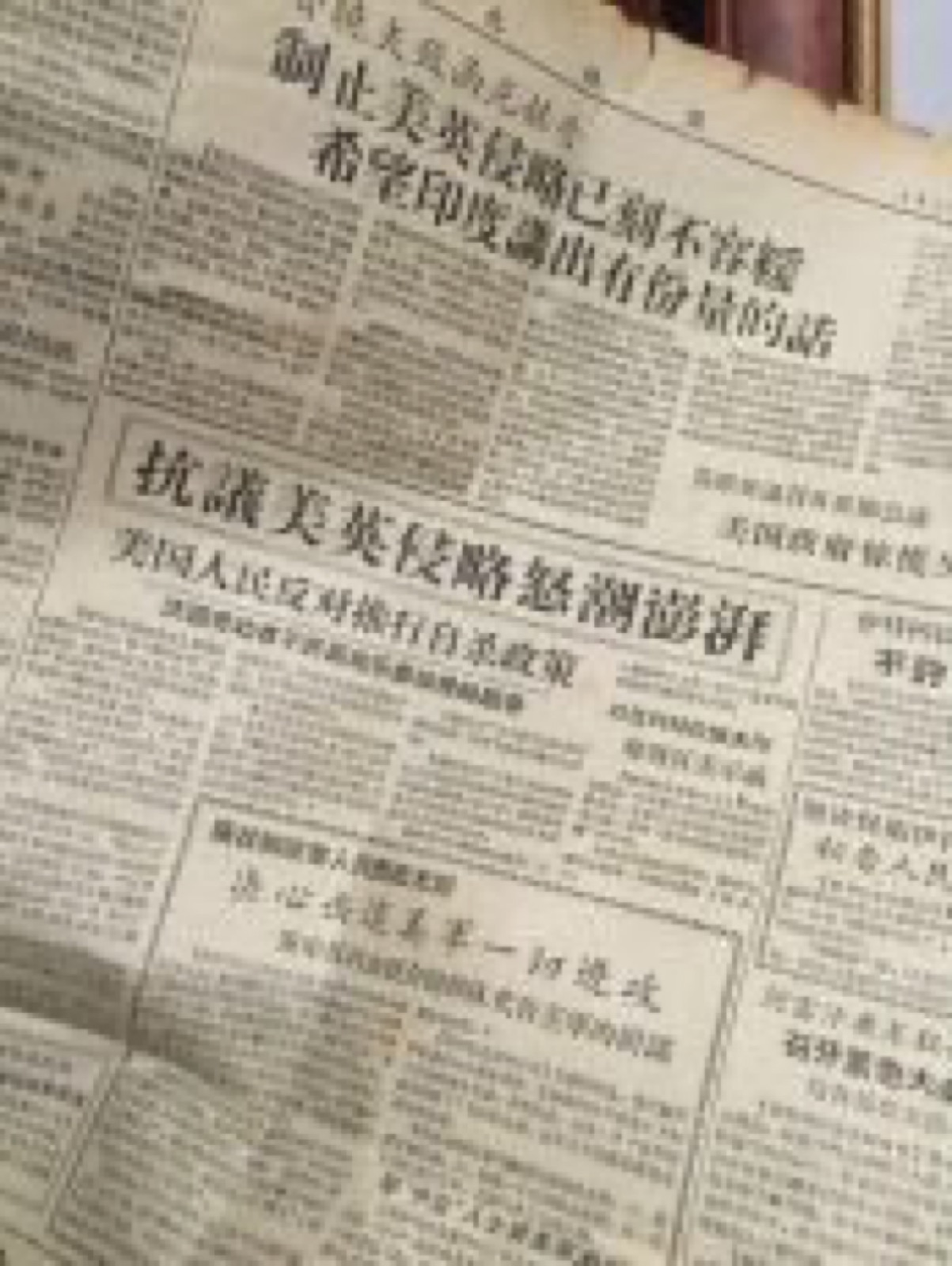
I opened the paper from that day and, good heavens, it was the same anti-American slogans, page after page. All those years later, the place I was born seemed hardly to have changed.
— August 24, 2023
That's what I found. Anti-American imperialism, in headline after headline. Sixty-some years ago, the same tune.
I'll keep my opinion short, because this is supposed to be a story, not a speech. I have nothing against people changing their minds. I've changed mine plenty. What strikes me is the sameness. Same tune, decade after decade.
But I'm digressing. Let me get back to the baby.
Three days and three nights
When I was very small, the years of the great famine came. Officially they were called the "three years of natural disasters." My mother decided to take me from Chengdu to Shanghai by train. It took three days and three nights. She had two reasons. One was to visit my grandparents. The other was to see for herself how bad things were in Shanghai, because nobody trusted what they heard.
All over China people didn't have enough grain coupons to eat. But on the train there was a strange exception: meals were sold for cash, no coupons needed. At mealtimes each passenger could buy one bean cake, a dou bing, a flat cake pressed from soybean. The attendant took one look at me and wouldn't sell me one. Too small. A child that size didn't count as a passenger.
My mother went to argue with the head of the train.
"A child is small, but he is still a person. He has a mouth, and it needs feeding."
— October 27, 2023
And she won. She got me my ration. A bean cake a meal.
Picture her doing that. A young teacher arguing with the man in charge of the train about whether her toddler was a human being. That's my mother.
She didn't eat all hers, of course. She saved them. When we got to Shanghai and met my father's younger brothers and sisters, she brought out the bean cakes she had been saving as a gift. They fell on them. They ate them so fast and with such appetite that my mother's heart sank. She had come all that way thinking Sichuan, the "land of abundance," was suffering. Was Shanghai worse?
After a few weeks she worked it out. Shanghai was still better. The rations were limited, but at least they were steady. So she made a decision. She would leave me in Shanghai with my grandparents.
A portrait of one
Before she went back, she took me to a photo studio.
She knew what was coming. Months, maybe years, of missing her son. She wanted a photograph. But here is the part I didn't understand until I was much older. She was someone who cared very much about how she looked. And by then she was skin and bones, because she had been going without so that I could eat. She thought she looked terrible. So she didn't get in the picture.
The photographer didn't understand either. Why was a mother paying for a portrait of a toddler by himself? He took it anyway.
When I posted that story online, some people had already seen a childhood photo of mine and decided I must have been born abroad, or born rich. Look at the chubby little face, they said. A boy like that never went hungry.
They were right about one thing. I didn't go hungry. I ate more than a grown-up. I was too young to understand anything.
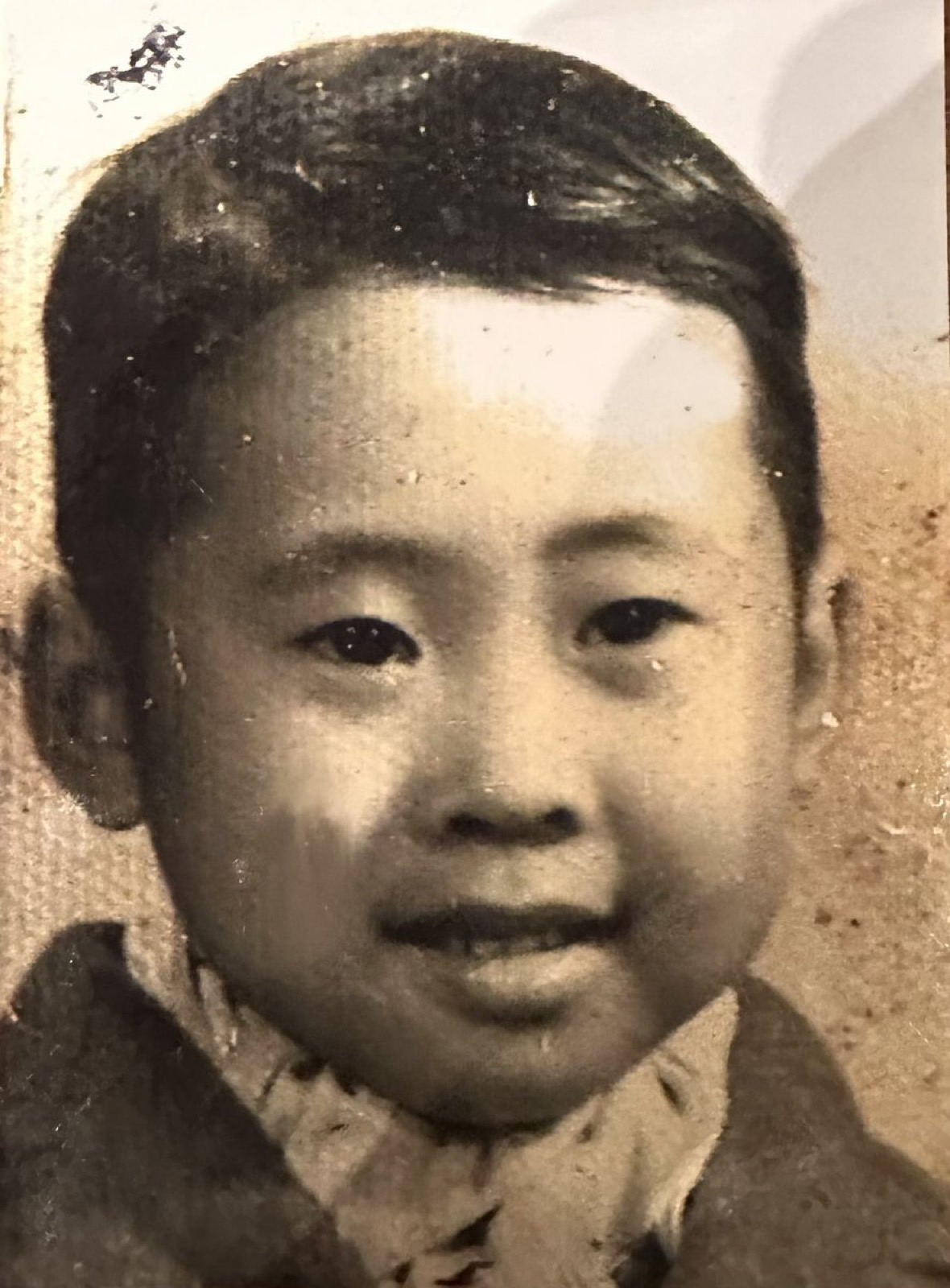
Thinking about it now is very hard for me.
That's all I'll say about it, really. A woman too thin to be in her own photograph, and a fat little boy in the middle of the frame. I had that picture for most of my life before I understood it.
Nothing to believe in
One more thing about where I started, because names and beliefs get tangled up.
My father's family were Buddhists. My mother's family were Christians. Each side had its rituals and rules, and as a little boy I was handed back and forth between them, confused, not knowing whose incense to light or whose hymn to sing. So I gave up and believed in neither. Then I went to school, where everything was atheist and the goal was to raise us as successors to communism, and that settled it.
I have told friends that believing in nothing was the best present I got in my childhood, and I see no reason to give it back. It has saved me a lot of time.
That doesn't mean I sneer. I still go into temples and burn incense. I still go into churches and sing the hymns. I'm especially respectful when I do it, because those are other people's beliefs, even if I don't share them. A Buddhist father's son and a Christian mother's son, named for a Russian woman's neighbour, raised on atheism, living now in a country where a church up north has a sign telling people to accept those who look different, believe differently, love differently. That's quite a mixture for one small boy to carry.
Two homes
So that's how it began. Two homes, three days and three nights of track between them. Inland, my parents, a pair of teachers who read and spoke foreign languages. In Shanghai, a big old house that had come down in the world, my grandmother who never wore jewellery, and my grandfather, who did not like me very much.
At the time I didn't know any of this was unusual. A child takes what he's given. He thinks every family has a name from Russia and a surname from an orphanage and a mother who argues with train conductors.
Looking back, I think I was given two things in that first year that stayed with me all my life. One was my mother's stubbornness about the small, fair thing: a child is a person, he has a mouth. The other was a name that didn't fit the country it was born in. Viktor. Every time somebody said it, it pointed somewhere else.
Later, the country would decide that Russia was no longer the big brother. Much later, I would give up borscht and vodka for a war. Names keep moving under you. Even the ones your parents chose.
But in those early years, nobody in Shanghai called me Viktor. To my grandfather I was something else entirely. I was bad luck.
The Capitalist's Grandson
In Shanghai the boy is the only grandson, the one who will carry the borrowed surname on, and also the jinx born the year his grandfather lost his business. An orphan's rise, a boat ticket never used, a train he jumped off, and ten strange families moving into the house.
The first name I remember being called in Shanghai was not my own. It was a Shanghainese word for bad luck.
I was the only boy grandchild in my generation. In a Chinese family that means something. It meant I was the one who could pass the surname down. You know by now what that surname was worth: a name lent to an orphan. But a name is a name, and in my grandfather's house I was the one who was supposed to carry it.
And my grandfather did not like me.
The way the family told it, the year I was born was the year he got pushed out of his own business. It was the joint state-private ownership campaign. The government took a half share in private firms, sent people in to learn how they ran, and once the new people had learned, the old owner, who had been drawing a decent salary, was shown the door. My grandfather felt he had been tricked. He had started that business himself, from nothing. And at exactly the same moment, his grandson arrived.
So I was a sao zhou xing, a broom star, a comet that sweeps bad luck in behind it. In Shanghainese the word is chu mei tou: a jinx.
A grandfather and grandson under one roof should be a happy thing. He didn't like me, and I didn't like him, and that's how we went on, day after day, at a standoff.
— October 11, 2023
Cadre or capitalist
In those years everyone had to fill in forms. Every form had a box called "family class background." And every time a form came into our house, there was an argument.
My uncles thought Grandpa should be put down as a cadre. After all, he didn't only invest money, he managed the business. That's what cadres do. But the honest answer was "capitalist," or "bourgeois," and in those days those words sounded about the way "rapist" sounds today. Also the box was too small. It had room for two characters. Worker. Peasant. Clerk. You could not fit "capitalist" into the life that box had in mind for you.
Later people began writing "unlawful capitalist." One man's so-called crime fell on the next several generations. When he was rich and grand, I had no share in it. When people started to look down on him, it was my turn.
Old Dick
Let me tell you who he was. I had to piece it together from a crowd of relatives, because he never talked about how he made his money.
He was raised in an orphanage run by a Buddhist temple. A single woman surnamed Huang adopted him and brought him to Shanghai. He had no money and no connections. His first job was at an American trading company, where he had to speak English to his bosses, so he learned it the way a parrot learns, by copying. He did it to support his adopted mother. To pay her back. The English he ended up with was the pidgin they used to call Yangjingbang, the language of the Shanghai docks.
He had one real gift. His brush calligraphy was so good it looked like a printed copybook you'd buy in a bookshop. I've always guessed he learned it from the monks.
Then he fell in love with Peking opera. He played the jinghu fiddle and sang along to his own playing, and once he'd made a little money he held opera parties at home for the festivals, with famous performers and fellow amateurs.
He was a handsome man. He liked to wear a white suit with black-and-white two-tone shoes, and people in Shanghai called that kind of man an "Old Dick." Strangers took him for a rich man's son. In fact he was the first generation. He made it himself.
How did he make it? This is the part my family pieced together. He ran a warehouse. Some of it held ordinary goods, but much of it held surplus that American merchants shipped in. No smart trader wanted to send a ship to Shanghai empty, so they filled it with things nobody had ordered. My family told me that whatever was in the warehouse, we had at home.
And because warehouse rent went up the longer things stayed, the American merchants would sometimes just abandon their goods to cover what they owed him. Once it was a whole warehouse of cotton. Another time a whole warehouse of coal.
That's how my grandfather got rich. If he exploited anybody, I'd say he exploited Americans more than Chinese.
A boat ticket and a mother's threat
He had a chance to leave. In 1949, when you could already hear the guns around Shanghai, he had bought a ticket on a boat to Singapore. His adopted mother heard that her son was going abroad. She swore she would dash her head against the wall and die right in front of him.
This was the woman who had taken him out of the orphanage and raised him. How could he walk away from her? And the new government was saying loudly, at the time, that exploitation had its merits. So he stayed, to keep doing his duty as a son.
Then came the gun. In those unsettled days he wanted a pistol to protect the family. To buy one you had to join some organisation, so he filled in a form. My grandmother was against it, and the gun stayed in the house exactly one night. That was enough. On the strength of that form he had joined a "reactionary organisation." I think it was the Three Principles Youth League of the old Nationalists, but I'm not sure. And for that he was sentenced to be sent to Xinjiang.
The whole family went to the station to see him off, old and young, men and women. The children knelt on the platform and wailed. My grandfather knew what was ahead. He kept waving to the family as if he were going bravely to his execution.
Then a man appeared. A cadre from the neighbourhood, somebody who knew him, an official who travelled back and forth on that line.
"What are you doing here?" the man asked.
"I'm an unlawful capitalist," my grandfather said.
My grandfather had always been decent to people. And this cadre told him, firmly: "You don't qualify. You can't go."
The train had already started moving. His luggage was thrown out piece by piece onto the platform, and my grandfather jumped off after it.
And so he met his saviour by chance. My grandfather never got a Xinjiang story. Later on, he got the chance to die in Shanghai.
— October 12, 2023
I've thought about that cadre a great deal. In my school textbooks, men like him were the heroes and men like my grandfather were the villains. But here is a cadre doing the decent thing for a capitalist, on a moving train, in front of a whole kneeling family. He's the first person in this book who did a kindness he didn't have to. He won't be the last.
So my grandfather escaped two places whose names both begin with xin, new. Either one would have made a completely different story, and I'd have been something else, with some other name.
Ten strange families
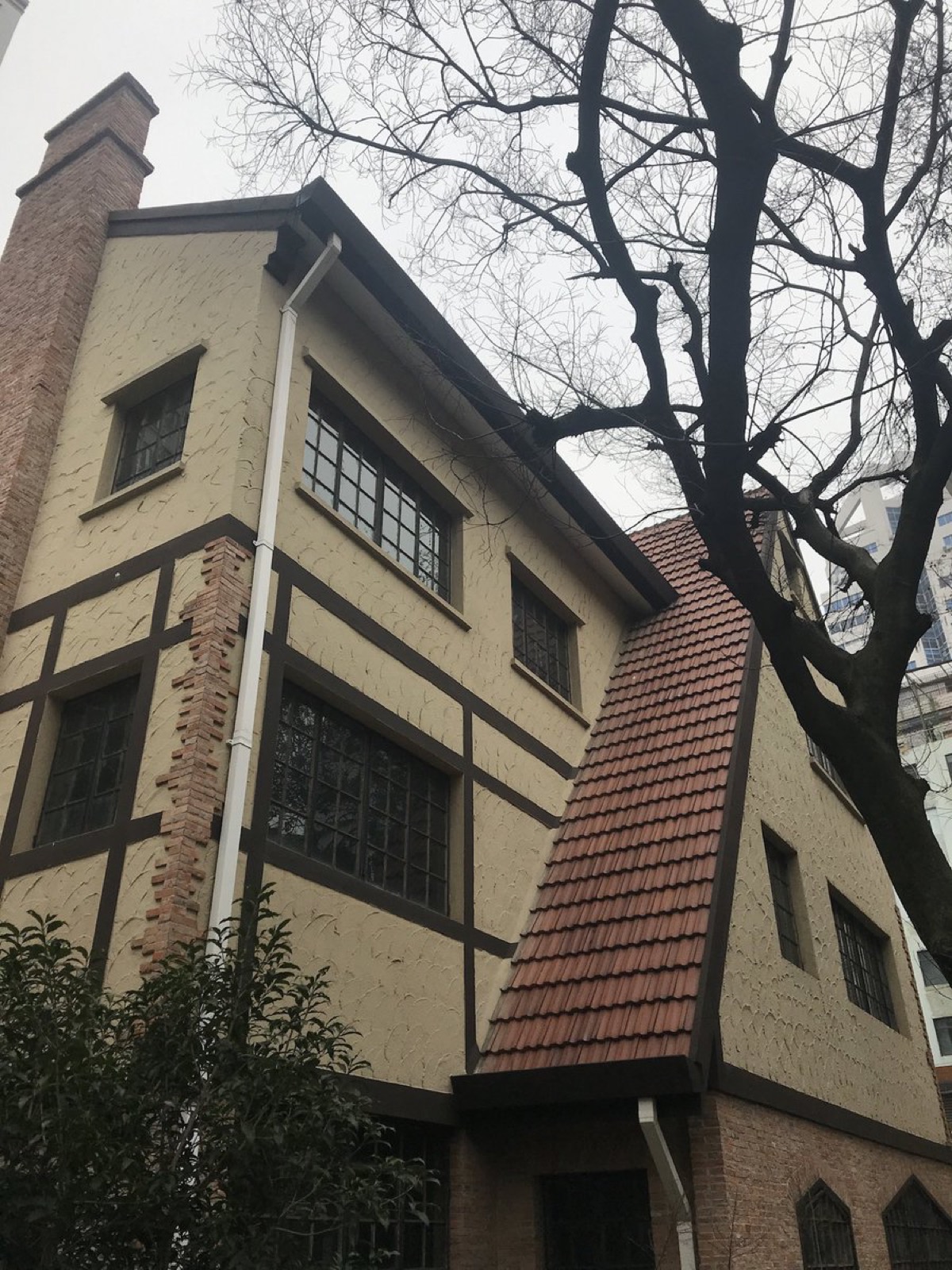
My grandmother told me that their old house, on what is now Hunan Road, had a staircase landing so big you could set a banquet table on it. I once asked her why she never wore gold or jewels like other women. She said that if she'd been in the habit, she'd have been crushed to death under the weight of it all. That was the size of her talk. By the time I came along they had moved to a smaller house off what is now Yan'an Road, and the family lived on government bonds and by selling things off.
Then the People's Commune campaign reached the city, and the commune needed buildings for schools. They were very polite to my grandfather. I've always wondered how they talked him into signing away part of his property as a "donation." Think about the logic. Exploitation is a crime; you ought to be in jail. But we won't jail you. We'll just let you share a little of your ill-gotten gains with society. Which meant that tomorrow, ten families of strangers would move into your house.
That's what happened. Our living room and dining room disappeared. The garage was split into two floors with a family on each. A family lived in the boiler room. Even the balconies became rooms. I grew up living on a second-floor balcony.
The one luxury we kept was our own kitchen downstairs. Everyone else shared one between five or six families.
I played the violin on that balcony, and when I tapped my foot to keep time, the working-class neighbour on the balcony below would bellow up at me. And there was a peculiar thing about that house that I'll never forget. The stairs and corridors and kitchens and toilets were all very dim, but there were lots of light bulbs, each belonging to a different family, each with its own pull cord. What frightened me most as a child was pulling the wrong cord and turning on somebody else's light. Wasting their electricity.
The neighbours then were each kinder than the last, and each poorer than the last. If they counted every penny, it was because they had no choice.
Comrade, this is Suzhou
Twice a week I went to my violin teacher's home. Teaching music in those years had nothing to do with money. My teacher took nothing. It was purely for the sake of the art.
Shanghai buses cost five fen for one to five stops and ten fen for five to ten. To save five fen I would ride five stops, walk a few, then ride another five. Once I fell asleep and woke at the terminus with a man in uniform standing over me. The conductor.
"Comrade," he said, "we've reached Suzhou."
I broke out in a cold sweat. People in those days hardly ever made jokes like that. I still think about him. Even when everyone was poorest and things were hardest, some people kept their sense of humour.
A form, filled in by a child
Something changed between my grandfather and me while I was still small, and it happened over a piece of paper.
Shanghai primary schools had an entrance test. I heard one question showed a picture of the moon and a picture of the sun, and some child called the sun a big flatbread. My grandfather did not prepare me for questions like that. He did something else. He made me fill in the parents' form myself. I wrote my parents' names. I wrote where they worked, including the two difficult characters in the middle, 師範, shifan, "normal school," the teachers' college. Back then everything was written in the complicated traditional characters.
Slowly I realised my grandfather was a good man. The foundation he gave me, looking at it today, was reinforced concrete.
— October 12, 2023
My grandmother saved the best of everything for me. My grandfather put his attention into my lessons.
But a question sat in my head. Everything at school taught us to look at our elders with suspicion, even hostility. We learned about the landlord Zhou Bapi crowing like a rooster at midnight to get his labourers out to the fields before dawn, and Liu Wencai cheating his tenants with a rigged steelyard. However much love the older generation gave us, school taught us to doubt them. So I lay on my balcony and wondered: why would Grandpa have exploited people?
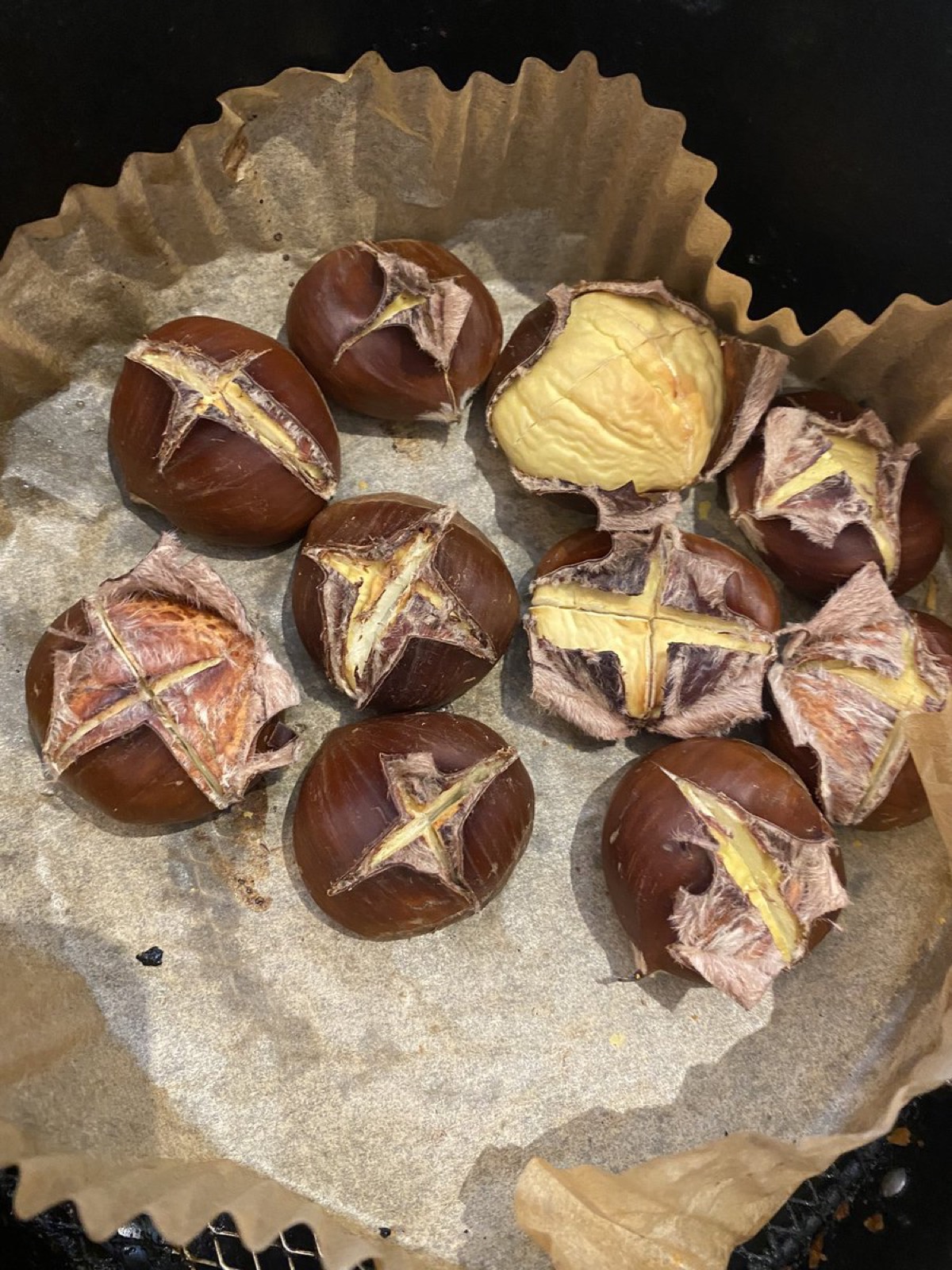
There was a chestnut seller I loved as a boy. I never bargained with him, because he looked like a pirate, with a black patch over one eye, and I thought he'd been blinded for life making treats for us. Only when I was much older did it occur to me that the blind eye was fake. Don't judge by the surface. I learned that late, from a chestnut man, and I think I was learning it about my grandfather at the same time.
Looking back
Here's how it looks to me now. In my grandfather's lifetime, the word "capitalist" went from praise to a crime you couldn't fit in a box on a form. And then, after he was gone, everybody in Shanghai, everybody in China, was competing to be one. Profit was renamed "increasing output." Exploitation was renamed "creating jobs." Yesterday's unforgivable sin became today's thing to admire.
Life is one joke followed by another joke. Everyone else can forget. I won't. Especially not my grandfather.
I was the jinx and the only grandson. I was the one who'd carry the borrowed name. And when the worst came, in the summer of 1966, I was the one who was there.
Ransacked
Summer 1966 to November 1971. Smashed Buddhas in the street, a three-day ransacking, a diamond hidden in a ball of wool, a grandfather sweeping streets in a light suit, and the last time the boy saw him, limping to the mouth of the lane.
In the summer of 1966 the grown-ups around me got new names overnight, and I learned what it sounds like when a whole street breaks its dishes.
I can still hear it. It was a summer day and everything turned at once. The streets of Shanghai filled with Red Guards in army uniforms with no collar badges and no cap stars. The old men and women and children who usually sat outside in the evening to catch the cool air all felt it. Something big was coming.
The Red Guards were shouting "Smash the Four Olds, establish the Four News," and they called on everyone to bring out anything feudal or superstitious or Western. People in the street were busy smashing Buddhas and pianos.
Our family carried out all our Buddhas and our statues of Guanyin. Even the rice bowls and dishes, red and green and yellow, with "Long Life Without End" painted on them, didn't escape. They had to be carried to the middle of the road and broken. That screeching sound of porcelain on concrete, I hear it still.
Trouser legs and spectacles
If you wore gold-rimmed glasses, they would stop you, take the glasses off your face and stamp them flat. Many people begged to keep the "innocent" lenses, so that someone very short-sighted could at least walk home holding two pieces of glass up to his eyes.
Trouser legs had rules too. Men's couldn't be narrower than six inches at the hem, women's not narrower than four. Anything that failed the test got cut open. The streets were full of people walking around in split trousers.
But never underestimate Shanghai people. Those who were at work phoned each other with the news, and before they went home they unpicked their own trouser seams so nobody else would do it with scissors.
I looked at my grandfather's face in those days. I felt I could see the end of the world in his eyes.
Three days
The thing Shanghai was known for in those years, besides the street fighting everywhere, was the house search. Chao jia. A group of people came into your home and turned over every chest and every cupboard and took anything of value, whatever the constitution said about private property.
At one villa in our lane lived an old man whose family had owned a dye factory, with a maid. The Red Guards found that the maid had been hiding her employer's valuables. They made her stand on a stool and beat her until she screamed, beat her so hard the bamboo pole split. I'll leave it there.
Our own house was searched for three whole days.
Now I have to tell you something that may surprise you. The Red Guards who came to us were very polite. Maybe it was because they didn't know much about this boss who'd been fired years before. Or maybe they had heard that my grandfather used to treat his workers well. I'll never know which. But I was there, and they were polite.
They were also efficient. They found Grandpa's gold right away, inside the bamboo washing poles and in the coal ash. Those were the most popular hiding places in all of Shanghai.
My grandmother handed over all her hidden jewellery very quickly. The Red Guards had an effective method. They told her, "The old man has already confessed. Are you going to go to jail for him while he's out finding other women?"
The ball of wool
I had a job too. Before the search I was given one diamond to hide. I wound it up inside a leftover ball of knitting wool. Every time the Red Guards tipped out the drawer of wool onto the floor, I went over and picked up the balls of wool and put them back neatly.
Just a tidy little boy, helping.
That diamond was the only treasure our family kept. Later we sold it cheaply through a friend in the countryside, and the whole family "got rich" one more time and went off to Suzhou and Hangzhou to eat well and enjoy ourselves.
On the last night of the search, I remember them sitting around our big round table with a little gold scale, the kind used for weighing money, counting and weighing every piece of gold and jewellery. They made a list with the number and the weight of each piece, as if it were going to the national treasury.
A suit for sweeping
Things got harder and harder. My grandfather had work to do. Every morning he swept the streets of the neighbourhood with the other "counter-revolutionaries." And every morning he dressed for it as if he were still Old Dick. On my way to school and back I passed him. I remember a light-coloured suit and pointed shoes in three colours, trimmed with crocodile skin. He hummed little tunes while he swept.
In the afternoons he had another job, writing revolutionary slogans. The neighbourhood committee didn't want the Red Guards' handwriting. They wanted the capitalist's. My job was folding and cutting the paper before he wrote.
By then the grain shop and the coal shop had stopped delivering to "black category" families. I was very young, but I worked out how to make a cart from a plank and four ball bearings, to haul the rice and the coal home myself.
Later we weren't even allowed to buy the ready-made coal briquettes. We bought loose coal, smashed it into dust, and mixed it with yellow mud to roll our own coal balls. I wasn't ten yet. My hands were too small and too weak, and the coal balls I made didn't burn well. Shanghai winters are damp and cold. My hands went red and swollen and covered in chilblains.
At the time I thought the suffering was deserved. This was how Grandpa had exploited other people, so now it was our turn.
What I couldn't bear, small as I was, wasn't the work. It was the strangers. The neighbours were all right. But when I pulled my cart of rice and coal down the street, people I'd never seen before gave me cold looks and said humiliating things.
Dearer than my parents
The slogan everywhere in those days went: "Father is dear, mother is dear, but neither is as dear as Chairman Mao." I was never sure about it, because of two things that kept me thinking.
We had a neighbour who was also from the bourgeoisie. I saw her on an outing once, carrying the big plastic-covered Little Red Book, and after the rain she put it down on a rock and sat on it.
And my grandfather, pointing at the portrait of Chairman Mao, once said: "I'm a good man. He's a bad man."
Because of those two "reactionary" acts, I often couldn't sleep at night, as young as I was. That's how deep school had got into me. A grandson lying awake because his grandfather had called himself the good one.
Chicken blood
At some point in those years Shanghai went mad for chicken-blood injections. You drew blood out of a young rooster and injected it into a person. The neighbours all started keeping chickens, and because their kitchens were too crowded, the coops ended up in ours.
I asked my grandmother why we couldn't have chicken blood. She said, "We don't have a clinic." It was true. Our whole family had no medical care at all.
Grandpa had had high blood pressure for years with no treatment. He had a stroke and half his body was paralysed. When he was hungry he would slap his own thigh and shout, "Three cents for a flatbread!".
Meanwhile letters kept coming from my parents, telling me to leave Shanghai and come home inland as soon as possible. My father was being buried under big-character posters. His crime was raising his son in a bourgeois family as a pup of the exploiting class.
It took months to find someone willing to take me back to Sichuan by train. The train stopped overnight in Xi'an. At my age I couldn't make the trip alone.
My grandfather was no better. Still, he dragged himself, limping, all the way to the mouth of the lane to see me off. Grandfather and grandson both knew it was the last time.
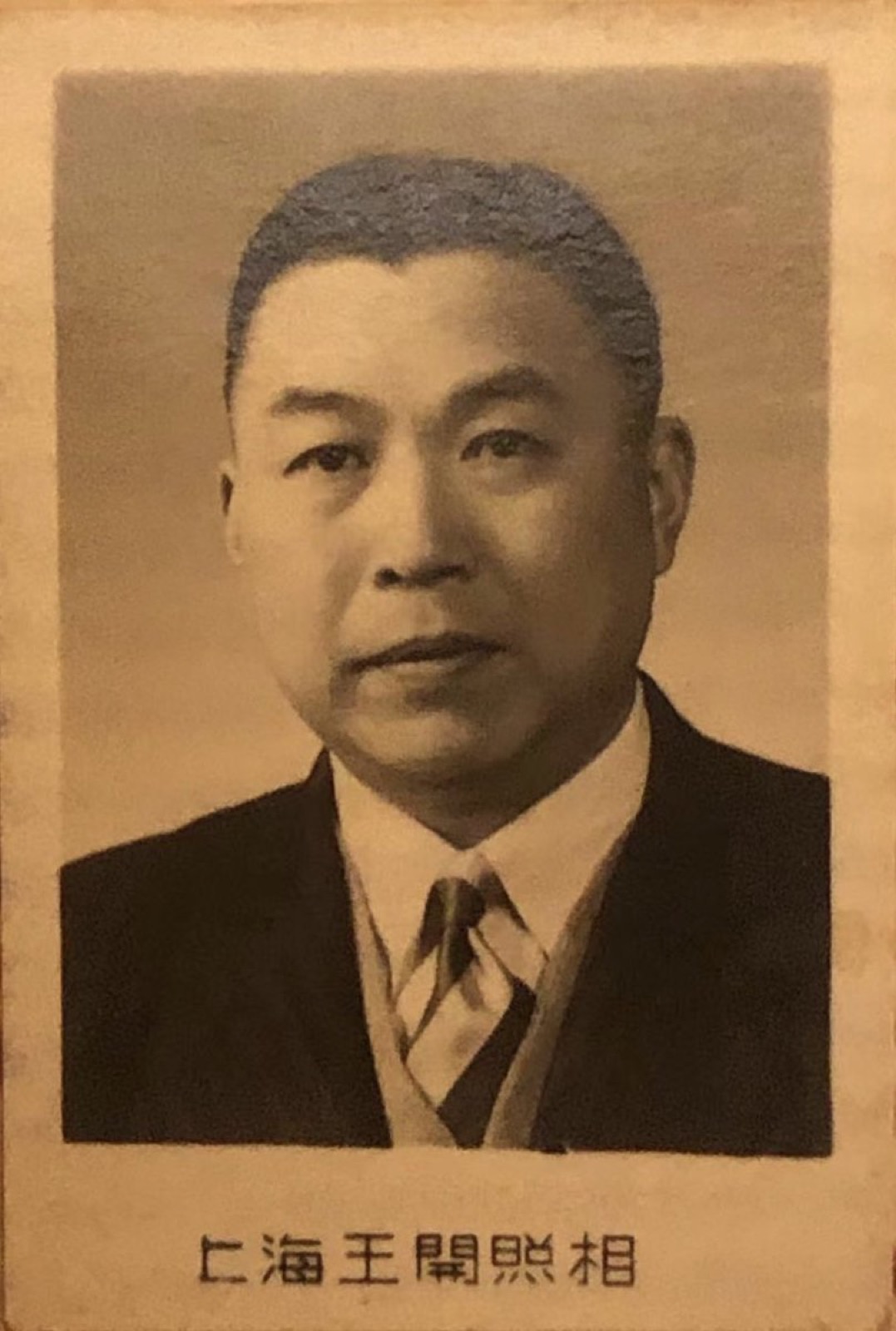
The telegram
Not long after I got back inland, I came home from school for lunch one day and there was a short telegram on the table. Nobody said a word.
I looked at my father. In my head I said to him: if you cry, I'll cry. My tears were ready.
My father didn't cry.
That's not true. He cried. His tears just ran inward. People in those days had that skill. I'm sorry, Grandpa. The best I could do was cry without making a sound.
He had been denied the most basic medical care that ordinary people got, even in those chaotic years, because of his class. But I think his heart hurt worse than his body. The capitalist label he was leaving to the next generation meant none of them could have a normal future. He had given up hoping to live.
The family spent everything trying to keep him going. In the end all they could find was a barefoot doctor, who drew ballpoint circles all over his body, some with the names of acupuncture points written beside them. Grandpa was a big, tall man, and there were no wheelchairs then, so moving him was a huge job. Going to the toilet at night was the hardest. Every night they tied a rope to one of my uncles' hands.
When the end was near they finally got him into a hospital, but he wasn't entitled to a ward. He lay on a stretcher in the corridor, his sons and daughters standing around him to block the draught.
It was November 30, 1971. He was younger when he died than I am now.
Grandpa, whether you were a capitalist or a cadre, I miss you!
— October 16, 2023
A good man
After the Cultural Revolution was over, I went with one of my uncles to the countryside in Zhejiang to visit the people who used to work for our family. You took a long-distance bus to the county town and then rode on the back of a bicycle for the better part of an hour.
My uncle had grown up with a boy they called Water Buffalo. Back then Water Buffalo was a child, and his father was in charge of a few hired hands who ran the whole Huang household, all the eating and drinking and everything else.
Water Buffalo met us at the edge of the village and took us home. I finally had the chance to meet the most directly exploited person I could imagine.
Water Buffalo's father asked my uncle, "How's the young master these days?"
My uncle told him the young master had died long ago.
The old man fell from the stove where he was sitting, right onto the floor, and cried out in pain: "He was a good man!" And then he told us story after story about my grandfather.
That was an exploited man's summing-up of the man who exploited him. I couldn't believe my eyes, and I couldn't believe my ears.
— October 15, 2023
My grandfather was good to everybody, people he knew and people he didn't. He gave leftover food and old clothes to the refugees from Anhui who came to Shanghai to escape famine.
In those years nobody would be friends with him. Anyone who got close was suspected of having the wrong politics. So he made friends with a few stray cats, and at night he brought them home to eat our leftover soup and rice. I'm an old man now, and when I think of those cats' eyes, glowing green in the dark, I'm still afraid of them.
Looking back
I was a first-hand witness to the "cruelty" of a capitalist. I can say boldly that at least not every one of them was like what we were taught.
But I want to be fair to the boy I was, too. He wasn't a hero. He thought the coal balls and the chilblains were deserved, and he hid a diamond in a ball of wool because he was told to.
What I have now that he didn't have is the view from the other end. The polite Red Guards. The cadre on the platform. The old servant on the kitchen floor. Every one of them should have been on the other side of the story I was taught. And every one of them, at least for a moment, wasn't.
After the telegram, I stayed inland. My Shanghai childhood was over. In Sichuan I had a new name waiting for me.
Little Red Soldier
Back inland in Sichuan, in a university compound with a machine gun on the roof. A cowards' gang, a propaganda troupe, a playmate's taunt that his unknown grandfather in Hong Kong was a spy, and English learned in exchange for violin lessons once Nixon came to China.
Many years later, in Canada, a pediatrician asked me a question I'd been waiting half my life for somebody to ask.
He was a kind, chatty man surnamed Kim, and when I brought my children in for their check-ups he liked to talk. Our backgrounds could not have been more different. I asked him whether he was a descendant of the Gam Saan Baak, the "Gold Mountain uncles," which is what Hong Kong people called the Chinese who came to North America for the gold rush. He said yes, that's right. Then he asked me: were you a Red Guard?
I said yes. But as I remember it, most of the time I was a Little Red Soldier.
— October 23, 2023
That's the honest answer. The Red Guards were the big kids. Little Red Soldiers were the children's version, the ones too young to do anything but copy. So that's the name for this chapter. I was too small to be a perpetrator and too big to be innocent. I was a child copying grown-ups at a time when the grown-ups had gone mad.
A machine gun on our building
After Shanghai, I lived with my parents in the compound of a university inland, in Sichuan. Our family lived in the building at the far corner of the campus. It was three storeys high, which made it the tallest building around, which made it a strategic high point, which meant that the Red Guards doing the armed fighting had taken it over long before I arrived. They piled up sandbags and set up a machine gun.
That was home.
The university and its attached middle school were joined together, and they were on opposite sides. The university students belonged to a faction called Red City. They were the "royalists," defending the existing order. The middle-school students belonged to a faction called 826, the rebels. And the joke, if you can call it a joke, is that both sides worshipped Chairman Mao.
The middle-school kids usually won the fights. They were young and had never thought about jobs or families, so they were much braver than the university students.
People said Beijing and Shanghai were mild by comparison. In Sichuan they used every kind of weapon there was. In the staff dormitories at our school, somebody was already making homemade guns that fired iron shot. Those don't just wound you. They can blind you for life.
In front of the university gate there was a little hill. It was a beautiful spot, honestly. Many students who died in the fighting were buried there. Before each funeral there was a ceremony where they shouted, "Give us back our comrade!"
Eventually a new slogan came out: "Fight with words, not with weapons."
The shrimp squad
I had a friend from those days, what we call in Sichuanese a mao gen'r pengyou, a friend from when you both had baby hair. My wife taught me the northern word for it, faxiao. Either way, he was the boy I grew up with. When he came to visit me many decades later, it brought it all back.
The two of us formed a gang called the Shrimp Squad. In Sichuanese, a "shrimp" is a coward. Wherever there was a fight we were there, nine times out of ten. And as soon as it came to fists, we ran.
It was the later years of the Cultural Revolution, and children copied adults. Every problem was solved with violence. The two of us solved it by running away. I'm not ashamed of that. Looking back, I think it was the smartest thing a Little Red Soldier could have done.
A spy in the family
One day on the way home from school I got into a quarrel with another kid, and suddenly he said: "Your grandpa on your mother's side is an American-Chiang spy," he said. "They sent him to Hong Kong."
I said that was impossible. My mother didn't have any family.
Then I thought about it. No grandfather, no mother. That couldn't be right. So I went home determined to get to the bottom of it.
"Do I have a grandpa?" I asked my mother.
"Yes."
"Where is he?"
"In Hong Kong."
It was like being hit by lightning. I burst into tears and howled. My father's family were exploiting capitalists. Now my mother's family had a man with secret ties to foreign countries. Heavens, I thought, why am I so unlucky?
My mother kept explaining that she'd done it all to protect me. She said that boy's parents must have peeked at our personnel files. Even in a university compound, overseas connections were rare.
So that was another name, and I hadn't even heard it from my own family first. I heard it from a kid in the schoolyard: the grandson of a spy.
A troupe and a feast
The schools then had to "learn from workers, learn from peasants, learn from soldiers." Students were always being sent off to do physical labour. I was usually assigned to the little propaganda troupe instead, rehearsing and performing. We put on shows for things like "Support the Army, Love the People." Besides getting out of the labour, after a performance there was often a da ya ji, a feast, a rare chance to eat meat.
I could hum most of the red songs then, because I'd played them on the violin countless times. And it took me years afterwards to wash my brain clean of them.
It took me many years to wash my brain. Now I've nearly forgotten them all.
— September 16, 2023
But I didn't always escape. Once, at harvest time, the student kitchen was serving half-cooked rice every day, and I fainted on the threshing machine from hunger. Luckily I fell backwards and not forwards. Otherwise I wouldn't be here writing this.
A desk on credit
In middle school I really needed a desk and a chair. My father phoned the general affairs office, and the next day they delivered them. A few fen a month came out of his wages.
That was my parents' life, the opposite of my grandparents'. As I remember, they owned two bicycles and their meal tickets for the canteen.
The English teacher
After Nixon visited China, English suddenly mattered, and people dropped Russian and switched to English as fast as they could.
My father had gone through middle school in English. You'd think he would teach me. He wouldn't. He said his own pronunciation had a Shanghai accent.
So he looked around his department for someone else, and found a woman from Guangdong, a returned overseas Chinese who had graduated from Yale and from Cambridge. How could we impose on someone like that? As it happened, her little boy wanted to learn the violin. So twice a week, when I went for my English lesson, I gave her son a violin lesson too.
That's where I learned something that has stayed with me for life.
When you learn anything, you have to find the best teacher. Don't settle for the second best.
— December 3, 2022
In those days you started with the 48 symbols of the International Phonetic Alphabet. My teacher told me to bring a small mirror to every lesson. The reason was simple: if your mouth isn't in the right shape, the sound won't be right. Learning pronunciation took months. Even today, when my sons correct my English, I find myself thinking about which phonetic symbol it is.
My father gave me something else that helped just as much. He lent me a beautifully made book that collected the grammar and spelling mistakes of famous people. It opened my eyes. They made mistakes all day long, too. So what was I afraid of?
From then on, whenever I met a foreigner, I'd start by asking, "Do you speak Chinese?" If you can't speak my language, well, I can speak a bit of yours.
The first English song my father taught me was "Old Black Joe." People today say it makes slavery look pretty, and nobody sings it any more. But it was the first English song I ever learned.
Under the quilt
My father never just told me to study. He made his own conditions for it, even at the worst possible time. In the most extreme years of the Cultural Revolution he was doing labour on an army farm. In the daytime he read the Peking Review. At night he listened to Radio Peking in English, hiding under his quilt.
Somebody reported him for listening to enemy radio. So they moved a man with a good family background into the bed next to his, to listen in. And the man listened, and something was off. This "enemy station" played "The East Is Red," in that tinkly tone it had when it came back to earth from China's first satellite. The struggle session they'd planned was cancelled. After all, what my father was listening to was the latest news of the Cultural Revolution. The voice of the Party Central Committee, just in English.
I love that story. A man sent to catch my father, lying in the dark, hearing the anthem of the revolution coming out from under the quilt beside him.
The boy who asked about the fridge
We had Reference News at home, the internal digest of foreign press, and also English magazines and papers, the Peking Review and even the Washington Post. I couldn't read the English yet, so I looked at the photos and cartoons. Once the Post had a cartoon of a tiny Black child standing in front of a giant refrigerator, with a caption saying something like, "Nothing to eat again." I told my father: he should sell the fridge, then he could buy lots of food.
Another time the Peking Review printed a photo of Deng Xiaoping's birthday, not long after he'd been rehabilitated, with an enormous three-tier cake. I said, out of nowhere, "How much would he have to embezzle to afford a cake like that?"
My physics teacher in middle school explained voltage by comparing it to water pressure: the faster the water flows, the higher the pressure, and electricity was the same. So I asked him why the lights on the first floor and the third floor were equally bright.
People around me thought this was a flaw. In the West today they'd call it thinking outside the box.
Seven cents a thousand
After China joined the United Nations, many UN documents were translated by university teachers like my father. I helped type the translations. I heard each thousand characters earned seven American cents in foreign exchange for the country. My fingers got fast.
Looking back
The boy in this chapter was a coward with a violin and a mouth on him. He ran from fights and ate at feasts and asked the wrong questions about fridges and cakes and light bulbs. He thought a grandfather in Hong Kong was a disaster.
Now I see it the other way round. The cowards' squad, the mirror on the desk, the book of famous mistakes, the radio under the quilt: those were the things that would get me out. And the spy in Hong Kong was about to become the most important door in my life.
Because after Nixon, my mother applied to visit her father in Hong Kong. I couldn't understand why. She had no feelings for him. Why go to that place, where they "eat people and don't spit out the bones"? But she went, and she came back, and suddenly our house was full of colour photographs. Huge ones, next to our little black-and-white family snaps. My mother in lipstick and high heels, standing by an aeroplane, on a cruise ship, in front of tall buildings. People on campus kept finding excuses to drop by and ask her about Hong Kong. She had a skill most people don't have. She never told them what they wanted, she protected herself and the family, and she never offended a single one of them.
I looked at my mother in those photographs and thought: how is it that the woman I see every day looks like the wife of a foreign leader?
Before long, it would be my turn to go.
Mainland Boy
Probably the mid-to-late 1970s. Twenty Hong Kong dollars, a German violin, a name called over a loudspeaker in a language he couldn't understand, a taxi driver's grip on his collar, a bed in his grandfather's living room, and seven loaves of bread labelled Monday to Sunday.
The first time Hong Kong called my name, I didn't answer. I didn't know it was me.
I'll come to that. First the bridge.
Lo Wu
In those days the Lo Wu bridge at Shenzhen was a shabby, run-down thing. I walked to the middle carrying bags in both hands and stood there hesitating before I took the step to the other side. It was, after all, a national border. I looked back and saw the slogan on the bridgehead: "Love your hometown, defend the motherland."
A PLA soldier in a grass-green uniform barked at me to hurry up and get moving. His uniform looked shabby, and he was very impatient. On the other side stood a policewoman in a black wool uniform. She smiled at me and pointed out which way I should walk.
That's my first picture of Hong Kong. Not a skyline. A smile and a finger pointing the way.
I was holding a travel permit printed in Chinese and English, in the traditional characters I hadn't seen for years, on paper thicker than any I'd seen in my life. The immigration hall was full of people from every part of China. At noon everybody was handed a boxed lunch. It felt like the staff were about to go home and they still hadn't got to me.
It turned out they had called my name over the loudspeaker many times. But they were saying it in Cantonese, and I felt "that person" had nothing to do with me.
— July 13, 2023
In Cantonese it was a stranger's name. That was the first name Hong Kong gave me, and I didn't turn around.
The lady on the train
I finally got onto the train for Hung Hom in Kowloon. Trains then still carried people and cargo together. There were closed freight wagons, wagons for livestock and vegetables. I sat down and looked all around me. Everything was new.
Across from me sat a woman in her forties. She seemed friendly, and she spoke to me first, in better Mandarin than mine. She offered to help me with my bags. I was a young man raised on class struggle, and that string inside me was pulled very tight. I refused, firmly.
I was the clumsiest person on the whole train, and it felt like everybody wanted to help me. In the end the woman offered to give me a hundred Hong Kong dollars as a deposit, so I'd trust her with my things.
When we got to the terminus in Kowloon, I stood in the middle of the hall like a fool, not knowing what to do. I was clutching a slip of paper with a name, an address and a phone number on it, and the only money I had: twenty Hong Kong dollars. It was that woman who phoned my grandfather, my mother's father, a man I had never met.
They spoke in Cantonese. As far as I could make out, they were saying my money might not be enough for the taxi to Causeway Bay. I think she told my grandfather to wait downstairs with some cash.
I never learned her name. I've thought about her many times since. A woman who offered a hundred dollars to a suspicious young stranger so that he would let her carry his bags.
Twenty dollars
The taxi raced through the tunnel. The driver kept looking at me in the rear-view mirror. Who was this person who couldn't talk? He obviously took the long way round, and the fare that should have been enough turned into me owing him a dozen dollars more.
I handed over all twenty Hong Kong dollars I had. He grabbed me by the collar and shouted that he was calling the police to arrest this illegal immigrant riding without paying.
Where was my grandfather? How had I got into trouble the moment I arrived?
It turned out my grandfather was waiting on a double yellow line, where taxis weren't allowed to stop. Then he and the driver argued in Cantonese, which I couldn't follow. I think it was about how a Hong Kong Island taxi shouldn't charge the tunnel fee both ways.
And that was the end of my twenty dollars. To get them I had spent days running between different offices and collecting several red stamps. I still remember the exchange rate: 0.26 yuan to one Hong Kong dollar. Before I left, the people who cared about me came to see me off. Someone had heard that Chinese money was no good in Hong Kong and gave me national grain coupons. Someone else said I might need international grain coupons. Nobody, including me, knew whether Hong Kong used grain coupons at all.
The violin
Apart from the twenty dollars, the only thing I owned that could be turned into money was a German violin. Its fingerboard and pegs were inlaid with mother-of-pearl flowers. Even if nobody played it, it was a beautiful object. It had cost my parents half their life's savings. In Shanghai it was worth a thousand yuan.
My parents were worried their son would end up in Hong Kong unable to feed himself. They imagined me playing in a bar, or on a street corner for coins in the open violin case.
They had a reason to imagine it. Early in the Cultural Revolution, a neighbour's son in our Shanghai lane had come back from Hong Kong with hair longer than a woman's. People said he'd been a drummer in a bar. The lane cadres told him he wasn't allowed to sing foreign songs, so he sang "The East Is Red" with a drum beat under it. A very special rock version. He used to sit with my grandfather and the two of them talked in English about things that seemed to be secret. Because he said a man with a skill could easily earn a living in Hong Kong, I, too, became a "musician."
My father said: if you really can't make it, sell the violin and buy a plane ticket home.
All the way, on the trains, through the endless border formalities, I held that treasure in my arms. It wasn't only its value. It was feeling. Some nights when I was lonely, I wanted to hold it while I slept. How could I ever sell it? She was the only one who came with me from the mainland to Hong Kong, and later across the ocean to Canada.
Minister of the Living Room
My first morning in Hong Kong, I had to get up very early. I was the teng jeung, the "Minister of the Living Room." I slept on the sofa. I went to bed later than everyone and got up earlier than everyone. I'd learned that cruel reality only a few hours before.
In those years, everyone who went from where I lived to Hong Kong went with a kind of mission: to "inherit an estate." A boy from our compound had left before me; his grandfather supposedly had a rubber plantation in Malaysia. The public security bureau gave green lights to cases like ours.
My grandfather had sent a family letter to the police there, introducing himself. He said he was born as the century turned, in 1900. He had graduated from the customs college in Beijing and later served as a customs official. Now he had his own business in Hong Kong and was active in charity. The letter was in traditional characters, full of elegant classical phrases. It sounded like a rich man.
He didn't live in a squatter hut on the hillside or a public housing flat. He had his own flat with a lift. That felt rich.
But my grandfather had been a playboy. Besides travelling the world, he always spent every cent he had. His hobby was stamps. He had founded a stamp club, and he had a stamp shop no bigger than a slab of dried tofu on a side street in Causeway Bay. Collectors came in, and schoolchildren after class. The club belonged to an international organisation and regularly received parcels of the world's cheapest, most common stamps, still attached to bits of torn envelope, a hundred to a rubber band. We soaked them apart in warm water, like any family cottage industry.
My trip to Hong Kong had used up some of the nation's precious foreign currency: twenty Hong Kong dollars. And now I saw my real situation. My grandfather wasn't poor, but he was certainly not rich. My dream of an inheritance was smashed for good.
— July 14, 2023
He never gave me a cent. I have no reason to blame him for it. Until a few years earlier, he hadn't known I existed. He paid the taxi difference. He let me sleep in his living room. He took me out for tea. That was already a lot. The "American-Chiang spy" of my schoolyard turned out to be a dapper old man who loved stamps and ran out of money.
Enough?
On that first day, around lunchtime, I was wondering how to cook something. My grandfather said, "Let's go out to eat."
Eat out? On the first day? It was an unbelievable luxury. In those days, people on the mainland ate in restaurants less often than people today go to weddings.
We sat down in a typical Cantonese teahouse. After a few baskets of dim sum my grandfather asked me, "Enough?"
Enough? I could have eaten another twenty or thirty baskets. I pretended. "Enough, enough."
I looked up at a scroll of brush calligraphy on the wall. I can still see it clearly. Spring ice is thin, but human kindness is thinner. Bitter herbs are bitter, but poverty is more bitter. Climbing to heaven is hard, but asking for help is harder. Rivers are dangerous, but the human heart is more dangerous. I've forgotten what order the lines were in. But I will remember those words all my life.
Life Bread
When we came out of the teahouse, I bought a long loaf of Garden Life Bread. I remember it cost eighty cents. What a name. Bread that keeps you alive! My eyes filled with tears, and I walked along stuffing it into my mouth.
That same afternoon I started looking for work. Hong Kong had two "rice papers," as people called the job sections, one English, one Chinese. And I went to see an acquaintance of my father's, a man who had studied at Yale and taken a doctorate at Oxford, and who ran a group of companies from an office in the tallest building in Central. I only wanted his advice.
He gave me a job on the spot. I could hardly speak the language and couldn't find my way around, and he said I could start any time. Rather than finding a job, I'd been given one, as a kindness. On my first day in Hong Kong I'd met a benefactor. I've been grateful to him and his wife all my life. Many years later, when he died, I printed his photograph at home and attended his memorial service online.
My other relatives in Hong Kong collected a thousand Hong Kong dollars for me. I knew exactly what to do with it. Package myself. Shanghai people say style starts at the head and ends at the feet. A fashionable haircut, good leather shoes, a branded suit, shirt and tie. I already looked more Hong Kong than the Hong Kong people.
My first pay was still a month away. So I went back to the bakery and bought seven loaves of Life Bread all at once and hid them at home. And for English practice I wrote on them: Monday, Tuesday, Wednesday, and on to Sunday.
Like my blood pressure pills today. Never take more than one a day. The only difference is that taking fewer was fine.
Looking back
I was a mainland boy, dai luk jai. That's what Hong Kong people called people like me, and they didn't mean it kindly. Someone suspected of having sneaked across the border. The taxi driver had me pegged in one look. I couldn't talk, I had no money, I didn't recognise my own name.
What I remember most from those first days isn't the people who looked down on me. It's the smiling policewoman, the woman with the hundred-dollar deposit, the grandfather who wasn't rich but took me to tea, the man who gave me a job before I could even ask properly. Hong Kong was hard. It also put those people in my path on the very first day.
I had bread. I had a job. I had seven days labelled in English. I was full of confidence about the future.
What I didn't know yet was my job title.
Boy
His job title in an office tower with round windows was 'Boy.' One or two sugars, telex codes, the quick brown fox, Cantonese muttered on the Star Ferry, English learned by falling in love with it first, and twenty years spent becoming more Hong Kong than the Hong Kong people.
Within three days of arriving in Hong Kong I was at work. It was so fast I couldn't believe it. Surely nobody pays wages for nothing? But before long I'd become an important member of the company. You could tell from how often my pay went up, and by how much.
It was only when I started that I found out what I was. My title was "Boy."
My job was "Boy," which meant something like the male office dogsbody who runs errands. In other words, I existed to make everyone else more efficient.
— July 15, 2023
In my whole life I've been called a lot of things, but this is the only one that was printed on an organisation chart. Not a nickname. Not an insult. A job description. In a British colony, in an English-speaking office, the young man who carried the tea was called Boy, whatever his age.
I didn't mind. I was the fastest Boy in the building.
The round windows
The office was in what was then the tallest building in Asia. People called it Connaught Centre then; today it's Jardine House, built by the trading house Jardines. Every window in the building was round, and none of them could ever be opened. It stood in Central, across from the General Post Office.
My benefactor ran a group with businesses in shipping, construction, electronics and trade. I was responsible for morning tea and afternoon tea. I had to remember how each person took their coffee or tea. Milk or no milk? One sugar or two? Mostly I ran letters and documents, opened envelopes, posted mail, and, when the secretaries were too busy, typed for them.
I had my little tricks. When a letter needed a signature, I had the pen ready to hand over. Every time I reached a floor, I pressed the "down" button for the lift before I'd even finished delivering. All to save time. Always one step ahead.
The quick brown fox
I went crazy over typing. I had a little foundation already: back inland, I'd typed my father's UN translations. Now I practised the sentence everyone practised.
The quick brown fox jumps over the lazy dog.
One sentence, every letter of the alphabet. The secret of fast typing is keeping your ten fingers on the home keys, reaching up and down from there, and above all, not looking. Touch typing.
In those days offices had stopped using telegrams and fax hadn't arrived yet. The thing everybody used was telex. I didn't fully understand the technology. Every user in the world had a unique address, and two telex machines would connect and communicate in real time. You paid by the letter or by the connection time, so abbreviations were crucial. Another pile of things to memorise. ASAP: as soon as possible.
Two secretaries worked next to the telex room. I had the feeling they both wanted to get away quickly after work to meet their boyfriends, so they were happy to teach me the machine.
Before long this mainland boy typed like the wind and could operate a telex! I'll say it proudly. Maybe not in all of Hong Kong, but in that huge building, you couldn't find another Boy like me.
Talking to myself on the Star Ferry
The language that was hardest for me wasn't English. It was Cantonese.
Mandarin has four tones. Cantonese has nine. Even the words are different: a bicycle is a "single car," a taxi is a dik si.
I spent a fortune buying every Cantonese tape the Commercial Press sold. By then I'd rented a room in Kowloon, so every day I crossed the harbour to the island and back on the Star Ferry, on the cheap lower deck, with the sea wind blowing and Victoria Harbour in front of me, muttering sentences to myself. Have you eaten yet? Will there be a typhoon today? How many younger brothers have you got at home? The people next to me thought I was mentally ill.
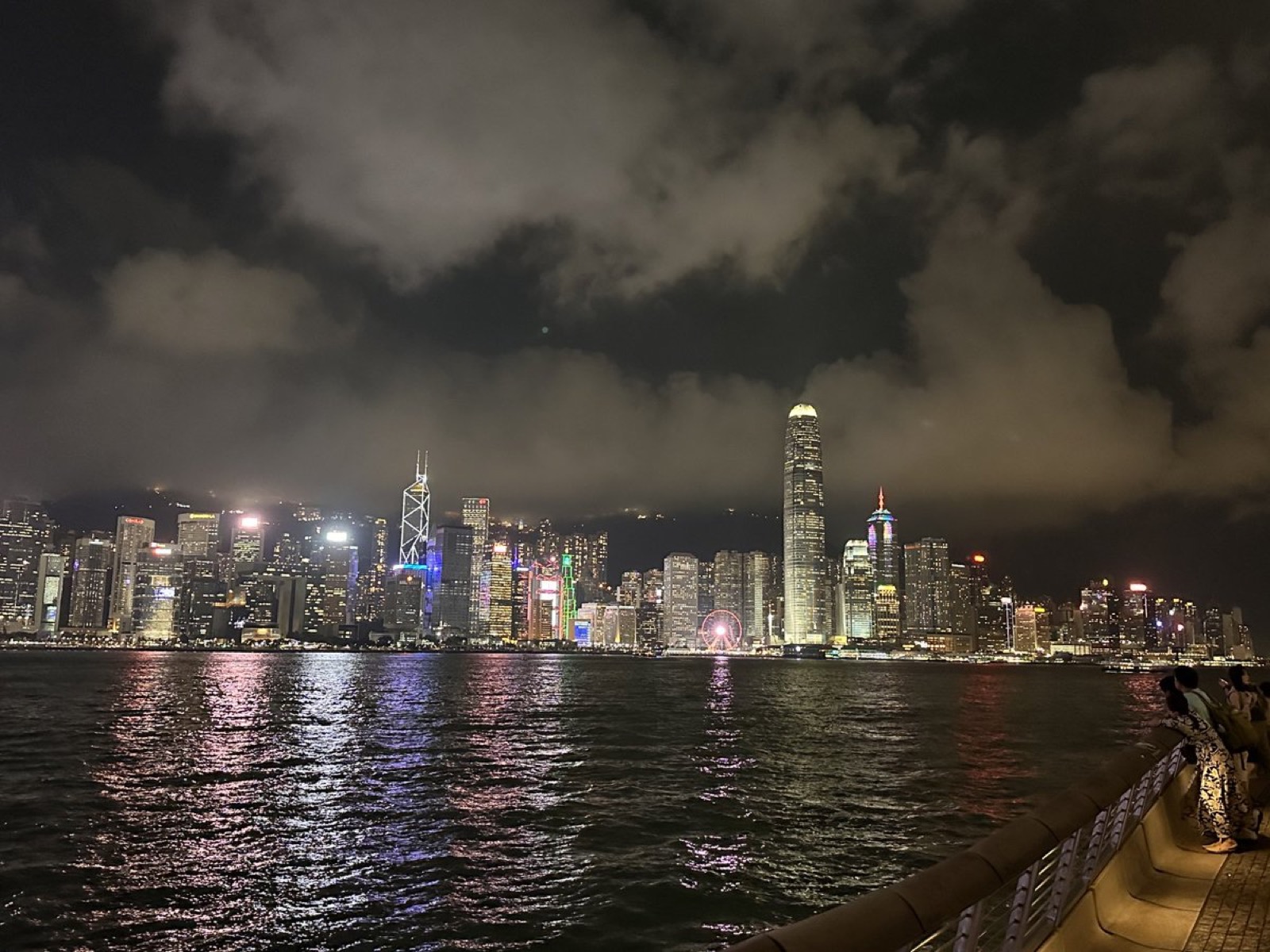
What I learned turned out to be the old Guangzhou Cantonese of the previous generation, not the Cantonese Hong Kong people actually spoke. I could never get rid of the last bit of my accent. People told me not to worry. Plenty of Hong Kong's big bosses came from Shanghai.
The hardest part of a language is that it's tied to a culture. On weekends I minded my grandfather's stamp shop on that side street in Causeway Bay, and often had to deal with local hooligans. I learned plenty of Cantonese curses there. One day someone said to me, "Go eat chicken-pot shark's fin!" It stumped me completely. I shot back, "After you."
Later I found out it came from a film, where somebody thought the word "die" was too ugly and said "go eat chicken-pot shark's fin" instead. By accident I'd told him: you die first.
Once at a company event I sat next to a fashionably dressed young woman. "Excuse me, miss, may I ask your surname?" I said politely. The whole room burst out laughing. She was the reigning Miss Hong Kong, the most famous face in the city. Everyone knew her name except the mainland boy.
Falling in love with her first
For the better part of a year I worked mainly on Cantonese. People around me still thought it sounded odd, but in the end they'd guess I came from some part of Guangdong, they just couldn't say which part. That was good enough.
Then I turned to English, all four skills at once. Luckily Hong Kong was bilingual. Every government or shop notice had to be in Chinese and English. I made myself read only the English, and only looked at the Chinese next to it when I truly couldn't understand. I watched the news first on the Cantonese channel and then on the English channel of the same station. Often the stories ran in the same order.
When someone tells you something you already know, in a language you don't know well, you can guess most of it. My first English novels were all about China.
I went to a Christian youth group at an English-speaking church. One evening a week, everyone talked about their experiences and confessed the things they shouldn't have done and asked the others for help. It gave me a chance to speak English in front of people, and everyone there was eager to help. Remember, I believed in nothing. I went anyway, and I was grateful.
I put a classified ad the size of a matchbox in the South China Morning Post, looking for a language exchange partner who wanted to learn Chinese. No money involved. Each meeting was in two halves, one all English, one all Chinese. I brought an English paper, he brought a Chinese one.
Even when I went out to relax, I deliberately went to bars where English speakers gathered, in those days mostly in Wan Chai. After a couple of drinks, nobody cares about your grammar or your pronunciation. I was like a fish in water.
My English shot ahead because I fell in love with "her" first, and only then did "she" start to love me back.
— July 15, 2023
My father, who taught English, thought I'd found a foreign girlfriend. In fact I'd never had eyes for anyone but Chinese girls, and anyway I had no time for a girlfriend. Every so often I'd spend a few cents at a newsstand on a couple of photos of the same film actress and send them home, to fool my mother into thinking I wasn't lonely.
Time, money, manpower
My favourite places when I was new to Hong Kong were two institutions: the British Council and the Hong Kong Management Association.
In class the teacher would write three words on the board: time, money, manpower. Think of them whenever you do anything, he said. Otherwise you won't succeed, or if you do, it won't mean anything.
In the early 1980s I was living on my own in Hong Kong, as poor as you can be. My friends my age still envied me, because I could come home at any hour of the night, or not at all. Their families lived in tiny flats. I had no degree, no family money and no connections. But I had one tremendous resource: endless time. Apart from studying, I put everything into making friends, especially with people whose backgrounds were completely different from mine.
Fruit flies and mansions
Personal computers were just arriving in Hong Kong then, and only rich people could afford them. Ordinary people bought kits and soldered them together at home. I did that too, with an Apple II kit from a shopping arcade.
Back then the sales pitch for computers was something you'd never believe today. It was all about 1997. Your flat can't move, but your computer can. "When the Communists come they'll take your flat, but they can't take your computer."
California was called the orchard of America, and besides Apple there were all kinds of computers named after fruit. Lots of young Hong Kong people sold California "fruit" part-time. I did something different. I sold a German personal computer brand called Medfly, which is a Mediterranean fruit fly. It sold quite well. Some people thought: if you buy the fruit, I'll buy the fly that eats it.
Every personal computer had to be installed by someone who came to your home. I installed computers in a lot of Hong Kong mansions and villas. It was my first lesson in aspiration: it's good to be rich.
No talk of state affairs
My first part-time job in Hong Kong was showing visiting officials from the mainland around the city. It paid next to nothing, but it let me watch two ideologies collide up close. One thing they could never understand. Why did a tiny place like Hong Kong reserve parking spaces for disabled people? Why give disabled people so many rights?
There wasn't even a phrase "political correctness" then. I'd answer, a bit impatiently: without these things, it wouldn't be Hong Kong.
I had a friend with a Taiwan background who kept taking me to rallies where angry crowds talked about retaking the mainland. After the Cultural Revolution I had no interest in anything with raised voices. I was waiting for it to end so we could eat.
Afterwards we went to a peculiar little restaurant decorated like a village, with straw hats and straw sandals and a plough on the door. I always tried to sit at one particular table, because on the wall above it was a notice written in brush calligraphy. It was a pun on the old teahouse sign, "No talk of state affairs." The character for "stop" had been swapped for one that sounds the same and means "cultivate." I used it to remind my friend: enough politics. Let's talk about how to make money.
I did want to see Taiwan, though. As a child in Shanghai, we had some writing paper printed with a beach and coconut palms. My grandfather told me it was a Chinese place, but I'd never be allowed to go there in my life. In Hong Kong, if you told me I couldn't go, then I had to go. My first application was refused, after a strange interview in a coffee shop, where a man asked me odd questions and disappeared while I went to "phone my lawyer." A year or two later, with help from one of those old National Assembly delegates, men who represented mainland provinces they hadn't seen in decades, I finally went. I've been dozens of times since.
Looking back
Hong Kong people, I decided after a few years, don't really exist. Almost all of them came from somewhere else, most from the mainland, the rest from all over the world. A "Hong Kong person" is someone who has been ground down and remade into something particular.
The first thing about Hong Kong people is: no one asks where a hero came from. They don't care whether you came from the mainland by jumping a train, swimming or climbing over a mountain. Once you're here, you're a Hong Konger.
— July 16, 2023
I made a goal for myself then: to be more Hong Kong than the Hong Kong people. At first I worked on the "hardware": the clothes. Men had permed hair then, big curly perms, and flared trousers wider than the length of your shoe. A light-coloured suit for formal occasions, a black leather jacket in winter, a checked shirt in summer. Later I worked on the "software," the way of thinking. That took much longer. In Hong Kong it took me twenty full years.
The young man who didn't recognise his own name in the border hall became, in the end, someone people couldn't place. Some part of Guangdong, they'd say, but which? I think that was the best thing anyone could have said about me. A Boy from nowhere in particular.
Then an American company came looking for people.
Little Shanghai Friend
The early 1980s. A job interview in permed hair and flared trousers, a regional president who studied drama, Mrs. Wang's nickname for the youngest Shanghainese in the office, Deng Xiaoping and An Wang failing to understand each other in 1984, and a backpacker's America, kind and cruel on the same afternoon.
One day in the early 1980s I went to a job interview dressed exactly like the photograph I still have in my album. A light-coloured suit, all one colour. Flared trousers, and under them pointed leather shoes. My hair permed into tight curls, so it looked like I was wearing a big hat. It was drizzling, so I carried a long umbrella and used it as a walking stick.
In today's internet slang, I was very "IN."
In those days how you dressed mattered enormously. And you had to let them know that while they were choosing you, you were choosing them.
The company was the wholly owned Hong Kong subsidiary of an American firm, Wang Laboratories. Wang Computers. I knew they valued personality, so my letter was written for them and nobody else. None of that stiff, formulaic stuff. If you buy a book of sample cover letters from the Commercial Press, you're finished before you start.
What annoys you?
The man who interviewed me wasn't a department manager. There was nobody from personnel with him. Who was he? It turned out he was the president of Wang's whole Asia-Pacific region. We did the interview in English, and near the end he asked me a question.
"What kind of people really annoy you?"
I said: people who are always asking what you studied and what diplomas you have.
He said, "Guess what I studied." And then he answered himself. "Drama."
The Asia-Pacific president of America's third-biggest computer company hadn't studied computing at all. He had studied acting.
He said he had one request. He hoped I'd stop looking for other jobs. He just hadn't decided which department to put me in.
In the interview he'd seen how crazy I was about computers. My hobby was programming in BASIC. I'd go to the Golden Arcade to buy parts for an Apple II and solder them together myself. And I was stubborn about everything. They liked people like that.
As soon as I walked out I found a public phone and called a buddy to tell him I'd got it. "How do you know?" he said. Let me be modest here. The big boss had grown up in Shanghai. So had I. That's why the interview worked.
Then I said: "Oh no. I forgot to ask about the salary." He'd only told me the position and the grade. But it couldn't be bad, because while I was waiting I'd seen a huge pantry stocked with Nescafé and Coca-Cola and everything you could want to eat and drink.
The youngest Shanghainese
Back then Causeway Bay had three big department stores, and one of them was called Mitsukoshi. Three floors above it were Wang's Asia-Pacific headquarters.
There were a few older people at the company who spoke Shanghainese, and I was the youngest. Mrs. Wang, the wife of the founder, Dr. An Wang, couldn't remember my name. So she called me her Shanghai xiao pengyou. Her little Shanghai friend.
I love that name. It was given carelessly, by someone who couldn't remember my real one, and it was one of the warmest things anyone ever called me. In an American company in a British colony, a Shanghai lady looked at me and saw a Shanghai child.
Everybody around Dr. Wang liked to talk about how rich he was, and how stingy. For the company's top people, playing mahjong with the Wangs was the dullest thing in the world, because the Wang household had a limit of twenty US dollars. If anybody won or lost more than that, it didn't count. Otherwise Mrs. Wang would say, "An Wang has been gambling."
Once in Beijing, Mrs. Wang asked where she could buy Shaoxing rice wine. I said we should ask our Shanghai colleagues to help. Then I thought again. Boston's Chinatown has it. Mrs. Wang answered me in Shanghainese:
"Cheeky boy. It's far too dear there."
Too dear? This from a woman who flew to China on a private plane.
Dr. Wang always wore a bow tie. He never once wore an ordinary necktie. Some people said he owned only three. Others said more than three. I never found out.
Beijing, 1984
I remember a day in 1984. Headquarters called and said, "The big boss is coming to China to meet the top leader." Everyone knew the big boss was An Wang, and the top leader was Deng Xiaoping.
At the time Dr. Wang was probably the richest Chinese person in technology in the world. China wanted its Four Modernisations, and computerisation was the most important of all. The top people in Beijing took his visit very seriously.
By then I was in Beijing. The company had printed me a business card with a very shiny title. In reality I was a small fry. But I took every job I was given very seriously. I could help the company grow its business, help China modernise, and get myself a raise and a promotion, all at once.
Trouble started before Dr. Wang even arrived. The civil aviation authority wouldn't let his foreign-registered plane fly a domestic route from Beijing to Shanghai. So he had to fly Beijing to Hong Kong, then Hong Kong back to Shanghai. All that time and fuel wasted.
At the briefing with the protocol department of the Foreign Ministry, they explained everything in great detail, including exactly where the line was for the handshake in front of the cameras. Deng would stand on the side with a raised platform. Dr. Wang was a short man too. Was that really necessary?
At the banquet Dr. Wang was to give a speech in Chinese, and even that was a challenge. I found he couldn't read a lot of characters. Words like "bridge." And at the meeting itself, Deng spoke Sichuanese and Dr. Wang spoke Shanghainese. It was a chicken talking to a duck. Even the interpreter couldn't help.
Deng said to Dr. Wang, in a very heavy Sichuan accent, "Your family's business is big. Come back and do some good." I'm sure Dr. Wang didn't understand a word.
I said to a colleague: Shanghainese into Sichuanese, Sichuanese into Shanghainese, isn't that exactly my specialty?
In that photo, I should have been sitting in the middle!
— July 7, 2023
A boy raised in Shanghai by a capitalist grandfather and in Sichuan by teacher parents. For one afternoon in 1984, I was the only person in the room who spoke both sides. Nobody asked me.
Stamps for the students
The volunteer work I did most in those years in Beijing and Shanghai was helping university students go to America to study. I helped with everything: changing money for dollars, making international calls, sending faxes, booking flights, paying fees, arranging for someone to meet them at the airport. I saw their excitement and their joy up close.
Students in those days, people joked, came in three factions. The mahjong faction. The dancing faction, meaning dating. And the TOEFL faction. The third group knew exactly what they wanted. Students at the famous universities wanted one thing most of all: a catalogue or yearbook of American universities. What they worried about most wasn't tuition and wasn't English. It was the money for the stamps to mail applications to hundreds of American universities.
Many of them got their tuition waived. Some got full or half scholarships, including living costs, even the plane fare. And as I remember clearly, the English of most of them was at primary-school level. Those American universities wanted to correct old injustices and also wanted more variety among their students. Who wouldn't want to plant a few little flags in China's big cities?
A lot of the Chinese families in North America today started with a stamp and a kindness.
A backpacker's America
Working for an American company at its Asia-Pacific headquarters, I had a chance every year to go to the United States for the annual meeting and for training. I used every one of those trips. I put on jeans, put a backpack on, and travelled practically all over America. The city I went to most was the capital, Washington.
It was dirtier and more chaotic then, but there was so much to see.
One day I asked a man on the street for directions. He was a veteran who had lost a leg. He had no money, but he was extraordinarily hospitable, and he insisted on taking me to lunch. We ended up at a big church, singing hymns with a crowd of strangers, and then sitting down to a proper meal. The food was really quite good.
Another day I was sitting on the grass near the White House reading a book when someone came over to pick a fight. Was I Korean? "You people made Americans go and fight in your country, and a lot of us died." He grumbled on and on. I told him no. "Then you're Japanese," he said. "No good either." I remember he used the insulting word for Japanese.
On the steps of the Capitol, a stranger came up and greeted me in perfect Mandarin. A typical-looking American. It was his wife's birthday, and his present for her was to run several miles, to stay healthy for her. Is that how Americans give presents? He had never been to China. He'd learned Chinese at Harvard. He ran a chain of thirteen hotels in Honolulu and invited me to come and visit. We became good friends. He explained America to me and I explained China to him, and of course we visited each other.
Hawaii, 1984
I did go to Hawaii, in 1984, on my own. On the plane I met a tour guide travelling with a group of shareholders from a Taiwanese textile mill, and decided to join their tour.
At the very first buffet lunch after we landed, something went wrong. An elderly Taiwanese gentleman in a suit and tie, on that hot island where I never saw anyone else in a suit and tie, fainted from the heat. I thought it was a small thing.
Then a whole crowd appeared in front of me, all in uniform. Police, security, paramedics, medical staff. And somehow I found myself the interpreter on the spot. When the guide went off in the ambulance with the old man, I was surrounded, including by reporters. People from a charity gave me their card and offered to pay his medical bills. Most of the others just wanted to know how the old man was.
At that moment I thought of things I had seen in China. A young woman on a bicycle, hit by a car, lying for hours in front of an embassy in Beijing. And bodies on a highway, run over by car after car. That Americans valued a life so much moved me deeply, and I said some emotional things to the people around me, the reporters included.
Before we'd even finished lunch, the old gentleman was back at the table eating.
Looking back
America, for me, is a place I fell for because I misunderstood it, and was disappointed by because I came to understand it. Honestly, the people there are as different from one another as heaven and earth. A one-legged veteran who buys a stranger lunch, and a man on the White House lawn who calls the same stranger a slur. A crowd in uniform rushing to save an old man who only needed some shade.
That young man in the flared trousers believed what he saw at that lunch in Hawaii. He was right to. He just didn't know yet that he'd also see the other side.
Mrs. Wang's little Shanghai friend had a lot to learn. He was about to learn most of it by selling.
Salesman
The 1980s into the 1990s. A computer salesman in Beijing who watched three future leaders of China at close range, a move from 'the Wang household' to 'the Sun household,' a resignation over who a company would hire, flowers from a rubbish bin on Huaihai Road, and the decision, before 1997, to choose Canada.
There's a famous American play called Death of a Salesman. It's a very sad story about the American dream.
I was a salesman too. That's the plain word for what I did, under all the shiny titles on my business cards. But in a particular moment of history, a salesman like me could walk into the offices of the men running the most important ministries of a country, and some of those men would end up running the country. That's an odd thing to have happened to anybody. I think it's worth remembering. If I've got any of it wrong, please do correct me.
A box that was too small
Selling computers to China then was very complicated. Besides all the Chinese approvals, there was an international body called CoCom, the Coordinating Committee in Paris, whose job was to restrict technology exports to Communist countries. By the time a computer arrived in China it had often been superseded several times.
One day the computer for the Ministry of Water Resources and Electric Power arrived. It was smaller than the one on the contract by a size. In every way that mattered it was the same or better: more memory in the main unit, more terminals it could connect. But the people under the minister who handled computers didn't dare sign for it. The minister in charge couldn't make up his mind either.
That minister was Li Peng.
I watched him get so anxious there was sweat all over his nose. All because that metal box was a little smaller.
— July 11, 2023
In the end they had to ask the old minister above him to decide.
I'll tell you how I see it now. The man who would become premier of China, sweating over a box that was better than the one he'd ordered because it didn't look the same as the paper. Looking back, I feel a little sorry for him. Somewhere in that system he had learned that the safest thing is never to decide.
A negotiation that turned into an opera
At the same time, Wang was negotiating a joint venture in China. Because it carried the Wang name, the American side wanted to be the majority shareholder, over fifty percent, and wanted it based in Shanghai, An Wang's hometown. The two sides couldn't reconcile. China at that point had no joint venture law at all. How do you negotiate a Sino-foreign joint venture without one? Everything had to be nodded through from above.
The minister of the electronics industry then was Jiang Zemin. In my view, he couldn't make a decision about anything at the time.
On Wang's side was a woman with a doctorate in history from the University of Hawaii. I remember her talking to Minister Jiang in English and Chinese, switching between Shanghainese and Cantonese too. They had come to negotiate a company. What they ended up agreeing was to co-sponsor a Peking opera. The University of Hawaii had an arts troupe that performed classic Peking operas in English, and the two sides agreed to put one on at a famous old theatre in Beijing.
"Whose name is Zhu?"
The State Economic Commission was run by Zhu Rongji. China always had a huge Planning Commission and a small Economic Commission. Zhu's people wanted Wang computers to calculate financial data, including the reserves and circulation of the special foreign exchange certificates. At that time Tsinghua University was setting up its school of economics and management, and Zhu was its honorary dean. Wang donated a minicomputer, and the commission wanted to negotiate after-sales support.
Why negotiate over a gift? Zhu wanted to be sure the system would actually work. He said: why are you giving this to me and not to someone else? There must be a commercial interest in it, right? He was right.
Then, in the middle of the negotiation, he said: who's the boss here? Me, of course. The one whose name is Zhu.
That sounds ordinary today. At the time it was jarring, coming from a Chinese official. My colleague and I looked at each other. This man is the future of China.
When those three men later ruled China, they had nothing whatsoever to do with my life. But in their decisions, I'd see shadows of what I watched back then.
Put the computer in front of the person
Typing used to be very hard, especially in Chinese. Later all of that was called word processing, and Wang was the first to revolutionise it.
Other companies said they were "putting people in front of computers." Our slogan at Wang was the reverse: "Put the computer in front of the person." Everyone else needed two or three keys to do one thing. Wang put the common functions on a single key.
I was so thoroughly poisoned by Wang that when I left to join another US-listed computer company, I made a strange demand while negotiating my contract. I asked them to install a Wang personal computer for me, because it was so good at word processing.
Colleagues told me later that machine became the company's shame. A competitor's product sitting in the middle of the office, reminding everyone every day of the company's weakness.
From the Wang household to the Sun household
The company I joined after Wang was called Sun. My relatives back home said I'd left "the Wang household" and gone to "the Sun household." Old Wang's family, old Sun's family, sounds like I'd moved from one neighbour to another. Either way, I was working for somebody.
They had no idea those were giants of the American computer world. Sun stood for Stanford University Network. Engineers today might not know the name, but they know its inventions, like Java.
At home I tell people I'm an IT professional, and my sons laugh at me. Yes, what I know has long gone rusty.
But don't they say a starved camel is still bigger than a horse?
— November 23, 2023
Years later I took my sons to visit Facebook's headquarters. Besides discovering the food was excellent and cost nothing, I found the whole campus was Sun's old headquarters. Sun was bought by Oracle in 2009 and left that piece of Silicon Valley. When Zuckerberg moved in, he renovated everything, but he deliberately kept Sun's old sign. He just turned it around and put "Facebook" on the front.

He wanted to remind himself and everyone who worked there: no matter how brilliant a company is, it can fall into the abyss at any time. That was Sun's fate.
The trade show
I'll tell you one thing from those years that I'm proud of, though it cost me.
I was working at one of the biggest American computer companies, and I was very proud of the company. Then, at a trade show, an American told me: your company doesn't hire Black people. It was the early eighties, and that sort of thing wasn't unusual. I still went and asked my boss about it. He said there were Black employees on the factory floor.
Not long after, I resigned.
I don't want to make it sound braver than it was. But I had been the boy whose family class didn't fit in the box on the form. When somebody told me which people a company wouldn't put in the box, I couldn't stay.
A company of one
Later I was doing management work for a US-listed company. Two families once asked me to sit in on serious family meetings about whether to emigrate. One was in Shanghai and had never been to America. The other was in New York and had lived there ten years. I suppose they asked me because I knew both worlds.
The Shanghai family told me language wouldn't be a problem, because the wife had graduated in English from a teachers' college. I said: my father is a university professor of foreign languages and has worked as a UN translator, and as far as I know he'd still have problems. My advice: you're badly underestimating the difficulties. Don't go yet.
The New York family were actually discussing whether to go back to China. In the middle of it I suddenly asked them about Michael Jackson, the biggest singer in the world. Neither of them knew who he was. My advice: if you won't take part in the place where you live, go home.
On July 9, 1992, I registered a company of my own in the United States. And in those years I was also doing business in Shanghai, often. My office was in a big hotel. I ate on Huanghe Road.
The flowers on Huaihai Road
There was a lawyer I used to ask for advice, one of the first lawyers in Shanghai after the reforms. He hadn't gone to a law school. He'd studied law at a night university. One day he asked me a favour. China had no credit cards then, so would I pay his daughter's TOEFL and GRE fees? When I saw her scores I was stunned. A perfect TOEFL. She was sitting the graduate entrance exam without having gone to university.
I was still single. I asked him: how did you teach your child? He said: we had no money, but we had plenty of time. If we talked about trains, I carried her to the station. If we talked about frogs, I carried her out into the fields to catch frogs.
I remembered that, much later.
One year in Shanghai, on Valentine's Day, I realised to my horror that I had forgotten to buy flowers for my girlfriend. Right then, on top of one of the shiny rubbish bins on Huaihai Road, sat a beautifully wrapped bouquet of fresh flowers. Some poor boy had obviously been turned down and left it there.
I didn't ask anyone. I picked it up and put it straight into her hands. I did it right in front of her.
She just smiled. I, of course, smiled even more. In that instant I knew I could spend my life with her.
— May 3, 2023
Some people won't understand that. Don't force them.
The editor
One more Shanghai story from around then, from more than thirty years ago.
A Shanghai newspaper reported that three "outsider thieves" had been caught. Outsiders meant people from other provinces. I complained that you couldn't put it that way. They said it was a fact.
So I asked the editor-in-chief: one day will you report that you've caught a single-eyelid murderer? Unless you can prove that locals never steal, and that no murderer ever had double eyelids.
He didn't understand at all. I believe he understands now. A Shanghai paper wouldn't write that today. I hear that these days, the people living in the mansions are outsiders.
The squat test
Before 1997, the most serious topic in Hong Kong was whether to emigrate, and where. People had a test: squat by the side of the road and pretend you have a stomach ache, and count how many people stop to ask if you're all right. Then decide whether you want to live there for the rest of your life.
Neither I nor anyone I knew actually did the test. I chose Canada on impression.
Looking back
Mrs. Wang's little Shanghai friend had become a salesman with a big title, a manager, a company of one, a man who argued with editors and took flowers out of bins. He had stood close enough to see the sweat on a future premier's nose.
What strikes me now is how much of it was luck and timing. A Shanghainese boss in Hong Kong. A Sichuanese leader in Beijing. A computer that was a size too small. And what stays with me isn't any of the big names. It's the lawyer carrying his daughter to the station to look at trains. Later I'd try to be that kind of father.
But first I had to arrive somewhere where nobody knew my title at all.
Water Fish
Choosing Canada, probably arriving around 1998. A free dinner with a provincial politician, an interview in New York that earned full marks, a share of a provincial debt, a classical music station, and a car insurance quote that taught him he was a 'water fish,' a sucker who pays whatever he's asked.
In Cantonese there's a word for someone who gets fleeced: seui yu, a "water fish." I don't know exactly where the expression comes from. I know exactly when I became one. It was about a week after I landed in Canada.
But let me go back a little, because I didn't arrive by accident.
A rough-and-ready country
For a long time my impression of Canada was a huge country with very rural people. Once, at an annual meeting or a training course for an American company, I got along well with a Canadian colleague and we spent a weekend together. He helped me run an errand. A friend had asked me to buy some cassettes, Jane Fonda's aerobics workout. He asked me what on earth anyone wanted that for. Yes, I thought, Canadians are rough and ready. They drink straight out of the can without wiping the top. That was Canada to me. Not a place I imagined living.
Then, sometime in the 1990s, a friend with Canadian connections phoned me and asked me to come and fill a seat at a dinner that evening. A free dinner. Who says no?
I arrived at a dazzling banquet hall and stopped in surprise. The host was a provincial premier from Canada's biggest province, in a suit and casual shoes. It was an Ontario investment promotion event in Hong Kong, to attract investment to the province and help its exports.
His name was Mike Harris, the Conservative premier of Ontario. He had been a ski instructor and a schoolteacher, and people liked to tell a story about him. When he was a teacher, children didn't want to eat the lunches they'd brought from home, so he encouraged them to swap. The kids' appetites came back, and the parents started putting more effort into the lunch boxes.
He was a seasoned politician and a first-class persuader. I already had plans to emigrate. I took in everything he said.
The interview in New York
My immigration interview was at the Canadian consulate in New York. The immigration officer and I got along very well. At the end he walked me to the door. He encouraged me a great deal and said I'd certainly have a fine future in this new country.
Many years later I requested my file and found he had given me full marks.
He would never see me again. He didn't have to walk me to the door.
My immigration category had a condition: within two years I had to set up a company and employ at least one Canadian who wasn't related to me. Only then would the condition on my status be lifted.
An endgame
Here's how I thought about it then, and how I still think about it.
Any immigrant faces an endgame on the chessboard. How bad an endgame depends on your luck.
— December 2, 2023
When I was a boy on that university campus inland, every summer there were games of Chinese chess everywhere. The bigger the crowd around a board, the better the players. And there was a golden rule: if you're a new spectator, don't open your mouth. Otherwise you'll be chased away. How long you stay quiet depends on how complicated the endgame is.
The easiest mistake new Chinese immigrants make in Canada is to think the locals are "stupid," because they don't understand the laws and customs. I watched many of them lose a lot of money here before they learned. The figures in those days showed that half of all brand-new businesses in Canada closed within two or three years, and half of the rest within two or three more. Some of what was left didn't care whether it made money.
So after thinking it over, I decided my company would be as small as possible and run for as short a time as possible. Once I'd met the immigration condition, I'd either find a job or work for myself. Because you can't read an endgame in a short time. I've never believed I'm cleverer than the people already playing.
No Canadian experience
Not long after, I was job-hunting like a new graduate. I was excited about it. I wrote a résumé, prepared for interviews. And I found that Canada, like Hong Kong, kept outsiders out. They had a stock phrase: "You don't have Canadian experience."
I'd answer, "But I have international experience."
It didn't always work. But I liked saying it.
A share of the debt
The first work I did after emigrating was helping local wineries sell a Canadian speciality to Asian countries: ice wine. Young people with mainland, Hong Kong and Taiwan backgrounds did internships with us, with the government paying their wages. I never imagined we could sell such expensive ice wine in such quantities, shipped to China and other Asian countries in temperature-controlled containers.
That clever premier gave me my immigrant life. He also gave me a debt. On my first day in Canada I did a calculation. Ontario was deep in debt in those years, so I took the provincial public debt and divided it by the number of taxpayers in the province. My share came to about one hundred and seventy thousand Canadian dollars.
I had emigrated to pay off a debt. Call it paying back Dr. Bethune.
Every Chinese schoolchild of my generation learned an essay about Norman Bethune, the Canadian doctor who died in China helping the Communist army in the war. Canada had sent us a doctor. Now China was sending Canada a taxpayer. It seemed fair.
Ninety-six point three
Not long after I arrived, somebody interviewed me and asked what attracted me most to Toronto. My answer was: "96.3."
That's a Toronto FM station that plays classical music around the clock. Its slogan, repeated over and over, was "Beautiful music for a crazy world."
They played a lot of the Toronto Symphony, whose advertising told people to come straight from work, jeans and work clothes welcome. They took music people thought was out of reach and gave it to everybody.
It sounds silly to say a radio station was one of my main reasons to emigrate. But it was.
Water fish
About a week after I arrived in Canada, the first thing I did was buy a car. I had to get insurance before I could drive it away.
I had the car salesman drop me at a Chinese shopping centre and picked a Chinese insurance agent at random. He spoke every dialect and was enthusiastic about everything. Why is car insurance so expensive here? I thought. Maybe it's the long winters. I told myself I was beginning to contribute to the Canadian economy.
Back where I was staying, there were car insurance ads on TV. I had nothing to do, so I phoned one of them, just to practise my English.
The quote gave me a fright. It was forty to fifty percent of what the Chinese agent had charged me.
My case was simple. The car: make, year, model. The driver: sex, age, address, years of driving, and a claim-free record from Hong Kong. How could the prices be so different? Was service in my own language really worth that much?
I thought I'd started contributing to the Canadian economy. I didn't realise I was a freshly arrived water fish.
— October 19, 2022
That's the name for this chapter. Not given to me by a Canadian. Given to me, in effect, by one of my own, who saw a new arrival coming and knew exactly what he was worth.
Two small stories
Before 1997, I told you, people in Hong Kong talked about a test: squat by the road, pretend to have a stomach ache, and count how many people stop. I never did it. I chose Canada on impression. Was I right? Let me give you two small stories from many years later, and you decide.
One day I was at my family doctor's. The person who opened the waiting-room door was a white-haired old man, and he was helping a very old father who could barely walk. You see that sort of thing everywhere in Canada. I and two other people in the waiting room stood up at almost the same moment, wanting to help somehow, or at least to give up the seats closer to the door.
Another time, on Yonge Street, I'd bought a case of beer and was carrying it on my bicycle. At a big intersection I lost control of it and the cans spilled and rolled everywhere. Just then the lights changed and all the cars stopped. And four or five passers-by, all hands, picked up the cans one by one and put them back into my hands.
Chosen
I talk to strangers on aeroplanes. My wife admires this. Whether the person next to me is eight or eighty, I can chat with them for hours. If there's nobody beside me, I go and talk to whoever is waiting outside the toilet.
Once my neighbour on a flight was a fellow Shanghainese. He kept saying, "those Canadians," yi la Jianada nin. I asked him how long he'd been in Canada. "Seventeen years," he said. He'd long since become a citizen.
I don't know whether that's a failure of the country or of the man. How could so many years not give him a sense of belonging? If people like him aren't Canadians, then hardly anyone is. Canadians come from every country on earth, the way people in Shenzhen come from every city in China.
I truly thought of myself as Canadian from the first day I arrived. My birthplace was given to me by my parents. The place I emigrated to, I chose myself.
— March 25, 2023
Looking back
When I look back at that water fish, I'm fond of him. He'd been a manager of men and a man who registered companies in America. He arrived and got cheated on car insurance in his first week by someone who spoke his own language, and he found out because he was practising his English on a TV advert.
That's what emigrating is. You press a reset button. Everything you were is wiped. You start again as a fish in someone else's water, and if you're lucky, you learn to keep your mouth shut at the chessboard until you can see the game.
My wife spoke no English. She couldn't drive. The children were small. I needed to earn Canadian dollars, speak good English, and get into the society around me. And I needed to do all three without leaving the house.
So I went down to the basement and started selling people their own names.
Vic
Early years in Canada. A basement business selling people their own names on the new internet, a baby on his back during client meetings, a customer who argued about the price in the wrong direction, a junior job selling laptops where 'Vic' was easy to remember, and an island where his wife learned to argue in English.
My name, like everything else about me, got shorter in Canada.
In a big electronics store, customers said it back to me across the counter, and somewhere in those months I stopped being Viktor or Wong or anybody's little friend and became just Vic. Three letters. I'll tell you how that happened. But first I have to tell you how I made a living selling other people's names.
Selling names
When I arrived, the internet had only just started. People often didn't know what it was. If you said "open Windows," someone really might go and open a window. If you said "mouse," they'd wonder where the mouse was in the room.
I'm not making this up. Once I was training a group of real estate agents and asked them whether they had email. One or two said yes. Most said no. And one said he'd bought it but didn't know where he'd put it.
Canada was honestly behind on the internet then. It felt a bit worse than Beijing or Shanghai. Plenty of big companies printed the same shared email address on everyone's business card. I told people around me: you need your own email, and more than that, your own domain.
I'd registered my own domain in 1996. Ordinary Canadians had no idea where a domain came from. I spent hours explaining ICANN, which assigns them, and Whois, the database.
So I simply opened a business at home: selling domain names, selling hosting, building websites. To my surprise, it did well. You told a Canadian professional, a lawyer, a doctor, an accountant, a real estate agent, that he or she could own their own name dot com, and their own website.
The margins then were enormous, ten or even dozens of times. A domain cost a few US dollars to register. Point it at a free web page and you had a permanent business card, open twenty-four hours a day, that the whole world could see. People who didn't understand it thought it was magic.
Many Toronto people whose names were worth something became my customers, especially well-known Chinese people. By then the Western names had mostly been taken. Bill Clinton had registered his long before. But lots of Chinese names were still lying there, unclaimed.
It was easy to persuade people then. I'd say the internet was free land on a new continent. You just spend a little money and plant your sign.
I hired two part-timers, one who spoke Persian and one who spoke Hebrew, to help me sell names.
People's own names plus a ".com," and you could make money from it. A strange way to earn a living, isn't it?
Think about who was doing this. A man whose surname was borrowed from an orphanage, whose first name came from a Russian ward-mate, who had answered to Boy and little friend and water fish. In a basement in Ontario, he was selling people the rights to their own names.
A baby on my back
I met clients in the basement of our house, sometimes with a baby strapped to my back. It was very touching, I thought: I'm earning money for milk powder and nappies. Looking after the child and doing business at the same time. To my surprise, clients liked it.
The tool was simple, a part of Microsoft Office called FrontPage, which generated web pages automatically. What you see is what you get. The person I traded tips with online about using it was an eight-year-old Canadian boy. For him it was a hobby. For me it was feeding a family. It didn't pay much, but I was free, and I could be with the kids.
Building a website was the easy part. The hard part was understanding a client's taste, which colours they liked together. I had a secret for that. I bought nearly every brand of beer you could get in Canada and kept them at home, and when a client came I'd ask which combination they liked. Heineken, for example, is mainly green with a touch of red.
Then I'd praise them. "Excellent taste! The brewery spent half a million dollars on design and market research for that."
Paul
One client left a deep impression on me. His name was Paul. He studied the Shaw alphabet, the new alphabet George Bernard Shaw left money in his will to promote. People said a fund had been set up, and anyone in the world researching Shaw's invention could apply for a grant.
We were halfway through building his website when Paul suddenly raised an objection about the price. I thought to myself: no wonder people say Jews are stingy.
Then he said: may I pay you a little more?
I picked up the baby beside me and said, "Of course, you're very welcome."
I believe that small thing did a great deal to cure the prejudice of this first-generation coder.
— December 1, 2023
I tell that story against myself on purpose. The man who'd been called a capitalist's grandson and a mainland boy had his own stock picture of other people ready to go. It took Paul about ten seconds to break it.
The reset button
When I looked for a job, I didn't ask for much. Besides supporting the family, I mainly wanted to get into mainstream society.
That year the American company Best Buy had just bought the Canadian chain Future Shop and needed a lot of staff. I was prepared to take a step down. The job I got was the most junior kind there is. All my corporate experience was wiped clean.
Emigrating is a complete reset button.
— December 2, 2023
They sent me to the store floor to sell laptops.
I'd been in business a long time, and I had the professional manager's habit of looking for things to improve wherever I went. So I loaded every laptop I was selling with that year's movie trailers. Dozens of computers, each one playing a different film. It was quite a sight. The store manager asked me whether there was a copyright problem. I said don't worry, be glad they're not charging us for the advertising.
It turned out Canadians hadn't realised you could watch movies on a laptop. Sales went up for no reason anyone could explain. And I was voted Best Employee, for several months in a row.
There was another reason, which I didn't expect. Many of my colleagues had names customers found unfamiliar, Mohammed for instance. Mine was the Christian name Vic. Most customers could remember it, so when it came time to vote, they voted for me.
My name won me an award. Not my skill, not the trailers. Three letters that sounded familiar to the people voting. It's not fair to Mohammed. It's also the truth.
Friends from Iran
At that store I made many friends from the Middle East, mostly immigrants from Iran whose mother tongue was Persian and whose religion was Islam. They took me to their restaurants and taught me a great deal about their culture. I nearly became one of them. My prejudices about that corner of the world changed completely. They told me that in front of their parents they'd never eat pork, but behind their backs they ate anything.
I told them devout Buddhists aren't allowed to eat any meat at all, so their faith was the friendlier one.
Slowly I learned how to get along with people from completely different backgrounds. That was the most important reason I'd wanted a job in the first place.
Teaching the old
After I came to Canada I taught computers to adult classes of non-Chinese students. A friend said, "You're amazing." I said, they're not learning English from me, they're learning about the internet, how to register a domain.
Later I went to a Chinese cultural centre in Toronto to teach elderly immigrants from Hong Kong how to use computers, so they could keep in touch with their children and grandchildren. It was my way of repaying Hong Kong for what it did for me. Old people are well suited to learning computers. They have time and patience.
Could you please speak to my husband?
When my wife arrived in Canada, she couldn't get through the twenty-six letters of the English alphabet. In high school, she says, English was the subject she hated most. But daily life made her speak it. She had a mobile phone, and when she got stuck her most fluent English sentence was:
"Could you please speak to my husband?"
— February 1, 2023
Then she'd hand the phone to the shop assistant.
She either couldn't say a sentence at all, or she said it with perfect pronunciation. Sentences don't need to be long or complicated. But the sounds have to be right. Then people understand you, and your confidence grows.
I realised it was serious. So I rented a site in a trailer park on an island in a lake, about an hour's drive from Toronto. Every summer we lived there, and we kept going back for more than ten years. There were eight hundred households on the island. We were the only Asian family.
One morning I came back from golf with a friend and a neighbour told me my wife had had an argument with some people who'd come to fish. Later she told me she had only been speaking a bit loudly.
From then on, the neighbours all agreed that the quiet one, the only Asian woman on the island, now spoke fluent English.
Today she watches mostly English-language films, because there's more choice. She hardly watches Chinese ones. Where you start doesn't matter. What matters is whether you care.
The Wong group
We had five immigrant families who got together for years, holidays and travel. The children were all about the same age and thought of each other as brothers and sisters. It was the big family we chose after we emigrated. I often ended up as leader of the tour group. No salary and no power, just coordinating, sometimes paying a small fee out of my pocket so each family could sit together on the plane.
That bus with "Wong Group" on the windscreen in Jamaica was ours. Wherever we went, we were looked after.
Looking back
That was the start of being Vic. Not Viktor, not Wong, not Boy. Vic, on the shop floor, on the website, on the island, on a bus windscreen in Jamaica.
The younger man in this chapter had a family to feed and an ego to swallow. He took the most junior job in the store. He got beaten on price by a client who wanted to pay more. He won an award because his name was easy. I think he did pretty well.
And he had a baby on his back. In the next part of my life, that's who I mostly was.
Dad
Raising left-handed sons in Canada. Reading the whole school curriculum alongside them, a nurse running into the ER with his feverish child, candles in the basement on September 11, a son who never took a music exam and played Carnegie Hall, a Halloween ghost, and a graduation where a volunteer said 'You made it.'
When our sons were very small, my wife and I noticed they were both left-handed.
What do you do? As parents we worried. Everything would be harder for them than for other people. A set of left-handed golf clubs costs much more. And what about the violin? As far as I knew there was no such thing as a left-handed violin.
We looked everywhere for information and asked a psychologist. The answer was: don't interfere. You'll affect their intellectual development. Plant melons, get melons.
What finally convinced me was a list. Truman, Ford, Reagan, the elder Bush, Clinton, Obama: so many American presidents were left-handed.
I joked to my wife: "Oh well, if nothing else works out, they can just be President of the United States."
— June 17, 2023
It didn't take long to find the advantages. They never did their homework at normal times. They did it at the dinner table, pen in the left hand, chopsticks in the right, both hands going at once. Nobody would dare dream of that skill. Later, when they joined sports teams, the coaches all wanted left-handers, because they could attack from the left. The weakness turned out to be a strength. I'd never have guessed.
And I'll say what I said to my followers that day. If a child turns out to be gay, let that be natural too. You can't twist it back, and there's no need to. People once tried electric shocks and cutting open skulls. What did that achieve?
A third of the job
I once went to a course on raising children. The speaker said children's education rests on three pillars: school, family, and society. I was startled. My responsibility was a whole third.
From then on I took every parent-teacher meeting, every report card, every school event seriously. I even applied to be a school volunteer. If the people around your child see that you care, they'll care too.
I remembered that Shanghai lawyer, too, the one with no money and plenty of time, who carried his daughter to the station when they talked about trains and out to the fields when they talked about frogs.
Kindergarten to Grade Twelve
When we first came to Canada, I made a decision. I would study alongside my children, all the way from junior kindergarten to the end of high school. K to Grade 12, as they say here.
I found a free website, full of pictures and video and audio, where you chose a grade and then a state. I chose California. Nobody made me do the maths and sciences. I only had to read the language arts, and in the higher grades the history and geography. That's how I kept my knowledge in step with my children's.
For example, I know who Rosa Parks is. The Black woman who refused to give up her seat on a segregated bus, was arrested, and set off the civil rights movement.
Friends ask me why I get along so well with my kids, why we see the world the same way. I'll tell you honestly. It's a deep happiness. The opposite is a deep misery.
The nurse who ran
The worst thing about living in Canada, if you want my honest answer, is the emergency room. You can wait all night with a headache, and by the time it's your turn it doesn't hurt any more and all you want is to go home. The triage nurses at the door decide who goes first. It's not first come, first served. It's by how serious you are.
Once, when one of my sons was very small and had a fever, I took him to the hospital. Before I'd even found my feet, a nurse practically snatched him out of my arms and ran inside with him.
I sat down in front of the TV in the waiting room. It turned out that in the past two days, three young children in Ontario had died of meningitis.
That's the reality of Canada. The waiting is terrible. And when it matters, someone runs.
Stuck in Vancouver
One Chinese New Year I took my sons to Shanghai to see my father, hoping to give him a good holiday. Because of the weather, our flight was stranded in Vancouver, and lots of Toronto families were stuck there over the New Year.
I helped them negotiate with the airline and got them the best treatment possible. Taxis to and from the airport, hotel and airport meals, even shopping, all paid for.
And I noticed something. Other families' children were more capable than mine. They translated menus and handled everything like grown-ups. So I started training my sons on purpose. I handed things over to them. Writing complaint letters. Asking for the services we were owed.
When Obama was elected president, I told them to find the White House phone number and call on my behalf to congratulate the new president.
That's how my sons became more and more capable, until they could stand in for adults. You fall in a ditch, you get wiser.
Candles in the basement
On the night of September 11, 2001, I gathered my family in the basement and lit every candle we could find, to mourn the more than three thousand innocent people who had died in America.
One scene from the Twin Towers has never left my head. Those people in their last instant, choosing how to die. By fire, or by falling.
I don't know of any other animal on earth that is happy when its own kind are killed or hurt.
The Laramie Project
When one of my sons was in high school, he acted in a play called The Laramie Project. It's based on a true story from Laramie, Wyoming, in October 1998: a twenty-one-year-old university student, Matthew Shepard, who was tortured to death because he was gay. He was tied to a fence in the wilderness, robbed, beaten, and left to bleed to death.
My son played the father. When he gave the monologue about losing a child, the audience wept.
That play has been staged countless times in Britain, America, Canada, Australia, New Zealand. For a quarter of a century it has reminded millions of people how frightening hateful words and acts are.
Grade Zero
One of my sons started music appreciation classes at two. He plays four instruments. He has never taken a single graded music exam. So I call him "Grade Zero."
Exams? I'm proud of my Grade Zero son!
— September 16, 2022
That's from something I wrote in 2016, when he went off with his band to a workshop at a university music department in another city, and was going to play at Carnegie Hall in New York that June. The house felt like an empty nest that weekend.
He's like me. He loves music so much he can hardly live without it. Whenever his eyes are open, the music is on more than it's off. He doesn't practise much at home, but if you add it up, he spends close to ten hours a week on music. He can't do his homework without his headphones.
When younger parents ask me what matters most in raising children, I answer in Sichuanese: cao yinyue, da tiyu. Play music, do sports. Those two things make your children smarter. Not cramming in things they're too young for.
I've heard too many sad stories in Toronto. A colleague's daughter who reached performance level on the piano and won a prize for Canada in England, and then, when she left for university, pointed at her parents and said, "I'll never have to practise for you again." Grand pianos sitting out of tune in friends' living rooms, that nobody touches any more, or that nobody ever touched. An expensive, useless piece of furniture, and a humiliation too big to move.
I don't force my children to take exams. Of course I don't force them to practise. We have an electric piano at home that can play itself. If you never touch it again, I'll still have music.
I'm not against exams. I'm against forcing them.
So Grade Zero might be the highest grade there is.
The ghost
Every Halloween I made an effort to entertain the children.
Some of the little ones cried. Thinking about it now, I'm a bit frightened myself.
We paid it
In June 2023, one of my sons graduated with a double degree, business and law, after six full years. Two graduation ceremonies in the same month, for the same person, at the same school. My wife and I were enormously proud.
Somebody on Twitter called me "Professor." Wrong. My father is the professor. Somebody else called me a lawyer. Wrong again. My son is the lawyer.
In other words, I myself am nothing.
— June 23, 2023
I told him: don't you dare study any more. If you want to study again, I'll be angry. Anyone can fight battles on paper. It's time to use what you've learned. He was one of the youngest in that crowd of future lawyers. That fits my philosophy of life. Everything should be done early, not late, except marriage and children.
Looking at him, I thought of when he was five and we opened an account at the Royal Bank. It was really a joint account, and the bank gave him five Canadian dollars as a reward. Facing a pile of legal documents about money, he sat very seriously, his face going red, and signed his name. I can still see him doing it.
Walking out of the ceremony hall, my wife and I each holding one of his diplomas, we passed a volunteer holding a sign. Besides "congratulations," he said:
"You made it."
And I said: "We paid it."
Thank you to that kind man. All we did was pay the tuition.
Looking back
There's a name I haven't mentioned yet in this chapter, and it's the most important one: Dad. My boys said it. Nobody else in the world could give it to me.
What strikes me, when I put it next to the other names in this book, is that it's the only one I worked to earn. Viktor was given to me. Wong was lent. The capitalist's grandson, the mainland boy, Boy: other people decided those. Dad I had to keep earning, at the dinner table and in the waiting room and in a stranded airport in Vancouver. And the boys corrected my English pronunciation while I did it.
The man in this chapter wasn't trying to raise lawyers or musicians. He was trying to raise people who would light candles for strangers and phone the White House for fun. I think he more or less managed it.
And after that, when the boys left, I found a new audience. Strangers. On the internet. And they gave me a name too.
Uncle Vic
Retirement, and a second life on Twitter from late 2022. A photo of strangers on a Greek rooftop seen by ten thousand people, tweets dictated in under ten minutes, a profile picture insulted as a 'funeral portrait,' a friend's child who called him Uncle Vic, a hat that says OK Boomer, and eight characters his grandfather once wrote with a brush.
It was all the fault of one photograph.
In October 2022 I was on a small Greek island, watching the sunrise, and I caught a couple on a rooftop celebrating their anniversary. I AirDropped the picture to them. Then I posted it to a Twitter group. More than ten thousand people saw it.
I thought that was extraordinary. I could share what I saw and what I thought with that many people, right away. From then on I stopped lurking on Twitter.
It fit my plan anyway, to go from semi-retired to fully retired. A man who has stopped working needs somewhere to put his mouth.
Dictated, not written
Here's a confession. Everything you've read from me on Twitter, I couldn't have written with a pen and paper.
During the Cultural Revolution I didn't study properly. Later I worked in English all my life. My Chinese faded, little by little. I'm only now picking it back up. My tweets are dictated by voice and turned into text. When I check them, I turn the text back into speech. No tweet, however long, takes more than ten minutes. So mistakes are unavoidable.
When I first started, a friend told me bluntly: you sound like you've got an olive in your mouth. What he meant was I couldn't write fluent Chinese.
My father helped. Years ago I asked him to recommend some books, and he suggested a writer about my age, Yan Geling. I read a great many of her novels. My reading came back. Then WeChat and Twitter helped my writing.
"From illiterate to man of letters." That is truly my wife's verdict on me.
— November 13, 2022
These days anyone who laughs at himself is better than someone who blows his own trumpet, so take that as me laughing at myself.
The teacher with the beard
When I was a child, my father told me his favourite teacher at his church school was a man with a full beard who looked like Karl Marx. Every day he carried a dictionary into class and told the students: while you're learning, I'm learning too. A student might be learning one meaning of a word while he was learning its other meanings. The only reason I can be your teacher, he said, is that I make fewer mistakes than you do.
I raised my sons the same way. Teachers have gaps and make mistakes too, I told them, and the reason they're your teachers is that they make fewer than you. That got me into trouble at parent-teacher meetings. In primary school one of my sons told his teacher, who had said "Kids like a book," that she was wrong: kids like lots of books.
So mistakes are part of life. When someone points one out in my tweets, I correct it and thank them. Many followers do. And to the people who disagree with me, who make arguments I don't accept, I'm grateful too. They make me think.
The ones who just swear at me, that's a different story. Usually it's because I've said something bad about a certain American politician. I don't watch much TV news. But I can tell from their tone how his week has been going.
A funeral portrait
When I set up my Twitter account, I used a photo taken when I turned fifty. At the time I wanted to look older, and the photographer said that was easy, he just put some light on my hair. Not long after I started tweeting, some people who didn't like what I'd been saying went after me and called it "an old white-left's funeral portrait."
White-left. Bai zuo. That's a label people like to stick on someone like me. It means a soft-headed liberal.
You know by now how I feel about labels. I've had a surname from an orphanage, a first name from a Russian ward, a job title that was "Boy." Funeral portrait? I've been called worse by kinder people.
Uncle Vic
I've had more than one friend's child come up to me and say:
"Uncle Vic, my dad really is a Trump fan!"
— November 8, 2022
Worse still, they'll add, the father is supposed to be an intellectual.
Of all the names I've been given late in life, Uncle Vic, Weike shushu, is the one that tells me the most. It's what a child calls a grown-up he trusts enough to tell a family secret to.
I don't say that to look down on their fathers. I say it because I know how it feels, from the other side. I was the boy lying awake because his grandfather said something about Chairman Mao. Every generation has to decide which grown-up to trust.
OK, Boomer
When summer comes, I take out my half-mesh "culture hat."
Years ago on Boxing Day I bought a blank cap and took it to a shop to have two words embroidered on it. I remember it cost two Canadian dollars a letter. It's the most meaningful present I've ever given myself.
"OK, Boomer." The phrase was made popular by a young member of parliament in New Zealand and went everywhere on the internet. Young people use it to mock stubborn older people who won't accept environmental justice or social justice.
I've noticed the faces of people walking past me. Older people think I'm insulting them. Younger people think somebody tricked me into wearing it.
Every time I put this hat on, I feel I'm declaring war on people my own age. Keep up with the times, old-timers! And don't call it "the left" at every turn. Call it the conscience faction.
— June 20, 2023
Why I tweet
People ask why I keep coming back to two topics, English and the vulnerable.
On English, I keep saying "listen, speak, read, write," and I've posted dozens of websites and apps. Not because I'm any kind of expert. Because it helps the most people. Language was the wall I hit at the Lo Wu border hall and on the Star Ferry and at the Canadian job interviews. If I can make that wall a bit lower for somebody else, why wouldn't I?
On the vulnerable, I have a motive too. I want the gap between Chinese immigrants and the mainstream to shrink, and the gap between old and young.
Who are the vulnerable? People history ignored, or discriminated against, or persecuted. In North America there's a heritage month for almost all of them. Black history in February. Women in March. Arab heritage in April. Asian heritage in May. Jewish heritage too. Hispanic heritage from mid-September. Disability in October. Indigenous people in November. Pride in June.
The people swearing at me on Twitter: do they belong to any of those groups? Of course. Plenty of them belong to two.
One plus one
As a child I studied lopsidedly. Subjects I liked, I threw myself at. Subjects I didn't, I wouldn't touch. I loved mathematics. I worshipped the mathematician Hua Luogeng, and then Chen Jingrun, who got closest of anyone to proving Goldbach's conjecture.
What I'm doing on Twitter feels like trying to prove one plus one equals two. I'm trying to prove that all people are created equal. Both are true. But how do you prove them? So far it feels harder than climbing to heaven.
Some followers laugh at me. Some say I'm preaching for nothing, playing the lute to a cow. Even if it's all wasted effort, what Shanghai people call washing coal, I'll keep at it.
Eight characters
My father is in his nineties now. On the first page of his middle-school graduation autograph book, there are eight characters written neatly with a brush. Ji suo bu yu, wu shi yu ren. What you would not want done to yourself, do not do to others. He took it as his motto for life.
When I first posted a picture of that page, I got the family term wrong in Chinese and had to correct myself. The man who wrote it was my father's father. My grandfather. My Chinese is terrible. It improves every day. Thank you to the people who correct me.
But think about whose hand wrote it. My grandfather. The orphan from the temple orphanage, with his copybook calligraphy. Old Dick, who wrote revolutionary slogans in the lane while I folded the paper. Before all that, he'd sat down and written eight characters in his son's graduation book, and his son kept them all his life.
I used to think that was the essence of Chinese culture, that everyone understood it. Real life isn't like that.
Looking back
Uncle Vic is a busy old man with a phone, dictating tweets in under ten minutes and arguing with strangers. I'll admit it. Some days he's too sure of himself. Some days he says things more sharply than his grandfather would have written them.
But when I ask myself where it comes from, the answer is always a scene, not an idea. Ten strange families in our house, each with its own light switch. A Red Guard's scissors on a stranger's trousers. A Hong Kong taxi driver's hand on my collar. Mohammed losing Best Employee to a short Christian name. I didn't learn "all people are equal" from a book. I learned it from being on the wrong end of it, one name at a time.
The hat stays on. Then, when winter comes, I put it away and get in the van.
Snowbird
Retirement on wheels. A camper van that looks like a contractor's truck, a dog named after a guitar wood, a fisherman who tracked him down over the wrong change, borscht crossed off a menu on the day the war began, two security guards in Edmonton, and a wife who said yes.
In Canada there's a name for a certain kind of retired person: a snowbird.
Snowbirds are Canadians who spend the summer at home and the winter in the American South. I suppose I count as one. Only I do it at random, in stages. When the Canadian winter gets too stuffy, I go south.
Today I drove ten hours, from below zero to more than ten above. I'm quite pleased with myself.
— February 6, 2024
That day I'd crossed from Ontario into Michigan in the morning. The border was quiet. Then Ohio, Kentucky, and that night I slept in Tennessee. I've probably been to more American towns, and talked to more Americans, than a lot of Americans have.
A Class B life
I've lived part-time in recreational vehicles for more than twenty years now.
My van is what they call a Class B. It looks a lot like a tradesman's van, the kind a renovation crew drives. Nobody looks twice at it. These days there's a fashion for "dry camping": not hooking up to fresh water or sewage or electricity or cable. With satellite navigation, LED lights, lithium batteries, satellite radio and the internet, a van can look after itself for a long time. You stop wherever you happen to be. No reservations, no cancellations, and naturally, no fees.
People ask me where you're allowed to park. I say: anywhere it doesn't say you can't. Isn't the law like that too? Whatever isn't forbidden is allowed.
People ask whether it's safe. I don't see any problem, especially now that I'm retired and not dragging a whole family around. Once, in a Walmart car park in a tourist area, I counted sixty-five RVs. In California you meet more and more people who live and work in their vans for good. There's a word for them now: digital nomads.
My son corrects me when I say I must have been a Gypsy in a past life. Don't say that, Dad. It's a slur. The right word is Roma.
Another name taken back and fixed. Some words are fine today and not tomorrow, the way we no longer say "Indians" but Indigenous people. That isn't political correctness. It's people caring more about how others feel. I accept the correction. I've had enough names stuck on me to know how it feels.
The dog with a guitar's name
We had a dog called Coco. When we lost Coco it hurt so much that my wife and I made a pact: no dog for five years.
We lasted one.
In March 2020, Canada had just declared a state of emergency for COVID. Around then one of my sons asked for a good guitar, and the one he got was made of koa, a Hawaiian hardwood used for fine guitars. My wife said: "So what's going to keep me company?"
So we adopted a puppy. I spent hours searching online and found a proper breeder. The puppy was born on March 17, 2020, about a week after Canada declared its emergency, and we had to wait two months before we could bring him home on May 17. We named him Koa, after the guitar. In Chinese we call him Ku Wa, which sounds like Koa and means "cool kid."
I bought him silk scarves on Amazon, twelve colours. He wears a different one every week. Everyone who meets him loves him. He kept us company through every day of the pandemic.
On Twitter I call him my dog son. When I'm away, I write things like: "Dog son, see you soon."
Think about it for a second. I've been called a jinx at birth, a little Shanghai friend by my boss's wife, and as good as a water fish by a fellow Chinese insurance agent. And here's a dog, named after a piece of wood, given a Chinese nickname that's a pun, called my son. Names don't have to be serious. That's one thing retirement taught me.
The fisherman
RV life shows you more than mountains and water. It shows you good people.
Once, in a fishing village outside Halifax in the Maritimes, I bought a few handmade things from an old man: the bright painted floats they tie to lobster traps. You can tell whose catch it is by the combination of colours.
I went back to the RV campground and took a nap. When I woke up, the fisherman was at my door. He said I'd paid him too much. It hadn't been easy to find me. There were dozens of families at that campground.
He hadn't overcharged me by a cent. He'd simply forgotten to give me my change.
He'd fished for more than sixty years, and when he couldn't go to sea any more he started making wooden crafts. He was descended from Irish immigrants, generations of fishermen. He sighed and said: "Now I'll be able to sleep tonight." And then he told me the secrets of catching lobster.
The fishermen there are truly kind and simple. I felt I'd come back to the real Canada.
The day the war began
On the day the war in Ukraine started, February 24, 2022, I was driving the van slowly up the Atlantic coast, from Miami to Toronto. Ukrainians were being torn apart by war, and I was enjoying the scenery all the way.
I passed through a town where obviously a lot of Russian-Americans lived. In a restaurant, "borscht" on the menu had been crossed out and replaced with "vegetable beef soup." Nobody talked about the war, but you could feel it.
At the Canadian border I wanted to buy two bottles of duty-free. The staff in the duty-free shop were busy taking bottles of vodka off the shelves one by one. I saw the war's shadow again. The idea, as I understood it, was that a lot of the world's vodka was tied in one way or another to the rich men around Putin, so buying it might help pay for his war.
As soon as I'd driven the thousands of kilometres home, I couldn't wait to donate my drone to the war effort. But mine was a DJI, a Chinese brand, and the non-profit wouldn't take it.
So the next thing I could do was help Ukrainian refugees through the Red Cross. And stop eating borscht and drinking vodka.
In Chinese, borscht is luosong tang. Luosong is old Shanghai pidgin English for "Russian," and later the whole country called it that. So even a soup carries a borrowed name. Viktor, named in a Russian ward, giving up Russian soup. I know.
Two guards
During COVID I drove to Edmonton, in Alberta. There's a huge shopping mall there, the biggest in Canada. My wife went inside to shop, and I stayed out walking the dog and listening to an audiobook.
Two security guards in uniform came over. The older one asked me, "What wind blows you here?" He was still fairly polite at that point.
"My wife is shopping inside, and I'm passing the time."
"When and where are you meeting your wife?"
Wow, I thought. That's going too far. It's none of your business.
I asked the younger one why he was asking me that. He said the angle I'd been taking photos from was unusual.
I told him: I'm a rather unusual person myself.
— April 27, 2023
In more than twenty years in Canada I'd never had an aggressive question like that. In fact I wasn't even standing on the mall's land. I was under the sign outside the boundary, on public land. So I took the chance to give the two of them a little lesson on the law.
When my wife came out, she asked what had happened. Then she said:
"If you were an old white man, would they have asked you that?"
Right then it hit me. Since Trump came to power, the right wing had been rising on both sides of the border, and race had gone from something hidden to something out in the open. Being stopped and questioned for no reason, just because I look different from other people. Is that what Chinese immigrants came here for?
I've had a lot of names in my life. That afternoon in Edmonton, two guards gave me a new one without saying it out loud: suspicious person. It's the oldest one, really. The mainland boy at the Lo Wu bridge. The capitalist's grandson pulling his coal cart. A man by a mall sign, walking a dog.
My wife said yes
During COVID all the restaurants closed, and the ones that stayed open did takeout only. I'd often drive the van to pick up food and eat it right there in the restaurant car park. Fresh and hot. Nearly as good as eating in.
Once a Hong Kong immigrant came over, masked, and talked on and on about my van, the brand, the model, the pros and the cons. He knew everything.
"You bought one too?" I asked.
"No," he said. "My wife said no."
I was very moved. How lucky I am. My wife happens to like it too.
Then I began to wonder whether she liked it because I liked it. These days, whenever we go out, she does all the getting ready, and she drives more and more of the time too.
My wife has worked hard. Remember the woman who arrived in Canada unable to get through the alphabet, who said "Could you please speak to my husband?" into a phone, who "spoke a bit loudly" to some fishermen on an island. Now she drives the van.
My New Year's wish is to have no wishes. If I have one, it's this: as a lucky man, I should be content.
— February 9, 2024
Looking back
A snowbird is supposed to be a happy, slightly ridiculous figure. An old man in a van, chasing the sun south. I don't mind being ridiculous. I've earned it.
But looking back, the van taught me the same things as everything else. The fisherman who couldn't sleep until he'd given back money he'd never taken. The guards who looked at my face before they looked at my camera. The menu with one word crossed out. The world is full of good people and suspicious people, and very often the only difference between them is who's doing the looking.
In March 2023, though, I went much further than Tennessee. My father was in his nineties, on the other side of the world, and he had very nearly gone for good.
My Father's Son
2023 and 2024. A father in his nineties nearly 'joins the majority,' a son flies halfway round the world to reach him, a man singing in a foreign language in an ICU at night, a care home where he wants to start an English class, a taxi in the middle of the night, a hug at the door, and a rule between father and son about wells and rivers.
All my life people have asked me who I am. In Shanghai these days, the answer is simple. I'm his son.
When I go to see him, I don't need any other name. What I sold, where I worked, what I tweet: none of it matters there. After all the names in this book, it's a relief.
Join the majority
On March 22, 2023, my father very nearly left us.
He has his own favourite way of talking about death. English has a lot of expressions for it, and the one he likes best is "join the majority." Sometimes, in the Chinese way of his generation, he says he's off "to go and see Marx."
Because in this world the dead will always be the great majority, and the living a very small minority.
— March 31, 2024
When the news came, I didn't tweet for days. My heart was too heavy.
Direct flights from Toronto had gone up to sky-high prices. In the end I had to fly to Vienna in Europe first, and then on to Shanghai in Asia. I went around more than half the world. It was the first time in the COVID years I'd crossed that border, and I noticed the officers' uniforms now said "Immigration," not "Border Defence," as they used to. They were quicker. They were politer, too. Funny what you notice on the worst trip of your life.
Singing in the ICU
By the time I got there my father was out of danger. But he was still in intensive care, and in that ward he was the only patient who could talk.
In the other beds, everyone had tubes in them of every kind. They all seemed to be struggling at the edge of death, at any moment.
One day a nurse who had worked there for three years told me something. A miracle, she said, a thing that had never happened before. In the middle of the night, singing had come from the ward. In a foreign language.
From that day on I knew my father would get a little better every day. And he did. He went on to the rehabilitation centre, and then to the care home.
The teacher's son
Before I was born, my father was already teaching people.
He graduated from a church school in Shanghai, and then studied Russian. He worked as a translator of English and Russian, and later he was one of the translators designated for the United Nations. He could teach two languages and translate between them. I remember he could write shorthand too. I worshipped him as a boy, and I still do.
Over more than half a century he taught so many people that wherever he goes there are students. The Chinese have a phrase for it: peach and plum trees all over the world. Some of those students live in Canada and America. I've been to their reunions, and some of them have been to my house.
So when, a few days into one of my visits, my father announced he wanted to start an English class at the care home, I wasn't surprised. Always wanting to teach, I thought. He'd been somebody's teacher before I existed.
And I'm a teacher's son. A teacher's descendant can't escape the habit either. Those of you who've put up with my English lessons on Twitter, please forgive me. It runs in the family.
Create a learning environment
On one of those trips I finally got to ask him, face to face, a question I'd wanted to ask for years. By then I'd introduced a hundred and fifty apps on Twitter, most of them for learning English or another language.
"You were teaching people foreign languages before I was born. Is there really a trick?"
"Yes," he said. "Create a learning environment."
He'd always told me that. And he'd always done it himself, even under a quilt on an army farm, with a radio.
For people today, with a phone in every pocket, it's as easy as turning over your hand. When I tell my followers that, I'm only repeating my father.
In March 2024 I tested his pronunciation with an app called ELSA. He doesn't wear his false teeth any more. He doesn't have a single tooth left in his mouth. His pronunciation and intonation were still fine. That's what a good foundation does.
The iron box
When my father retired, he told me he'd have nothing to do with the "iron box" for the rest of his life. I said: well, there's a spare computer, keep it at home as a piece of furniture.
Not long afterwards I noticed he was playing Hearts on it. Within a few years he was a computer fanatic. He told me how glad he was to have caught "the last bus."
Once he asked whether I wanted a Photoshopped picture of him shaking hands with an American president. It turned out he was learning computers at the university for seniors.
Thrown out of a taxi
Five or six years before I wrote this down in 2023, close to one Chinese New Year, I took my father to the Peace Hotel on the Bund to hear the old men's jazz band. By the time we came out it was long past midnight. We got a taxi, and the driver wanted two or three times the normal fare.
We ended up being put out of the taxi at the entrance to an expressway, in the middle of the night. I'll never forget it as long as I live.
Of course I took the chance to turn a bad thing into a good thing.
I said to my father: "Now you understand why I emigrated!"
— September 8, 2023
I remember I added something else. If Canada ever becomes a place like that, I'll emigrate again.
That's how my parents made me. What can you do?
Things in a suitcase
When I fly to Shanghai now, my suitcase is partly his.
One trip I brought him hearing aids. In March 2024 I brought him two things from Amazon. One was a cane with a handle on each side, so an old person can use both arms to push himself up from a chair. Once he's standing, the second handle folds itself away. The other was a belt like a parachutist's harness, with six cloth handles pointing in different directions, so the people looking after him have something to hold.
On that trip I wanted to surprise him. I flew more than halfway round the world without telling him I was coming, hoping that afterwards he'd have something to look forward to every day.
When I got to his room he wasn't there. It turned out that at that time of day he's always out somewhere, running wild. He can't stand being indoors. So I waited. His room is clean and tidy, on a corner, and one window looks out over the water.
The care home had told him that if he could walk ten metres on his own, they'd move him up a level of care. He walked at least thirty.
Before I left Shanghai I recorded a short video of him. I've watched it over and over. When I was young my goals were a good school, a good job, a good partner, a good house. Then promotions, the children's education, a bigger house. My goal at this stage of my life is just one thing. My father's health.
Wells and rivers
In September 2023 I was on my way to Taipei. On the day before I left Shanghai, I said goodbye to my father.
He insisted on seeing me to the door of the care home. Then he stood up and gave me a very strong hug.
At these moments neither of us says the obvious thing out loud. We live on opposite sides of the earth. That's the price emigrants pay.
The good thing is that he knows my world very well, and I know his. My father has been to more places in America and Canada than a lot of people who live there. He has always gone wherever he wanted.
Between us there's one important rule. He respects my choices, and I respect his. Well water doesn't interfere with river water, as the Chinese say.
Once, out of the blue, he told me he was going to the Philippines to visit a pen pal. He had pen pals all over the world. Was this really necessary? I'd heard this one was almost like a son to him. I worried about his safety.
He said: "I've got no money and no looks. What are you worried about?"
— September 22, 2023
When he got there he phoned me. "He's taken a week off work to be with me," he said. "He treats me better than you do."
He won't come to Canada any more. Every insurance company has turned him down. He has finally admitted he's old. He is, after all, in his nineties. Now he can't come to see me. Only I can go to see him.
Of everything I've written about my father, those few lines about the goodbye are the ones strangers answered most. Perhaps a lot of immigrants recognised that hug at the door.
A different kind of filial
There's an old Chinese ideal of the filial son, the one who devotes himself to his parents. I'll say I'm a filial son too, just pointed the other way. Filial to my sons, to my own children.
As a first-generation immigrant, raising your children and educating them so they turn out well is a real contribution to the family. I don't only think that. I've done it. And I've said something like it to my father's face.
Everything has its gains and losses. With a decision like emigrating, the important thing is to make what you gain as big as possible and what you lose as small as possible.
The loss is that door. That hug.
Looking back
When I was a boy in Shanghai I was my grandfather's grandson. The jinx, the only grandson, the one who'd carry the borrowed name. My father was mostly somewhere else, at his university, or labouring on an army farm. Later I was in Hong Kong and he was in China, and later still I was in Canada and he was in Shanghai. For most of our lives we've lived the way he likes it. Well water and river water.
And now the names have gone round in a circle. When I'm with him I'm not Vic, not Uncle Vic, not a snowbird. I'm the old man's son, the one who comes from Canada.
My father has been giving me things my whole life. A favourite teacher with a beard and a dictionary. A song called "Old Black Joe." A list of books by Yan Geling. A motto in his own father's brush. A rule about wells and rivers. And at the very end, one more lesson: that you can lie in an intensive care ward, among the tubes, and sing.
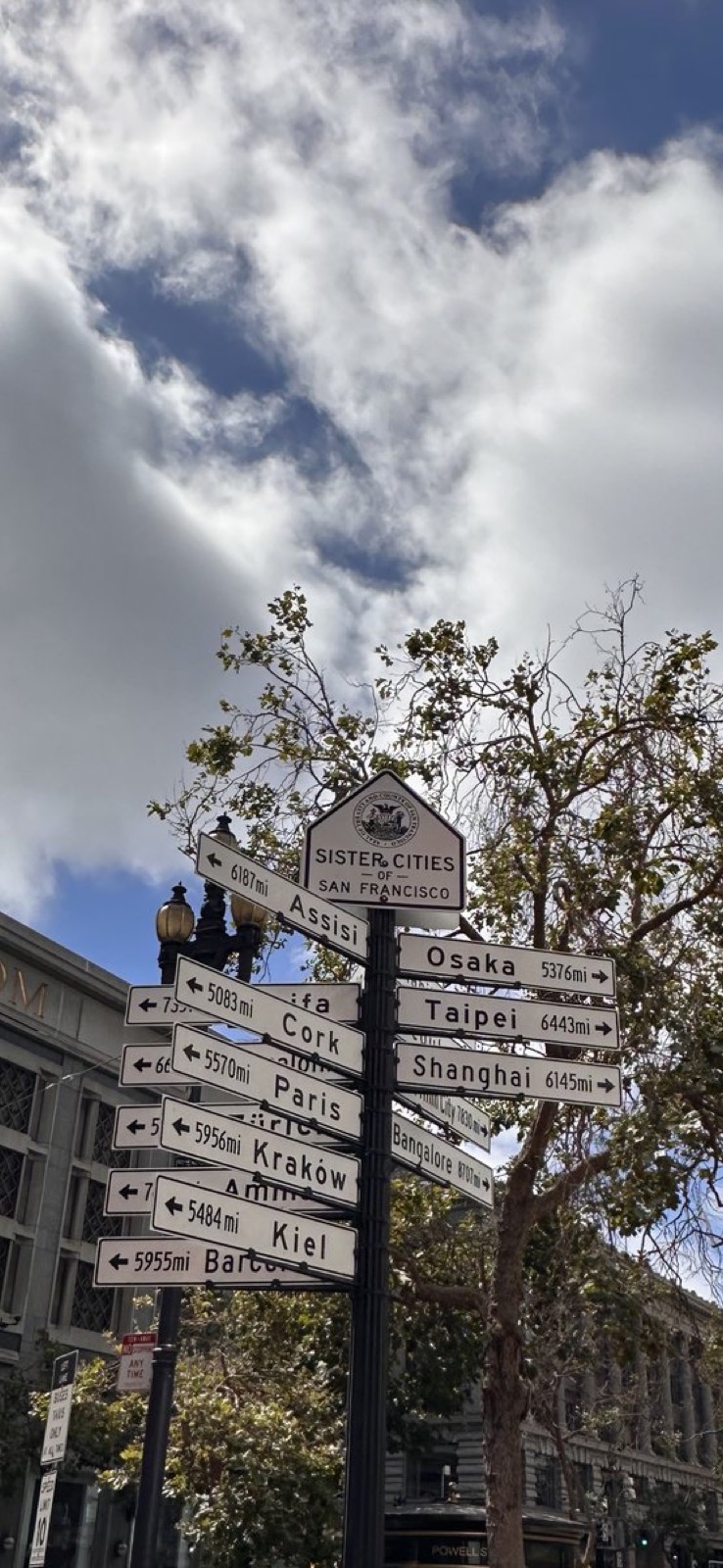
Shanghai Old Man
The last name, given by himself. A little Shanghai friend becomes a Shanghai old man, a TV series watched in the right dialect, a camper van parked beside the Bund, and the borrowed surname, still unresolved.
There's one name in this book I gave myself.
About forty years ago, in an office above a department store in Causeway Bay, the boss's wife couldn't remember what I was called. There were a few older Shanghainese at the company, and I was the youngest, so she called me her "little Shanghai friend." I've told you about that.
When I came to write about those years on Twitter, I noticed what had happened in between.
She called me "little Shanghai friend." Who'd have thought that today I'd be a Shanghai old man, gossiping about their family?
— July 9, 2023
Shanghai lao touzi. A Shanghai old man. Nobody handed it to me. I just looked up one day and there it was.
The right dialect
In January 2024 a friend told me to watch a television series, Blossoms Shanghai. He thought I'd like it because in those years I was doing business too, going back and forth to Shanghai, with an office in a big hotel and dinners on Huanghe Road.
I'd always had a rule that I didn't watch TV series, in English or Chinese. Too much of a waste of time. Now that I'm retired, I've got time to waste. I watched two episodes in Mandarin and lost interest.
Then I found the Shanghainese version on YouTube. And suddenly it was delicious. Never mind the plot. I was going over my dialect again.
I said on Twitter that Shanghainese also counts as my mother tongue. "Also." I chose that word without thinking, but it's the right one. My first name came from a Russian ward. I picked up Sichuanese on a campus inland. I learned Cantonese on the Star Ferry, English in Wan Chai and from a church youth group, and the English of business in an office above a department store. Shanghainese is one mother tongue among several. A man with a borrowed surname can't be too fussy about which tongue is his mother's.
A van by the Bund
In March 2024, walking along the Huangpu River, I saw something that made me stop.
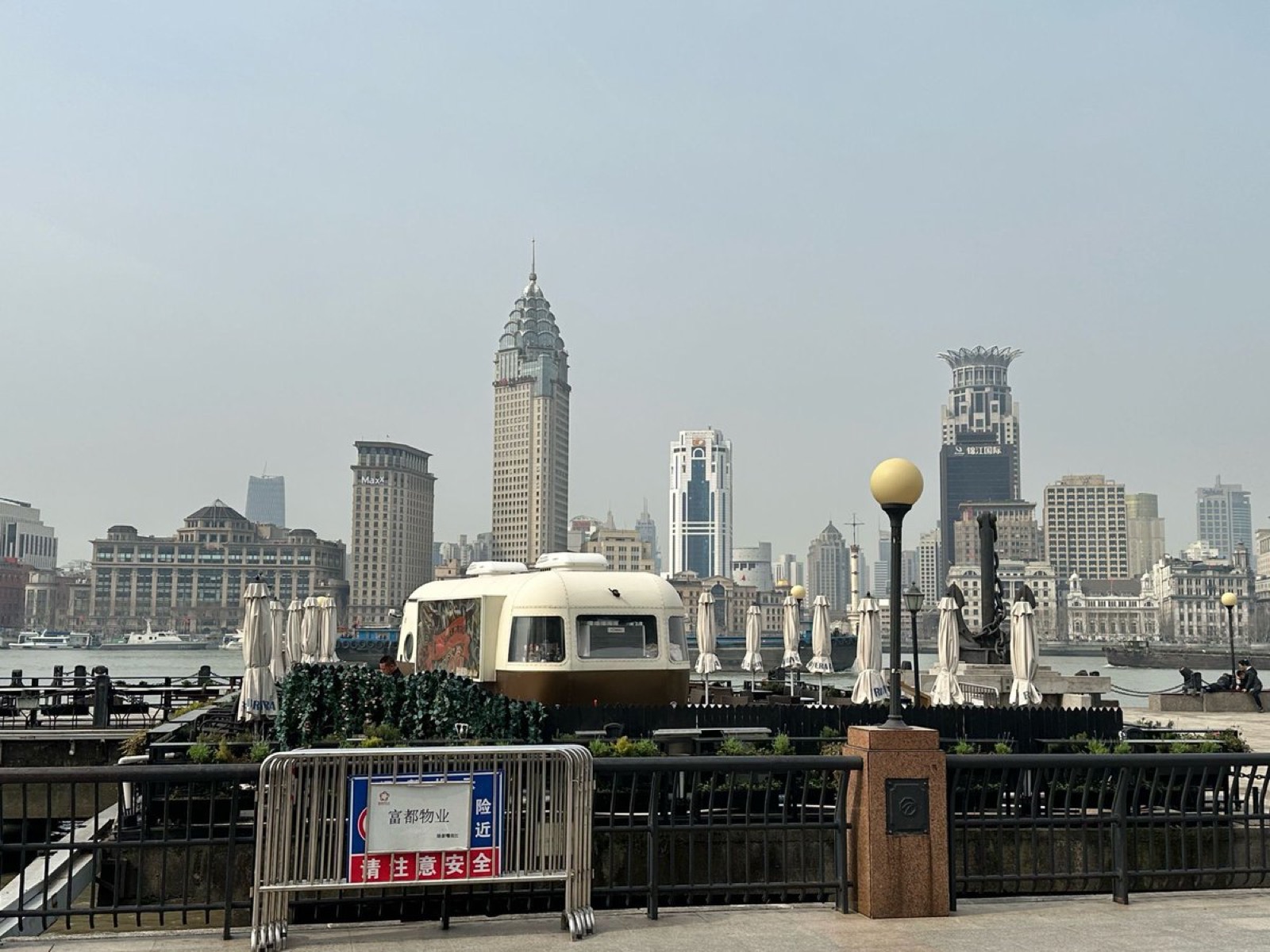
An RV, parked by the Bund.
I didn't write anything else when I posted it. I'll write a little now. That stretch of river is where my grandfather's Shanghai was, the city of the foreign concessions where an orphan made his money in cotton and coal and lost it again. It's where I took my father to hear the old men play jazz at the Peace Hotel, the night that ended with a taxi putting us out by an expressway. And there on the riverbank was the thing I've lived in for part of every year for more than twenty years, the thing that lets me stop anywhere it doesn't say I can't.
The snowbird and the Shanghai old man, in one picture. I don't know which of them took it.
Not even a Wong
I started this book with a question someone asked me on Twitter, about a Wong clan association in Guangdong whose hall had been pulled down. Had I given them money?
And the answer I'd wanted to give was the one I've been giving all along.
I'm not even a Wong!
— August 20, 2023
I've thought about it a lot since. Our big family never had a family tree. My grandfather was an orphan who took the name of the woman who chose him. My father carried it. I carried it to Hong Kong, where they called it out in Cantonese over a loudspeaker, and to Canada, where I shortened everything else about myself but kept it. My sons carry it now. A borrowed surname, generation after generation. Imagine that.
Should I mind? People want to put labels on someone like me. White-left. Funeral portrait. I asked my followers then whether they really thought I'd mind. I'll ask you the same thing now.
Here's what I'd rather we did, all of us. Stop paying attention to labels. Pay attention to what's underneath. Good is good. Bad is bad.
Still answering
So which one is me?
I've spent this whole book trying to answer that, and I find I can't, quite. Viktor was given to me in a hospital ward. Wong was given to my grandfather by a single woman who chose him. The capitalist's grandson and the little Red Soldier were given by a country at war with itself. The mainland boy, the Boy, the little Shanghai friend, the water fish: Hong Kong and Canada handed me those, one at a time, and I answered to every one of them, because that's what you do when you're new somewhere. Dad I earned. Uncle Vic was a gift from a child with a secret. Snowbird I chose. My father's son I've always been, even when there was an ocean in the way.
And Shanghai old man I gave myself, laughing, in a tweet I dictated in under ten minutes.
I told my father, on the night the taxi left us at the expressway, that if Canada ever became a place like that, I'd emigrate again. I meant it. I'd pack up the van and go. I'd get a new name wherever I landed. Somebody would mispronounce it. Somebody would call me something worse. And I'd answer, the way I always have, and see what happened next.
I'm still answering. The list isn't finished.
A Note on How This Book Was Made
How Vic Wong's 2022–2024 tweets became this book, what the editor did and did not do, and what still needs his confirmation.
This book was compiled from what Vic Wong wrote in public on Twitter, mostly in Chinese, between late 2022 and the spring of 2024. No interviews were done for it. Every scene, name, date and figure comes from those posts. Nothing was added from outside them except general context that anyone could look up, such as what joint state-private ownership was.
Vic often wrote in series: ten posts on Dr. An Wang, nine on his first days in Hong Kong, several on his grandfather. The editor grouped the posts by the period of his life they describe, put them in order, and translated them into English. Where a story was told more than once, the fuller version was used. Since his own writing keeps coming back to labels and the names other people gave him, the book is arranged around what he was called at each stage. The dated passages in each chapter are translations of individual posts. The surrounding text was written in his voice from his own posts, and the editor has tried not to sharpen his opinions or add any. Most of his political commentary has been left out. What remains is tied to a scene he described.
Ordinary people who appear in the posts are not named here. Public figures are named where Vic named them. Some details have been held back on purpose, including the name and location of his father's care home and other information that could identify private people.
Some things are still uncertain and need Vic's confirmation:
- His birth year and birthplace. His posts point to slightly different years in the late 1950s, and they don't make clear whether he was born in Sichuan or in Shanghai.
- The years of his two emigrations. The book places his move to Hong Kong in the mid-to-late 1970s and his arrival in Canada around 1998. Both are estimates.
- How he moved from his first Hong Kong job to Wang, and how, when and where he met his wife.
- Several stories told in passing that this book either generalises or leaves out: which company he left over its hiring of Black employees, the year of the Mike Harris dinner, and the details of his first trips to Taiwan.
Where his posts disagree with each other, the editor chose the more cautious version or stated the uncertainty openly in the text. A full list of sources and the open questions is kept with the manuscript.