Twenty Dollars and a Violin
A Shanghai Boy, a Hong Kong Office and an American Computer Company
A young man crosses the Lo Wu bridge with twenty Hong Kong dollars and his parents' German violin, loses the money within hours, and has to find out whether someone with no diploma, no family money and no connections can make it in Hong Kong.
Modelled on:Shoe Dog (Phil Knight)
Dawn
A young man from Shanghai stops at the center line of the Lo Wu bridge with his bags, twenty Hong Kong dollars and a German violin, and hesitates.
I remember the bridge was falling apart.
That is the first thing. Not the soldiers, not the river underneath, not the sky. The Lo Wu bridge between Shenzhen and Hong Kong was shabby, patched, worn down by all the feet that had crossed it before mine. It did not look like the door to anything.
I had bags in both hands. Big bags, small bags, the kind of luggage people carried in those days. Nobody had a suitcase with wheels. I don't think I had ever seen one.
And against my chest, the violin.
I walked to the middle of the bridge, where the line was, and I stopped.
It was a border. A real one. On one side was everything I had ever known. On the other side was a place we had always been told "eats people and doesn't spit out the bones." I stood there with my bags and my violin and I did not move my feet.
I looked back once. On the bridgehead behind me there was a couplet, big characters, the kind you saw everywhere then:
Love your hometown. Defend the motherland.
I have told this story more than once, and I have not always put the two halves in the same order. Maybe it was "Love the motherland, defend your hometown." Fifty years is a long time for an old man's memory. But I remember reading it. I remember thinking it was a strange thing to read at the exact moment you are leaving.
I remember the Lo Wu bridge in Shenzhen was shabby and broken-down. I carried my bags to the center line and hesitated before stepping across. It was, after all, a national border.
— 2023-07-13
A soldier of the People's Liberation Army stood on our side. Grass-green uniform. His clothes looked thin and poor, and so did his patience. He barked at me to hurry up and get moving.
On the other side stood a policewoman in a black wool uniform.
She smiled at me.
Then she pointed, very calmly, at the way I was supposed to walk.
I want you to picture this, because I still can. One uniform shouting, one uniform smiling. Same bridge. A few steps apart. I didn't have the words for it then. I only knew which way my feet wanted to go.
So I went.
The thickest paper in the world
In my hand I held a travel pass printed in both Chinese and English. The Chinese was in traditional characters, which I hadn't seen in a long time. And the paper. I had never, in my whole life, held paper that thick. Back home, paper was thin and grey and you used both sides. This was a document from another world, and I held it like it might tear if I breathed on it.
Was I a visitor? Officially, yes. People in my situation went to Hong Kong "to visit relatives." Some went "to claim an inheritance." Those were the words that got you through the stamps and the offices and the waiting. I'll tell you later how the inheritance turned out. (Laughs.)
I had twenty Hong Kong dollars in my pocket.
That was all the foreign currency a person like me was allowed to change. I had run around for days, to several different offices, collecting several different red seals, to get those twenty dollars. I remember the rate exactly: twenty-six fen of renminbi for one Hong Kong dollar. I didn't know yet what twenty dollars could buy in Hong Kong. I would find out within a few hours.
Before I left, people who cared about me came to see me off. Everybody had heard that renminbi was useless in Hong Kong, so they gave me what they thought was useful. Somebody pressed national grain coupons into my hand. Somebody else said no, no, in Hong Kong you would need the international grain coupons. Nobody knew. I certainly didn't. I honestly could not tell you whether Hong Kong people needed ration coupons to buy rice.
That was how much we knew about the place on the other side of the bridge. We had heard of it. We had seen, at most, a few photographs. And we were sending a young man there with a pocketful of coupons nobody would take.
I also had a slip of paper with a name, a telephone number and an address. The name belonged to my maternal grandfather. I had never met him. Until a few years before, I hadn't even known he existed.
And I had the violin.
German-made. Mother-of-pearl flowers inlaid on the fingerboard and the pegs. Even if nobody ever played it, it was a beautiful object. My parents had spent half their life's savings on it. In Shanghai it was worth a thousand yuan, which in those days was a number that made people go quiet.
It was not there as a souvenir. It was my insurance. If Hong Kong didn't feed me, I could play in a bar, or stand on a street corner with the case open and hope people dropped coins in it. My father had put it more simply.
If you can't make it, sell the violin and buy a plane ticket home.
All through the long train ride south, and all through the endless business of crossing the border, I held that violin in my arms. I didn't trust a rack. I didn't trust a stranger. I didn't trust myself to put it down.
A name I didn't recognize
On the Hong Kong side there was a big waiting hall, and it was full. People from every part of the country sat there with their bundles and their papers, all waiting for the same thing.
It was still morning when I got there. I know that, because at lunchtime someone came round and handed every person a boxed meal. A free lunch from Hong Kong. I ate it, and I kept waiting.
The afternoon went on. People were called and stood up and left. I started to feel the officials would be going home soon and I still hadn't been called.
Then I found out why.
They had been calling my name for a long time. Over and over, on the loudspeaker. But they were calling it in Cantonese, and I didn't speak a word of Cantonese. The sounds coming out of that speaker had nothing to do with me. As far as I was concerned, "that person" was somebody else.
I think about that a lot now.
The first thing Hong Kong did was call my name. And I didn't know it was me.
What I didn't know yet
I have had a long time to think about what happened on the other side of it. If you asked me today to sum up Hong Kong in one line, I would give you the one the Hong Kong people gave me:
No one asks where a hero comes from.
In Hong Kong, nobody cares how you arrived. Did you hide on a freight train? Swim across the bay? Climb over the hills? Walk across a broken bridge with a pass on thick paper? Doesn't matter. You are here, so you are a Hong Kong person. Nobody asks who your father is or which school you went to. They ask one thing: what can you do?
But I didn't know that rule yet.
That morning I did not feel like a hero of anything. I felt like what I was. A young man from Shanghai, already an adult, holding too many bags, who could not understand his own name. I had no diploma. I had no family money. I had no connections. I had a violin I was not allowed to sell unless things went very badly, and twenty dollars I was about to lose.
In my head, the questions were very simple.
Where do I sleep tonight? What do I eat tomorrow? How long can a person live on twenty dollars?
Could someone like me actually make it here?
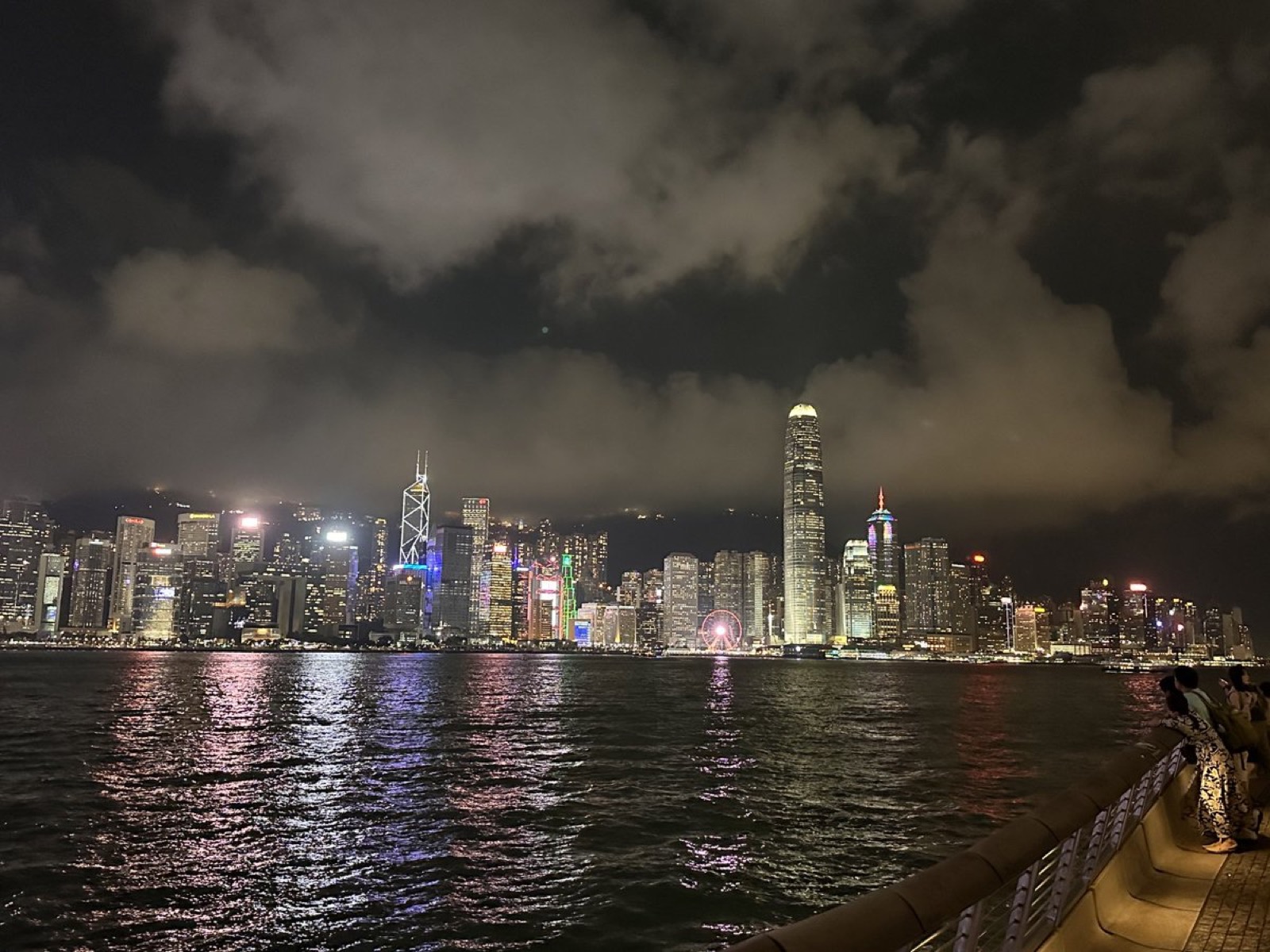
The train
At last somebody put a stamp where a stamp needed to go, and I was through.
I climbed onto the train for Hung Hom, in Kowloon. Trains in those days carried everything together. There were people, and there were closed freight wagons, and cars carrying animals and vegetables. I found a seat, put my bags down, kept the violin on my lap and looked around.
Everything was new. The seats. The faces. The way people talked, fast and loud, in that language with too many tones in it.
I had crossed the line. But I hadn't arrived anywhere yet.
This book is about what happened next: a city that taught me to type and to telex, to speak Cantonese with a Shanghai accent and English like a man in love; how a "mainland boy" with no diploma walked into an American computer company and came out years later as a manager; and how a Shanghai kid ended up in Beijing in 1984, while his boss flew in to meet the most powerful man in China.
But that morning I knew none of it.
I just held the violin tighter, and watched Hong Kong come toward me through the window.
1950s–1970s: Two Homes
On the train to Kowloon: a Shanghai capitalist's grandson and a pair of inland teachers' son, a balcony, a violin, a diamond in a ball of wool, and the day he learned he had a grandfather in Hong Kong.
The train to Hung Hom was not fast. Let me use the ride to tell you where I came from, because otherwise nothing that happens in Hong Kong will make sense.
I grew up with two homes.
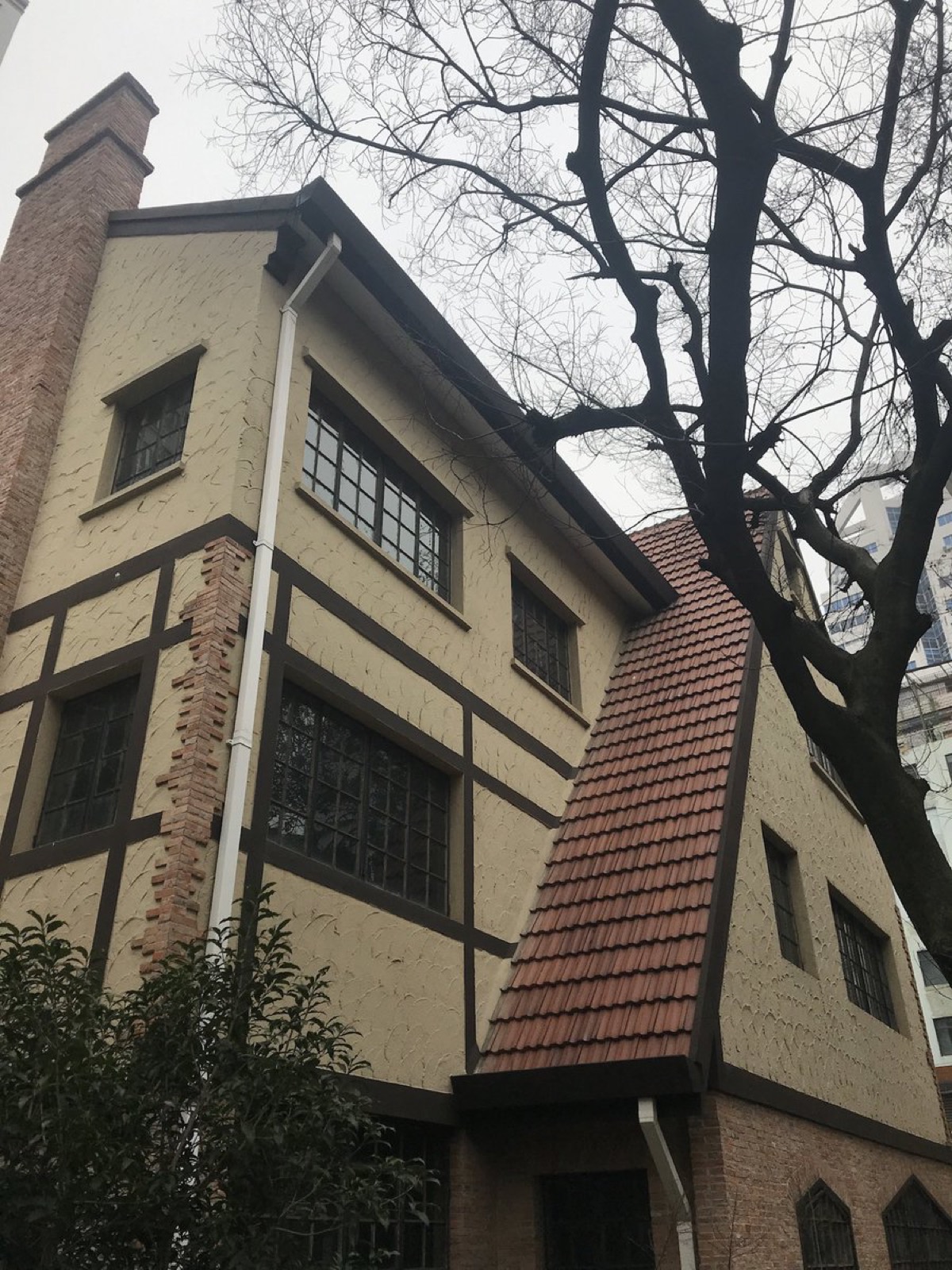
In Shanghai there was my grandparents' house: a big Western-style house belonging to a capitalist family that had come down in the world, with a dozen or so families living in it who didn't pay a cent of rent.
Inland there was my parents' home: two university teachers with no property at all. I remember they owned two bicycles. And meal tickets for the staff canteen.
That was everything.
The boy in the single portrait
I was born in the late 1950s. People argue about which year, and I'm not going to settle it here.
When I was very small, the "years of natural disaster" came, and the whole country went hungry. My mother took me from Chengdu to Shanghai by train. Three days and three nights. On the train you could buy food with money alone, without grain coupons, so at every meal each passenger could buy one bean cake. The attendant looked at me and decided I was too little to count. My mother argued with the head of the train.
A child is small, she said, but he is still a person, and he still has a mouth.
She won me my bean cake.
In Shanghai my father's younger brothers and sisters fell on the bean cakes she had saved, and my mother's heart sank. Was Shanghai worse off than Sichuan, the "land of abundance"? After a few weeks she decided it wasn't. Rations in Shanghai were small but steady. So she decided to leave me there with my grandparents.
Before she went, she took me to a photo studio.
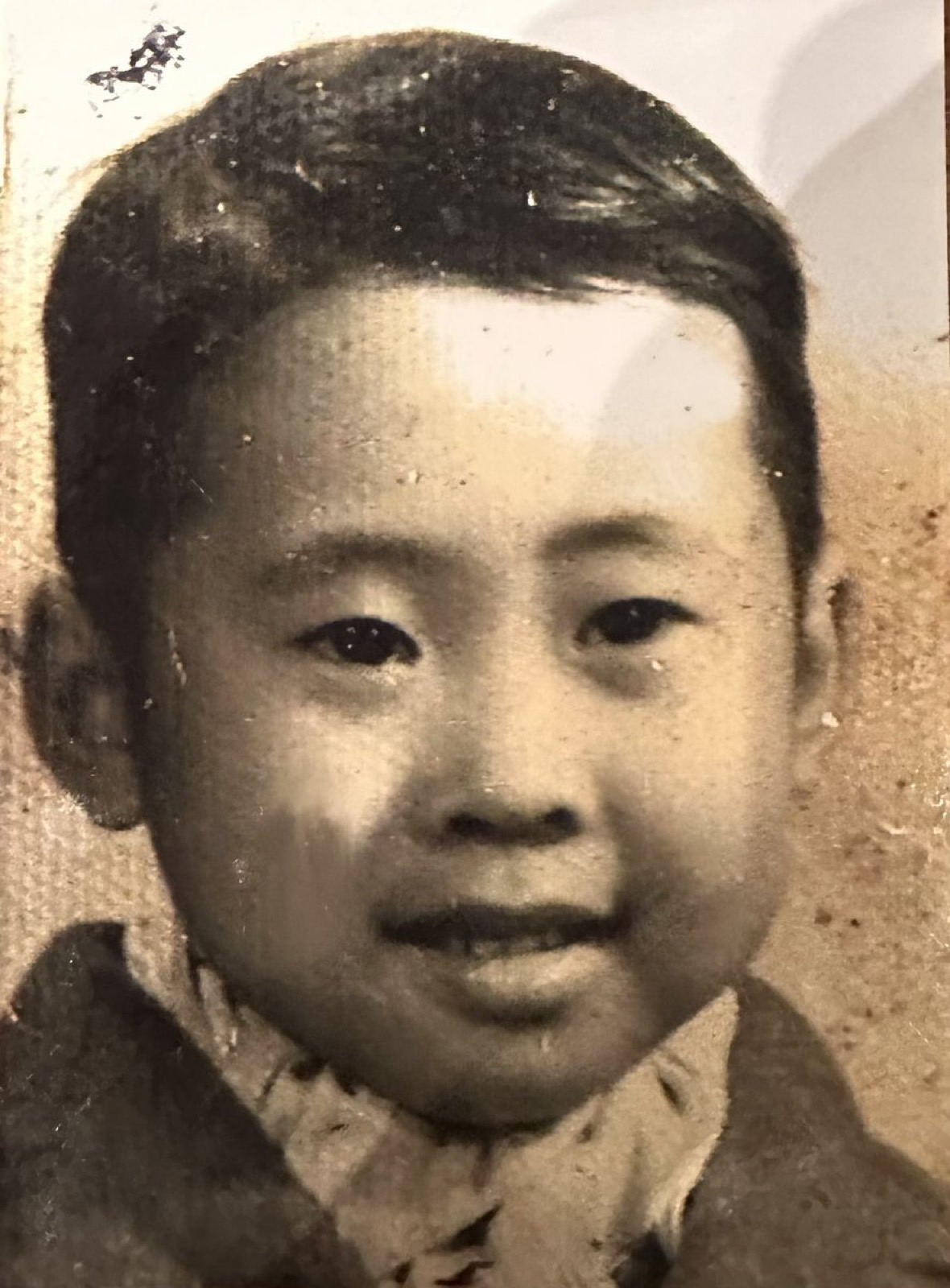
My mother loved to look nice. She had gone so thin, saving food for me, that she was ashamed of herself and would not stand in the picture. The photographer couldn't understand why a mother wanted a portrait of a child alone.
Look at me in that photo. Round face. Chubby cheeks. Not hungry at all. I ate more than a grown-up. I was too young to understand anything.
You can see how plump I was, how could I have gone hungry? So young, and I ate more than an adult. Too young to know any better. Thinking about it now makes me feel terrible.
— 2023-10-27
Grandfather and I did not like each other
I was the only grandson in my generation, the one who would carry the family name. You would think my grandfather would be pleased.
He wasn't.
The year I was born, he was pushed out of his own business by "public-private partnership." He had built the company himself. After the state took it over and its people had learned how to run it, they let him go. Since both things happened the same year, I became his bad-luck star. In Shanghainese we would say I was chu meitou, someone who brings misfortune.
So we sat in the same house, grandfather and grandson, and he didn't like me, and I didn't like him. Every day. A stand-off.
It changed later. It changed completely. But I'm getting ahead of myself.
When the People's Communes came to the cities, my grandfather was persuaded, very politely, to "donate" part of the house. The next day ten families of strangers moved in. The living room and dining room disappeared. The garage became two floors with a family on each. A family lived in the boiler room. Even the balcony became a room.
I grew up on that balcony, on the second floor.
When I practiced the violin and tapped my foot to keep time, the "working-class" neighbors on the balcony below would shout up at me.
My violin teacher was the concertmaster of the Shanghai Film Orchestra, half Cantonese and half German. He didn't charge me anything. In those days, teaching music had nothing to do with money. I went to his home twice a week by bus. One to five stops cost five fen; five to ten stops cost a dime. So I always rode five stops, walked a few, and rode five more.
Once I fell asleep and woke at the end of the line. A ticket inspector leaned over me and said, "Comrade, we've arrived in Suzhou."
I broke into a cold sweat. Suzhou is another city. It was a joke, of course. People almost never made jokes like that back then, which is exactly why I remember it.
Summer, 1966
Then the Cultural Revolution started, and the world ended.
That's how it looked to me, anyway. One summer day in 1966 the streets of Shanghai filled with Red Guards in army uniforms without collar badges or cap insignia, shouting to smash the "Four Olds." People carried Buddhas and pianos into the street and broke them.
My family carried out every Buddha and every statue of Guanyin we had. Even our rice bowls and plates, the ones printed with "Long Live" in red and green and yellow, had to go into the middle of the road and be smashed. I still hear that sound.
Men in gold-rimmed glasses had their glasses pulled off and crushed. Some begged to keep the "innocent" lenses, so you saw short-sighted people walking home holding two bits of glass in front of their eyes. Trouser legs narrower than the rules allowed were cut open on the spot.
I looked at my grandfather's face and thought I could see the end of the world in his eyes.
It turned out to be the end of his.
Our house was searched for three full days. The Red Guards found the gold and silver hidden in the bamboo laundry poles and in the coal ash used to bank the stove. Those were the most popular hiding places, so of course they knew them.
I had been given a job before they came. Hide one diamond.
I wound it into a leftover ball of knitting wool. Every time the Red Guards tipped the wool drawer out onto the floor, I quietly picked the wool back up and put it away. Nobody suspected a child tidying up.
That diamond was the only treasure our family kept. Later, after it was all over, it was sold cheaply through a friend in the countryside, and the whole family "got rich" one more time: a few trips to Suzhou and Hangzhou, eating well and playing well.
They searched our house for three whole days. Before the search I was given a task: hide a diamond. I wound it into a leftover ball of wool. Every time the Red Guards turned the wool drawer upside down, I picked the wool up and put it back.
— 2023-10-15
Coal balls
My grandfather got work, too. He swept the street in the morning, dressed on purpose like an old Shanghai dandy: a light-colored suit and pointed shoes trimmed with crocodile skin, humming to himself. In the afternoon the lane committee made him write revolutionary slogans. They didn't want the Red Guards' handwriting; they wanted the capitalist's. My job was folding and cutting the paper.
The grain shop and the coal shop stopped delivering to "black category" families. I built a cart from a wooden board and four ball bearings and hauled the rice and the coal home myself. Then we lost the right to buy coal briquettes, so I smashed raw coal into bits and pressed it together with yellow mud to make coal balls.
I was not yet ten. My hands were too small and too weak. My coal balls didn't burn well. Shanghai winters are wet and cold, and my hands swelled up red and covered in chilblains.
What hurt more than my hands was the people in the street. Not our neighbors; they were kind, and as poor as we were. Strangers. The looks, and the words, when a small boy pulled a cart of rice and coal past them.
My grandparents' family was "black category." My parents were intellectuals, the "stinking ninth." Later, in Hong Kong, I would become a "mainland boy," suspected of having sneaked in. I have been on the wrong side of a label for most of my life. Maybe that's why I can't stand people who stick labels on others.
The last time
My grandfather had high blood pressure for years with no treatment. Our family had no medical care of any kind. Then he had a stroke, and half his body stopped working. When he was hungry, he slapped his thigh and shouted for a flatbread.
Meanwhile big-character posters went up against my father inland. His crime was "raising his son in a bourgeois family as a pup of the exploiting class." Letters kept coming: send the boy back.
It took months to find an adult who would take me on the train to Sichuan, with a night's stop in Xi'an. On the day I left, my grandfather dragged himself, limping, to the mouth of our lane to see me off. We both knew it was the last time.
Back inland, not long after, I came home from school for lunch and found a short telegram on the table. Nobody said a word.
I looked at my father. If you cry, I'll cry. My tears were ready.
He didn't cry. He let the tears run inward. People could do that in those days.
My grandfather died on the 30th of November, 1971. He wasn't allowed a hospital bed because of his class. He lay on a stretcher in the corridor while his children stood around him to block the draft.
A grandfather in Hong Kong
Our home inland was in a university compound, in a fairly conservative city, though the university was more open-minded than most places. One day after school I was quarreling with another kid, and in the middle of it, he shouted that my mother's father was an "American-Kuomintang spy," stationed in Hong Kong.
Impossible, I said. My mother doesn't have any family.
Then I thought about it. No grandfather, no mother. I went home and asked her.
"Do I have a grandfather?"
"Yes."
"Where is he?"
"In Hong Kong."
I burst into tears. I howled. My father's family were exploiting capitalists, and now my mother's family had "foreign connections" too. Heavens, why was I so unlucky?
My mother kept explaining. She had kept it from me to protect me. Some parent must have peeked at the files.
After Nixon came to China, the doors opened a crack, and my mother applied to visit her father in Hong Kong. I didn't understand why she wanted to go to that place. When she came back, colour photographs appeared in our home, enormous next to our little black-and-white ones. In them my mother wore lipstick and high heels. She posed beside aircraft, on ships, in front of skyscrapers.
How did the mother I saw every day turn into the wife of some foreign head of state?
English, and a violin to pay for it
After Nixon, English suddenly mattered. My generation had learned Russian. Now everyone was switching.
My father had gone through a missionary high school in Shanghai, all in English. But he wouldn't teach me pronunciation himself, because he said he had a Shanghai accent. He found a colleague in his department instead: a Cantonese woman who had come back from studying at Yale and Cambridge. How could we ask her for free lessons? As it happened, her little boy wanted to learn the violin.
So twice a week I went for my English lesson and gave a violin lesson at the same time.
We learned the forty-eight symbols of the international phonetic alphabet. She told me to bring a small mirror to every class. If your mouth is not in the right shape, the sound will not be right.
And when China joined the United Nations, teachers like my father were given UN documents to translate. I typed my father's translations for him. I heard it earned seven US cents of foreign currency for every thousand words. Seven cents. I didn't know then that my fingers were learning the most useful skill I would carry to Hong Kong.
Two kinds of hungry
At school we had to "learn from the workers, the peasants and the soldiers," which in practice meant learning to suffer. Because I played the violin, I was often put in the propaganda troupe, rehearsing songs for the army. It got me out of some of the labor, and after a performance there was usually a good meal.
But not always. Once, during a harvest, the student kitchen served half-cooked rice day after day, and I fainted from hunger on top of a threshing machine. Luckily I fell off the back of it and not the front. Otherwise you wouldn't be reading this.
So I knew one kind of hunger already: the hunger everybody shared, where nobody had enough.
On the train to Hung Hom, I didn't yet know there was another kind. The kind where food is everywhere, in every window, and you are the only one who can't pay for it.
I was about to learn.
Arrival
A kind stranger he refuses to trust, a taxi through the tunnel, twenty dollars gone in half an hour, a hand on his collar, and a grandfather he has never met waiting on the double yellow lines.
Across from me on the train sat a woman in her forties.
She looked kind. She said hello to me first, in Mandarin, and her Mandarin was better than mine. She offered to help carry my bags.
I said no. Firmly.
You have to understand where I came from. All my life I had been taught to keep the "string of class struggle" pulled tight. A stranger who is friendly for no reason wants something from you. That was the lesson. And here was a stranger, in capitalist territory, being friendly for no reason.
So I kept my bags and my violin and my suspicions.
The trouble was, I had too many bags. Remember, no suitcase had wheels in those days. I was the most lun zun person on that whole train (clumsy, hopeless, as the Cantonese say). Everybody around me seemed to want to help. And I kept refusing.
In the end the woman did something I have never forgotten. She offered to give me a hundred Hong Kong dollars as a deposit. If she was going to carry my things, I could hold her money. That way I would know she wasn't going to run off with them.
A hundred dollars. Five times everything I owned.
I think that was the moment the string started to loosen. Just a little.
The slip of paper
The train pulled into the Kowloon terminus, and I got off, and I stood in the middle of the station hall like a fool.
I had no idea what to do next.
In one hand I held the slip of paper with my grandfather's name, telephone number and address on it. In the other I held the twenty dollars. I gripped them both very tight, as if somebody might take them, which, in a way, is what was about to happen.
It was the woman from the train who saved me. She found a phone and called my grandfather for me, a man I had never seen in my life.
They talked in Cantonese. I understood nothing. But I could guess the subject: this young man doesn't have enough money for the taxi, and he refuses to take any money from anyone. I had already said no to her offer of help with the fare.
In those days the cross-harbour tunnel cost five dollars, and the taxi charged it both ways, coming and going. We were going to Causeway Bay on Hong Kong Island. I think she told my grandfather to wait downstairs with some money in his hand.
I can't tell you her name. I can't tell you how we said goodbye. I only know that without her I might still be standing in that hall.
And I had been too busy being suspicious to be grateful.
The tunnel
The taxi shot into the tunnel under the harbour.
The driver kept looking at me in his rear-view mirror. Who was this person who couldn't talk? I couldn't speak Cantonese, I couldn't read a map of this city, I didn't know where we were going except by the address on the paper.
He took the long way round. Even I could tell. The fare that should have been just enough became more than I had. By the time we stopped, I owed him a dozen-odd dollars on top of the twenty.
I handed him my twenty Hong Kong dollars. All of it.
He grabbed me by the collar.
He was shouting. I didn't understand most of it, but I understood enough. He was going to call the police. I was a fare-dodger, riding a ba wong che (a "tyrant's taxi," one you don't pay for). Worse, I was a tau dou haak, an illegal immigrant who had sneaked across the border.
I had a pass on the thickest paper I had ever seen. I had crossed the bridge legally. It made no difference. In the back of that taxi, with a hand on my collar, I was exactly what he said I was.
Where was my grandfather?
How had I got into trouble already? I had only just arrived.
Half an hour off the train in Hong Kong, and I had already run up a "huge debt" of a dozen-odd dollars.
— 2023-04-21
Later, when I told this story, people asked whether I was angry at the driver. Honestly, I have never taken petty money crimes very seriously, though nobody enjoys them. Somebody who cheats you out of a few dollars is usually poor himself. Hurting people is another matter. But money? You don't bring it into the world and you don't take it out.
That's how I think now. That night I was just frightened.
The double yellow lines
My grandfather, it turned out, had been waiting on a stretch of road painted with double yellow lines, where taxis are not allowed to stop.
Then there he was.
He and the driver went at each other in Cantonese. Again I understood nothing. Later I worked out the main point: this was a Hong Kong Island taxi, so it had no right to charge the tunnel toll twice. Five dollars each way. My grandfather knew the rules. I knew nothing.
He paid the difference. The hand let go of my collar.
And my twenty dollars were gone.
Let me tell you what those twenty dollars had cost. Days of running around. Several different offices. Several different red seals. Twenty-six fen of renminbi for every Hong Kong dollar, and every single one of those dollars was "precious foreign exchange" belonging to the state. That was the entire amount a person like me was allowed to take out.
Gone in half an hour, to a man who had driven me in circles.
The only twenty dollars I had were gone, just like that. I had run around for several days, to several different offices, and collected several red seals to get them. I still remember the exchange rate: 0.26 renminbi to one Hong Kong dollar.
— 2023-07-13
Two strangers
So this was my grandfather.
He had seen one tiny black-and-white photograph of me, from when I was very small. I had seen lots of his photographs, big ones, in colour. We stood on the pavement and looked each other over, confirming that yes, we were related.
We didn't look anything like each other.
My grandfather looked like a foreigner. I am not exaggerating. Later on, when he travelled around the mainland, crowds would gather to stare at him wherever he went. He had been born in 1900, right as the century turned over. He was the man who had been a "spy" in a schoolyard argument, the reason I had once come home howling. Now he had just paid a taxi driver to let go of me.
I didn't know what to call him. I didn't know what he thought of me. Maybe he didn't know either.
All I had left to my name was standing on that pavement with me. Some bags. And the violin.
In all the shouting I had never once let go of it. Through the train, the border, the waiting hall, the taxi, the hand on my collar, I had held it against my chest.
My father had said: if you can't make it, sell the violin and buy a ticket home. I had been in Hong Kong for about an hour, and I had already lost every cent of my money and been called a criminal. A sensible person might have started doing the arithmetic on that violin.
I didn't. I couldn't. It wasn't only money. There were nights, later on, when I was lonely enough to sleep with it in my arms.
How could I ever sell her?
Colour television
People used to say the difference between the mainland and Hong Kong was the difference between a black-and-white television and a colour one. That's a nice line. But it isn't what I felt that night.
What I felt was shock. Culture shock, I suppose they'd call it now. Not the colours. Everything. The speed of the taxi. The noise. The language. A city where a stranger on a train could hand you a hundred dollars to prove she wasn't a thief, and another stranger could grab your collar over a dozen.
Both of those happened to me on the same day. Within an hour or two of each other.
I didn't know which one was the real Hong Kong.
I know now. They both were. That's what Hong Kong was.
Many years later, sometime in the last century, I was on a plane between Beijing and Hong Kong, and the big screen in the cabin was playing a woman singing. The song was about an unlucky "child" who had been lost and was waiting to return to its "mother's" arms. Behind the singer, the video showed Hong Kong's skyscrapers, all lit up, and the contrast with the mainland cities of the time could not have been sharper.
I sat there and thought: this "unlucky child"? How unlucky is it, really?
But that was much later, when I was flying business routes with a company title. On my first night, the only thing I knew for sure about the city was that it had taken my twenty dollars.
We went upstairs. My grandfather lived in a building with a lift, a real one, with a gate made of iron and bamboo slats. To me that meant he must be rich.
I was going to claim an inheritance, after all.
I had no money. I had no Cantonese. I had a grandfather who was a stranger, and a violin I would not sell.
And tomorrow was my first day.
The First Day, Part 1
He wakes up as the 'Living-Room Head,' learns what his inheritance really is, says 'enough, enough' at a teahouse when it isn't, and walks down the street eating a loaf of bread with tears in his eyes.
I was up very early on my first morning in Hong Kong.
Not because I was excited. Because I had a new title.
I was the ting zhang: the Living-Room Head. In Mandarin that sounds like a government rank, a "department head." What it meant in practice was that I slept in the living room. The Living-Room Head goes to bed after everybody else is finished with the living room, and gets up before anybody else needs it.
This was a cruel reality I had discovered only a few hours earlier.
Somebody else's living room, in somebody else's city. And the violin, which went wherever I went.
The inheritance
I should explain something.
In those days, a young person like me going to Hong Kong usually went with a mission, and the mission had a name: to claim an inheritance. In our university compound, one boy had already left before me. His grandfather had a rubber plantation in Malaysia, people said. He was going to inherit it. The local Public Security Bureau gave the green light to cases like ours, every time.
My grandfather had sent a letter to the Public Security Bureau on my behalf. I remember it well. He introduced himself as having been born as the century turned, in 1900. He had graduated from the old tax college in Beijing and served as a customs official. He owned his own business in Hong Kong and took part in all kinds of charitable giving. Besides being written in traditional characters, the letter was full of classical phrases, very literary, very formal. It sounded exactly like a rich man.
And in Hong Kong he didn't live in a shack on the hillside or in government housing. He had his own flat in a building with a lift, and not even an old tenement. Of course he was rich.
Let me tell you what "not rich" looked like in Hong Kong in those days, because I saw it soon enough. There were huts built up on the hills, the kind where if it rained hard outside, it rained a little inside, and the women of the family needed someone to go with them to the toilet at night. If you were lucky, you won a government flat in a lottery. Not every floor had a lift stop. People queued for the lift and still couldn't get off where they lived. Every family had a tiny space and hung a cloth curtain over the doorway to let a little air in. The shared corridors rang with pots and pans and parents and children shouting at each other.
And remember: the truly poor didn't live in public housing at all. They lived in cages, bed spaces fenced in with wire.
So, yes. Next to that, my grandfather was rich.
The stamp shop
Then I found out what he actually did.
My grandfather, my mother's father, was what the Chinese call a wanku zidi: a playboy, a rich man's son. He travelled the world and spent every cent he had. But he had one passion, which was collecting stamps. He had even founded a shop called the Kowloon Stamp Society. Old Hong Kong people may remember it.
The shop was in Causeway Bay, in the middle of all the bustle. And it was the size of a block of tofu. A tiny little place. Stamp collectors came in, and after school some children too. Stamp collecting, I learned, is a hobby for every budget. Some stamps are ridiculously cheap. Some are terrifyingly expensive.
The Stamp Society was a member of some international organization, and parcels came regularly from all over the world. They were full of the most ordinary, most common, cheapest stamps there are. Each stamp was still stuck to a little piece of the envelope it had been cut from, in bundles of a hundred held together with rubber bands.
Our job was to soak them in warm water and peel them off, one by one, like any family workshop.
Sometimes people brought in real treasures to sell or trade. China's "The Whole Country Is Red." Britain's Penny Black and Penny Red. Today those little squares of paper can be worth millions of dollars. Back then, a rare one would get you a colour television set.
I sat there with my hands in warm water, peeling stamps off envelopes, and I understood.
My grandfather was not poor. But he was definitely not rich.
Clearly my trip to Hong Kong had used up the nation's precious foreign exchange — twenty Hong Kong dollars — and at last I could see the reality in front of me. My grandfather wasn't poor, but he certainly wasn't rich. My dream of "claiming an inheritance" was shattered, just like that.
— 2023-07-14
I want to be fair to him. He had never given me a cent, but why should he? Until a few years earlier he hadn't known I existed. He had paid the taxi driver, let me sleep in his living room, and he was about to buy me lunch. That's already a lot.
But the inheritance, the rubber-plantation dream, the thing that had got me through the Public Security Bureau? Dead. On my first morning.
Enough, enough
People say a distant relative is not as good as a close neighbor. I'd put it another way. A close relative is not as good as a distant neighbor.
As the Living-Room Head, I couldn't pay any rent. I was an adult. Eating and sleeping for free, even if someone was willing to let me, was something I couldn't do. But my generation didn't mind hard work. Cooking, washing up, cleaning, laundry. I would do any of it.
So as lunchtime came, I was thinking about how to cook.
My grandfather said: we'll go out to eat.
Eat out? On the first day? That was an enormous luxury to me. On the mainland in those days, people ate in a restaurant less often than people today go to wedding banquets.
He took me to a typical Cantonese teahouse. We sat down. Little bamboo steamers came to the table, one after another, with dim sum inside. Everything was so small. Food from the land of Lilliput.
After a few baskets, my grandfather looked at me and asked:
"Enough?"
Enough? I could have eaten another twenty or thirty baskets.
"Enough," I said. "Enough, enough."
I looked up. On the wall hung calligraphy in a beautiful brush hand. I can still see it:
Spring ice is thin; human kindness, thinner. Bitter herb is bitter; poverty, more bitter. Climbing to heaven is hard; begging help from others, harder. Rivers are dangerous; the human heart, more dangerous.
I've forgotten the exact order of the lines. But I will remember every word of them as long as I live.
Life Bread
We came out of the teahouse.
I went into a shop and bought a loaf of bread. An extra-long loaf of Garden Life Bread. It cost me eighty cents, Hong Kong money. (Where did those eighty cents come from? I honestly don't remember. My twenty dollars had gone to the taxi driver the night before.)
Life Bread. What a name. Bread to keep you alive.
I walked down the street eating it.
My eyes were full of tears. I didn't stop walking and I didn't stop eating. I just kept stuffing the bread into my mouth, step after step, a grown man crying over a loaf of bread on a Hong Kong pavement.
Coming out of the teahouse, I bought an extra-long loaf of Garden Life Bread. I remember it cost HK$0.80. What a good name! Bread that keeps you alive! My eyes filled with tears, and I walked along stuffing the bread into my mouth...
— 2023-07-14
It was the first time in my life I had ever felt economic pressure. The pressure of things. Of money.
Isn't that strange? I had grown up through famine and the Cultural Revolution. I had made coal balls with chilblained hands. I had fainted from hunger on a threshing machine. But that had been everyone's hunger. Nobody had food, so nobody had food.
This was different. In Hong Kong the food was there. It was the money that wasn't. For the first time, hunger was not something we all shared. It was mine alone, and the price of a loaf was eighty cents.
Two inheritances
Walking along with my bread, I thought about my two homes.
On one side, my grandparents in Shanghai: a big house, a fallen capitalist family, a dozen families who paid no rent. On the other side, my parents: two teachers inland, two bicycles and meal tickets. When I reached secondary school and really needed a desk and a chair, my father had to phone the university's general affairs office. They brought them the next day and deducted a few fen a month from his salary. They came round regularly to check the wattage of our light bulbs to work out the electricity bill.
And yet I had always, somehow, believed that money was not a problem. Things were not a problem.
Even in Shanghai there had been a dream of inheritance. A neighbor once whispered to me that they were all just "occupying" our house. One day it would be given back, she said, and then my family would have lots of money.
Another inheritance. Another dream.
Now here I was, on the other side of a border, living on Life Bread.
Was this what I had crossed the bridge for? Twenty dollars gone, the inheritance gone, no job, no Cantonese, sleeping in somebody's living room?
What a hero looks like
Years later I would write that Hong Kong's first rule is that no one asks where a hero comes from.
If you had told me that on my first day, I would have nodded politely. And then I would have asked you: that's very nice, but does Hong Kong care whether you eat?
I didn't feel like a hero. I didn't feel like anything. I was a pair of shoes walking down a street, and a mouth full of bread, and a pair of wet eyes.
I want to be honest about that, because it's the bottom. Everything else in this book is up from here.
But at the time, of course, I didn't know there was an "up."
And it was only the afternoon of my first day.
The First Day, Part 2
Two 'rice papers,' a visit to his father's acquaintance that turns into a job, a thousand borrowed dollars spent on head and feet, and seven loaves of bread labelled Monday to Sunday.
That same afternoon I started looking for work.
I say "that same afternoon" because that is how I wrote it down in my series of tweets about those days. In another version I told, it was the afternoon of the second day. In another, I found the job after three days. An old man telling the same story many times will move the furniture around a little. What I'm sure of is this: it was fast. Very fast. So fast that, at the time, I could hardly believe it myself.
The rice papers
Hong Kong had two newspapers people called "rice papers," because they were how you put rice in your bowl. One was in English, the South China Morning Post. One was in Chinese, the Sing Tao Daily. Both had pages and pages of job advertisements in the classified section.
That was where everybody started.
People were already giving me advice, the way people do with a newcomer. The foreign companies pay better than the Hong Kong companies, they said. How much better? Nobody could tell me. I certainly couldn't have told you. But I heard one detail that stuck in my head like a song.
In a foreign company's office, there was a room called the Pantry.
In the Pantry, there was free Coca-Cola. Free Nescafé. You could go in and pour yourself a drink whenever you liked, and nobody charged you a cent, and you could stand there chatting with the pretty girls from the office.
Free Coca-Cola. I had just cried over an eighty-cent loaf of bread.
The catch was English. The foreign firms wanted everything in English: the letter you wrote to apply, the interview, all of it. My English was what you could learn from a mirror and forty-eight phonetic symbols in a teacher's flat inland. It was not going to get me into a room with free Coca-Cola.
Not yet, anyway. I put the Pantry away in the back of my mind. It would come back.
When I think about it honestly, that was my motivation for learning English, then and for years afterwards. Not culture. Not literature. I wanted to change my situation.
But I had one more thing. Before I left, my father had given me the name of an acquaintance of his in Hong Kong. A man who had studied in America and Britain, all the way to a doctorate. He ran a group of companies from an office in Central, in one of the tallest buildings in the city.
I didn't go to him for a job. I want to be clear about that. I went to ask for advice. How does a person like me even begin in a place like this? What should I do first? Who should I see? I thought, if I'm lucky, he'll tell me something useful, and maybe write a name on a piece of paper.
So I went to Central. I found the building. I went up.
On the spot
He listened to me. I don't know what he saw. A young man from the mainland who couldn't speak Cantonese, whose English was a schoolbook, who could barely find his way across the street.
And then he offered me a job.
Right there. On the spot. I could come in to work whenever I was ready.
I could hardly speak. I couldn't even tell you which direction the harbour was. And here was this man telling me to come to work.
It was less like finding a job than receiving a gift.
Never in my wildest dreams did I think he would give me a job on the spot. It wasn't so much that I found a job; it was more that I received someone's kindness. I couldn't speak properly, I couldn't find my way, and he said I could start any time.
— 2023-07-14
The Chinese have a word for a person like that: guiren. A noble person who appears at the right moment in your life and lifts you up. I met mine on my first day in Hong Kong.
I have been grateful to him and his wife all my life. Many years later, when he passed away, I couldn't be there. I printed out his portrait at home and attended his memorial service online, sitting in front of a screen on the other side of the world.
Think about what my grandfather had told the bureau in his letter: born in 1900, customs official, own business, charitable giving. And I had come for an inheritance. In the end, my grandfather gave me a sofa and a lunch. The man who changed my life was not a relative at all. He was a friend of my father's.
A close relative is not as good as a distant neighbor. I wasn't joking about that.
Head and feet
Now, a job is one thing. Turning up for it is another.
I didn't want to walk into an office in Central looking like a man who had just stepped off the train from Lo Wu.
My other relatives in Hong Kong got together and raised a thousand Hong Kong dollars for me.
A thousand. Fifty times what I had arrived with.
I knew exactly what to do with it. I had to package myself.
In Shanghainese we have two words that tell you everything about how Shanghai people think. When something is clever and eye-catching, we call it xuetou, and the tou means "head." When something is shabby and second-rate, we call it biejiao, and the jiao means "feet." So, head and feet. That's where people look.
I got a fashionable haircut. I bought a good pair of leather shoes. I bought a brand-name suit, a shirt and a tie. When I looked at myself afterwards, I looked more Hong Kong than the Hong Kong people.
Inside, of course, I was exactly the same. No Cantonese. No money. A violin in my grandfather's flat and a slip of paper in my pocket. But from the outside, from head to feet, nobody could tell.
Seven loaves
The salary wouldn't come for a month.
When it came, I planned to rent a room of my own. Independence mattered. Plenty of people arrive in a new place and get swallowed up by a crowd of aunts and great-aunts and cousins, and all their time and energy goes on family. For someone trying to make something of himself, that can turn into a disadvantage.
But a month is a long time.
So I went back to the same bakery and bought seven loaves of Garden Life Bread in one go. I took them home and hid them.
Then, very deliberately, using it as English practice, I wrote on each one:
Monday. Tuesday. Wednesday. Thursday. Friday. Saturday. Sunday.
One loaf a day. Like the blood-pressure pills I take now. You must never take more than one. The only difference is that with bread, taking less doesn't hurt you.
The problem of eating was solved. I went back to that bakery and bought seven loaves of Garden Life Bread in one go and hid them at home. I made a point of practicing my English by writing on them: "Monday, Tuesday, Wednesday..." Like today's blood-pressure pills, you absolutely mustn't take too many — the difference is that taking too few was no problem.
— 2023-07-14
Isn't it funny? That morning I had eaten one Life Bread on the street with tears running down my face. That evening I had seven, labelled in English.
Same bread. Different man.
Well. The same man, really. The same empty pockets, the same missing Cantonese, the same violin I wasn't allowed to sell. But a man with a job to go to eats his bread differently from a man with nowhere to go at all. He chews more slowly. He counts the days forward instead of back.
Adventurers' paradise
I want you to see that day the way I see it now.
In the morning: an inheritance that turned out to be a stamp shop the size of a block of tofu. At lunch: "Enough, enough," and calligraphy about how thin human kindness is. Right after lunch: a loaf of bread, tears, the first money fear of my life.
In the afternoon: a job. A thousand dollars. A haircut, shoes, a suit. Seven loaves of bread with the days of the week on them.
All in one day. Maybe two. Maybe three, if you believe one of my other versions. (Laughs.)
People used to say that old Shanghai was a paradise for adventurers. All the fortune-seekers of the world came to Shanghai to make their money. That was before my time. By the time I was born, Shanghai had stopped being that city.
Now, I thought, it's Hong Kong. Hong Kong has taken Shanghai's place.
I had bread. I had a job. For the first time since the bridge, I had confidence about what lay ahead.
What I didn't know
What I didn't know was what the job actually was.
The man had said come to work. He hadn't said doing what. And I hadn't asked. I wouldn't have known what to ask.
I had a suit and a tie and good shoes and a fashionable haircut. I was going to an office in one of the tallest buildings in Central. Maybe I imagined a desk. Some papers. A title of some kind.
I could not have imagined how far from the top of that building I was going to start.
That's fine. I've always thought you learn more at the bottom.
Seven loaves. Monday through Sunday.
I ate Monday's on Monday.
Late 1970s: The Boy
In a tower with round windows in Central, he makes the tea, runs the letters, presses the lift button before anyone asks, learns to touch-type and to telex, and starts to get raises.
My job title was "Boy."
That's what they called it, in English. The office Boy. As far as I could work out, it meant the male person in the office who fetches and carries and runs around. Put more elegantly: my existence was there to raise the efficiency of everybody else.
I had a brand-name suit and a fashionable haircut and very good shoes. And I was the Boy.
I didn't mind. Honestly. I had a salary coming, and in the meantime I had six more loaves of bread at home with the days of the week written on them.
A tower with round windows
The building I worked in was, at that time, the tallest in Asia.
It stood in Central, the busiest business district on Hong Kong Island. Every window in that tower was round, and not one of them could ever be opened. Across the road was the General Post Office. Next door was City Hall. Every morning on my way in, I walked past the branches of every bank you could name and shops with every famous brand.
The fanciest, most fashionable addresses in one of the busiest cities in the world.
And there I was on the inside, making tea.
The company belonged to my father's acquaintance, the doctor who had hired me on the spot. He ran a whole group of businesses from that office. I was at the very bottom of it.
One sugar or two
Every morning I made morning tea. Every afternoon I made afternoon tea.
This was a British colony, and tea was serious. I had to remember who drank coffee and who drank tea. Milk or no milk. Sugar or no sugar. And if sugar, one lump or two?
Get that wrong and you have a very small problem that everybody notices.
Mostly, though, I ran. I carried letters from our office to other offices all over Central. I opened the incoming envelopes. I posted the outgoing mail. And when the secretaries were too busy, I helped them type.
Running letters in Hong Kong was harder than it sounds. Apart from the Cantonese names, almost every street was named after some British person, place or thing. I couldn't speak Cantonese, and the English names meant nothing to me. So I studied maps. I memorized the British names that kept coming up. After a while I didn't need to ask anyone. Deliveries got much faster.
I also had a few little tricks of my own.
If a letter needed a signature, I held out a pen, ready, before the person had to look for one.
When I was waiting for the lift and knew I'd be going down again, I pressed the "down" button on each floor in advance.
Small things. Seconds. But I was always one step ahead of everyone else, and people notice that, even when they don't say so.
The quick brown fox
Typing, I went crazy about.
I already had a foundation, from typing up my father's United Nations translations at seven US cents per thousand words. Now I practiced like a man possessed.
You probably know the sentence. I still remember it:
The quick brown fox jumps over the lazy dog.
Just that one sentence uses every letter of the alphabet. You type it again and again until your fingers know it better than your head.
The key to typing fast is to keep all ten fingers resting on the home keys and reach up and down from there. Most important of all, you must type blind, without looking at the keys. Touch-typing. If you can't do that, you'll never be fast. I still tell people this today. Young people with phones in their hands, who think they type fast. (Laughs.)
You have to remember what typing was then. On an old manual machine, the little metal hammers with the letters on them were always jamming into each other. The ink came from a ribbon. Hit one wrong key and it was a disaster: either you painted over the mistake with white correction fluid and typed it again, or you lifted it off with sticky tape and typed it again. If you needed copies, you used carbon paper, or you cut a stencil. Before the photocopier came along, if you needed ten copies of a letter, somebody typed it ten times.
Very often, that somebody was the Boy.
Every mistake cost time, and time, as the Hong Kong people would soon teach me, is money.
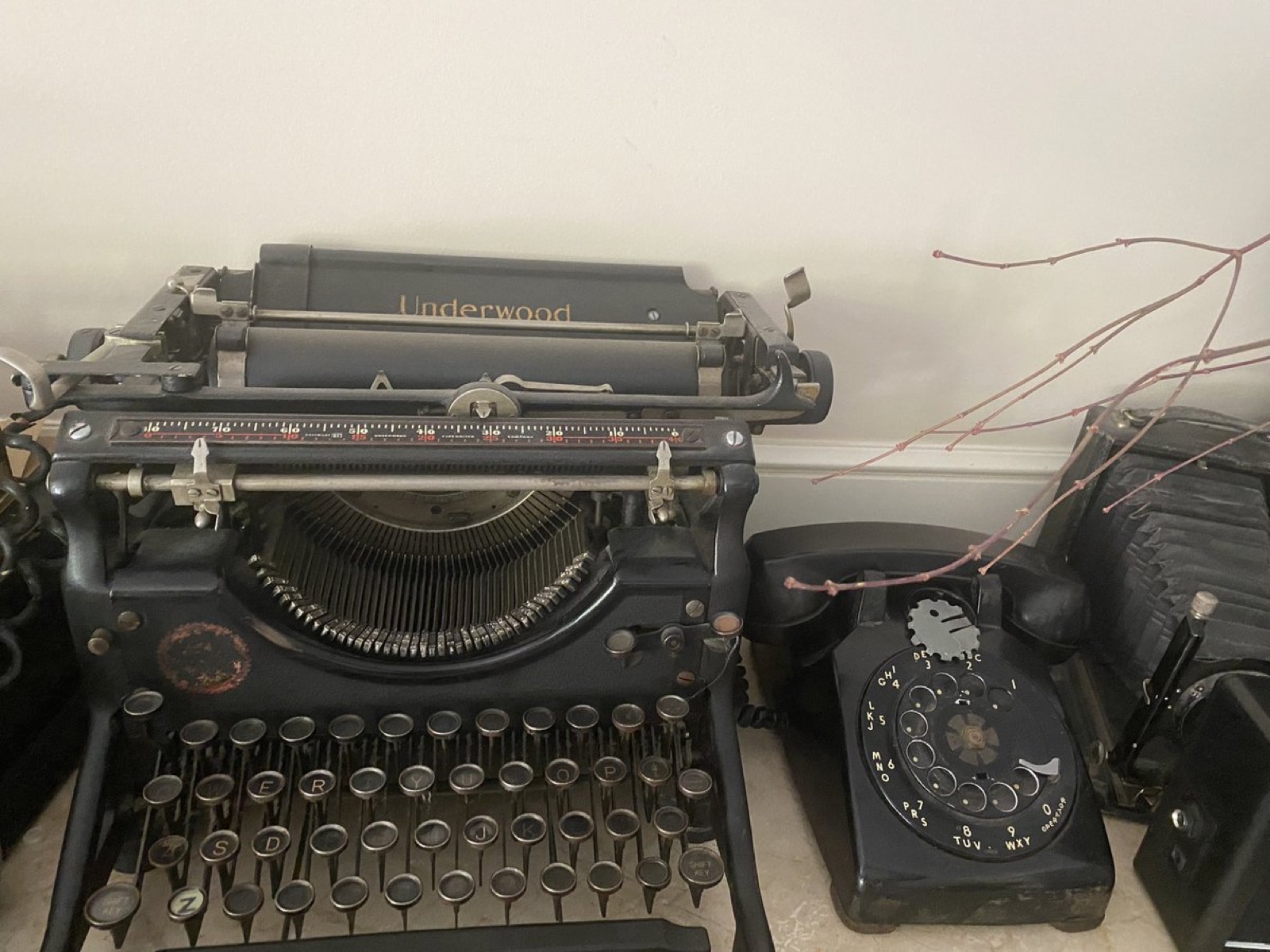
Telex
By then, offices had stopped using telegrams, and the fax machine hadn't arrived yet. The way businesses talked to each other around the world was the telex.
I didn't understand the technology very well. Here is how it worked, as simply as I can put it. Every user in the world had a unique telex "address." You connected your telex machine to the machine at the other end and typed, and the message came out over there in real time.
And it was expensive. You paid by the letter, or by how long the connection was open. So every letter cost money. Every second cost money.
That meant abbreviations were vital. Whole dictionaries of them, and you had to memorize them. One you all know today: ASAP. As Soon As Possible. I learned that one on a telex machine.
Four letters instead of nineteen. Fifteen letters saved on one message. Multiply that by every message, every day, across a whole company, and you begin to see why every letter mattered. That was my first lesson in business, and I learned it standing next to a machine.
The telex room was the communications hub of the whole company. Two professional secretaries worked beside it. I had the feeling they both had boyfriends, because the minute the day ended, they wanted to rush out to their dates.
So they were very happy to teach the Boy how to work the telex. (Laughs.)
Before long, this "mainland boy" typed like the wind, and could even telex! I'm proud to say that, maybe not in all of Hong Kong, but at least in that whole giant office tower, you couldn't find a second one like me.
— 2023-07-15
Raises
It is hard to believe how fast this happened.
Within days of arriving in Hong Kong I'd found a job. I had half wondered whether somebody was just giving me a wage out of kindness. But very soon I was an important member of that company. You could tell by how often my salary went up, and by how much.
I don't remember the figures. I only remember the feeling: they came often, and they were not small.
The Boy was useful. The Boy could type. The Boy could telex. The Boy knew every British street name in Central and pressed the lift button before you got there.
For a young man who had been called a fare-dodging illegal immigrant in the back of a taxi a few weeks before, that felt like a lot.
Showing Hong Kong to the comrades
Around this time I also found my first part-time job. It didn't pay much, and it felt a lot like being a tour guide.
Officials from the mainland were starting to visit Hong Kong, and somebody had to show them around. I was a mainland boy who now knew his way around the island, so that somebody was often me. When I was a junior clerk at a trading company, the thing I did most often was receive cadres from the mainland.
They were always very curious. They wanted to see the skyscrapers and the slums. The cinemas showing adult films, and the nightclubs. The mahjong parlors in Happy Valley.
There was one thing they never understood.
Hong Kong is a tiny place. Every inch of land is precious. So why on earth did Hong Kong set aside parking spaces for disabled people? Why give disabled people so many rights?
Back then nobody had heard the phrase "political correctness." I would answer, rather impatiently:
"Without these things, it wouldn't be Hong Kong."
I had been in Hong Kong only a short time myself. But I already knew that much.
My first part-time job in Hong Kong was showing mainland officials around Hong Kong, over and over. The pay was small; it felt like being a tour guide. They never understood one thing: why did tiny Hong Kong set aside parking spaces for the disabled?
— 2023-04-29
A long way down
I'd like to tell you that at night I looked up at that tower with its round windows and thought about how far I had come.
I don't remember doing that. What I remember is the Star Ferry. I remember that every conversation around me, in the office, on the street, on the ferry, was in a language I still couldn't speak.
Because there was a problem the suit and the typing and the telex couldn't solve.
In the office, with the British, I could get by. With the machines, I was the best in the building. But Hong Kong itself — the tea ladies and the shopkeepers, the bus conductors, the people at the next table, the taxi drivers — Hong Kong spoke Cantonese.
And I was still the man who hadn't recognized his own name over a loudspeaker.
That had to change.
Late 1970s: Nine Tones
A Shanghai man takes on Cantonese with a bag of cassette tapes, the lower deck of the Star Ferry and a stamp shop full of street toughs, and asks a famous young woman a question everyone in Hong Kong finds hilarious.
Mandarin has four tones. Cantonese has nine.
Nine. I want you to sit with that number for a moment, the way I had to.
The language wasn't only harder to pronounce. It was built differently. Its grammar was closer to English in some ways; for example, some adverbs go after the verb instead of before it. And even the words were different. A bicycle wasn't a zixingche, it was a daan che, a "single vehicle." A taxi wasn't a chuzuche, it was a dik si, which is just the English "taxi" said with a Cantonese mouth.
People today may find it hard to understand how difficult this was. We didn't have much contact with the outside world. There were no stacks of Hong Kong films and TV dramas to soak in. There was no internet. If you can't imagine it, think about why so many older people from the provinces never managed to speak good Mandarin, even though it was supposedly their own language. In those days we were a bit like North Koreans are today. Everything was harder for us than for everybody else.
Language was so hard for me back then — and I don't mean English, I mean Hong Kong's Cantonese. Mandarin only has four tones, but Cantonese has nine.
— 2023-07-15
A little school Russian, a little English and a pocket mirror had not prepared me for this.
When I arrived in Hong Kong, language suddenly became the biggest problem of my life, and it came at me from three directions at once. From Mandarin to Cantonese. From the simplified characters I had grown up with to the traditional ones on every sign and every newspaper. And from my scraps of Russian and English to the full English a workplace demanded.
Three walls. I decided to climb the nearest one first.
Like new immigrants everywhere, then and now, I was learning that language is the one hurdle you can never walk around.
The lower deck
So I did what I always do. I threw money at it, and then I threw time at it.
I spent what was, for me, a fortune, and bought every Cantonese language tape the Commercial Press had.
By now I had my own rented room, over in Kowloon. Every day I crossed the harbour to work on Hong Kong Island and crossed back again at night. I took the Star Ferry, on the lower deck, because it was cheaper.
And on the lower deck I talked to myself.
The sea wind in my face. Victoria Harbour all around me. And me, muttering away, a phrase here, a phrase there, over and over:
Have you eaten yet?
Is there going to be a typhoon today?
How many younger brothers do you have at home?
The people around me assumed I was mentally ill. I didn't care. I kept going. Have you eaten yet? Is there going to be a typhoon today?
Whenever it comes to learning a language, something desperate comes out in me. I will go all out. Looking a bit crazy on a ferry is a small price.
Guangzhou, not Hong Kong
There was one small problem with my tapes.
What they taught was the old-fashioned Cantonese of Guangzhou, not the Cantonese people actually spoke on the streets of Hong Kong. So I was learning to speak like somebody's great-uncle from across the border.
And there was the accent. However hard I tried, the last trace of my "hometown sound" would not go away. People around me told me to give up.
But they also told me something that cheered me up: in Hong Kong, a Shanghai accent was fine.
Shanghai didn't count as "the countryside." A Shanghai accent didn't hold you back. Plenty of the big bosses in Hong Kong had come from Shanghai: in stocks, in textiles, in shipping. Even some of the biggest stars on television, if you listened carefully, had a little Shanghai in their voices.
So, all right. I would speak Cantonese with a Shanghai accent, and I would speak it well.
The stamp shop education
The hardest thing about a language is that it is tied to a culture. You can learn tones from a tape. You can't learn people from a tape.
At weekends I minded my grandfather's stamp shop, the one the size of a block of tofu, on a side street in Causeway Bay. There I had to deal with all kinds of characters, including street toughs and petty hoodlums. I learned a great deal of Cantonese swearing in that shop. Nobody puts that on the Commercial Press tapes.
One day a man came in and swore at me:
"Nei sik gai bou chi!"
Literally: "You eat chicken-and-shark's-fin stew!"
I had no idea what it meant. It sounded delicious. So I answered with the most polite Cantonese I had, the phrase you use at a dinner table:
"Nei sik sin la." After you. You eat first.
Only much later did I find out. In one of Stephen Chow's comedy films, a character thinks the word "die" sounds too ugly, so he says "eat chicken-and-shark's-fin stew" instead. The man had been telling me to drop dead.
And I had politely invited him to go first.
I hit the target by pure accident. (Laughs.)
"Miss, may I ask your surname?"
Then there was the day my company held an event and invited some guests.
A very fashionably dressed young woman was sitting beside me. I wanted to be polite and start a conversation, and I had been practicing exactly this sort of thing on the Star Ferry. So, in the most correct, most standard Cantonese I could manage, I turned to her and said:
"Excuse me, Miss, may I ask your honorable surname?"
The whole room burst out laughing.
She was Miss Hong Kong. The reigning one, and at the height of her fame. Everybody in Hong Kong knew exactly who she was.
Except me.
That's the problem with learning a language from tapes. The tapes teach you how to ask the question. They can't teach you that in Hong Kong, some questions don't need asking.
Sugar water
My relatives meant well. When I first arrived, several of them said the same thing to me, as a kind of blessing:
"Marry a Cantonese wife, and she'll make you sugar water every day."
Sugar water? That frightened me. For a long time I didn't dare say a word. A wife who serves you sugar water every day, and gets upset if you don't drink it? What kind of life was that?
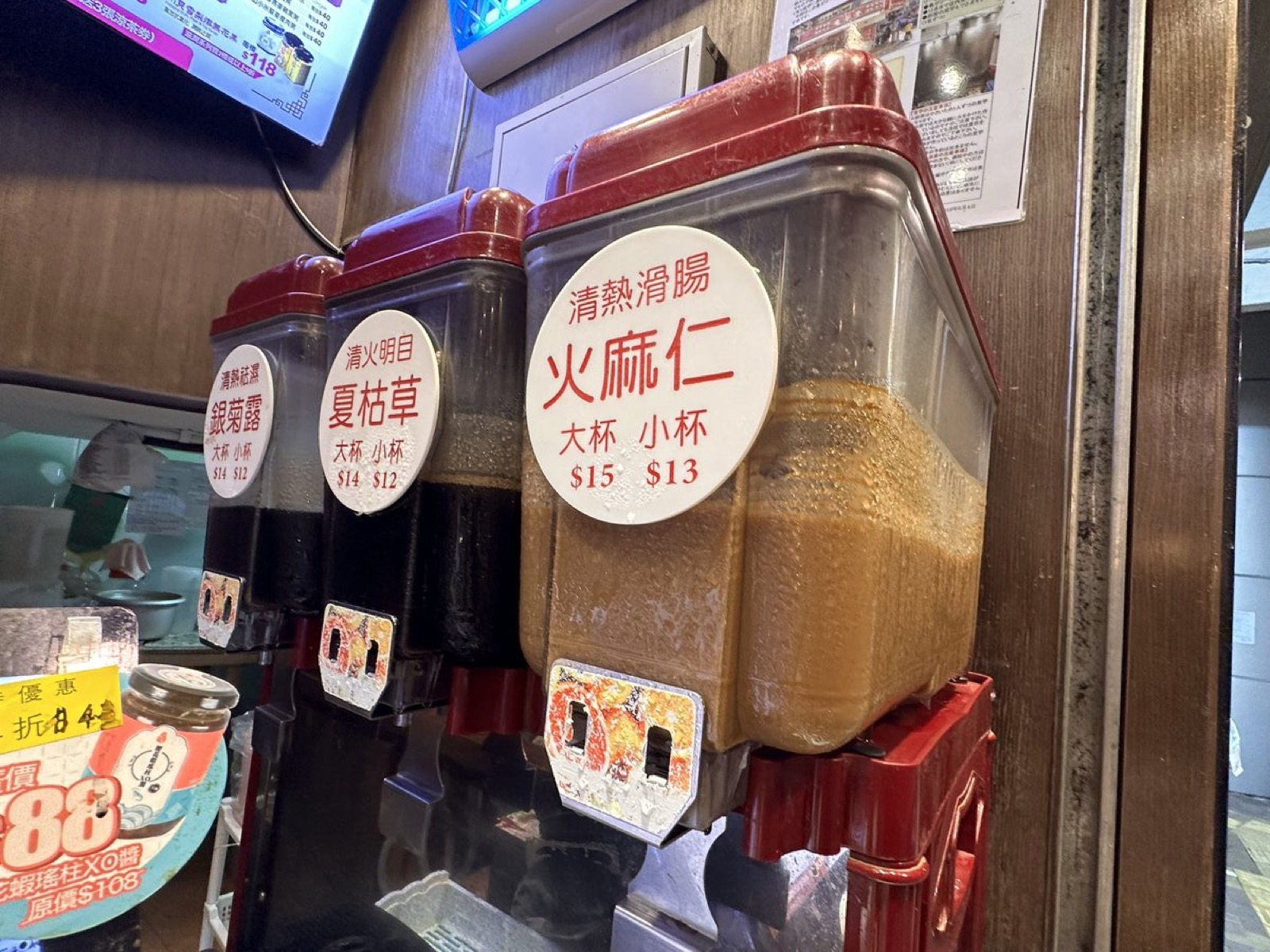
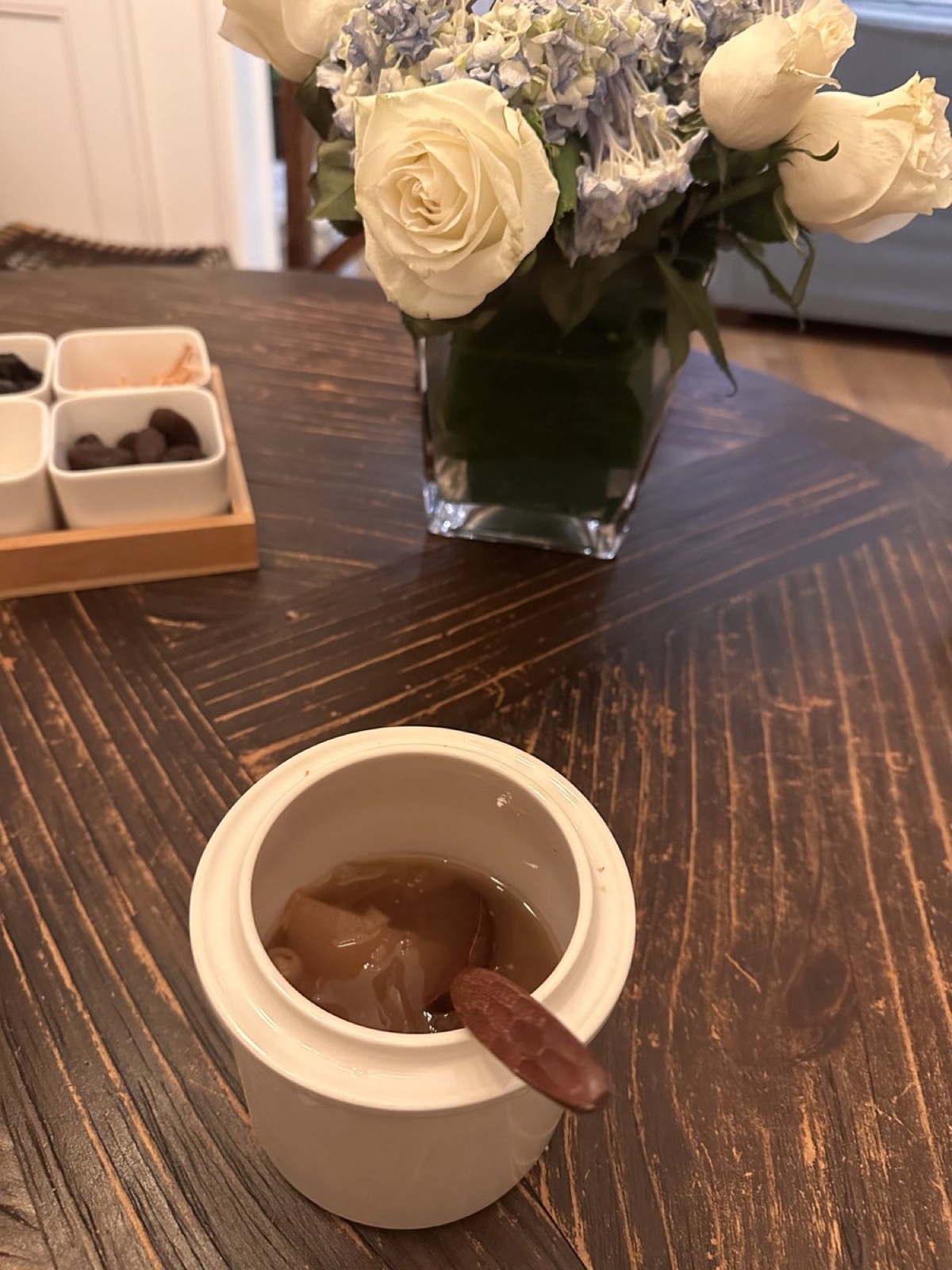
Only later did I find out that in Cantonese, tong sui, "sugar water," means dessert. Sweet soups, like the rock-sugar pear with snow fungus in the picture below. Delicious things. Why had I been so afraid?
More Hong Kong than Hong Kong
I spent most of my first half-year in Hong Kong on Cantonese.
In the end I got it to a place where it worked. People around me still thought it was only so-so, but the point of a language is to communicate, and we understood each other. Eventually people would guess that I came from somewhere in Guangdong province. They just couldn't work out where. (A Shanghai accent will do that to your Cantonese.)
I set myself a goal in those years. I didn't just want to fit in. I wanted to be more Hong Kong than the Hong Kong people.
I started with the "hardware": what you wore and how you looked. In those days men had their hair permed too, big tight curls all over. Flared trousers so wide at the bottom that the flare was wider than your shoe was long. For formal wear, a light-colored suit, all one color. For casual wear, a black leather jacket in winter, a plaid shirt in summer.
I did all of it.
In Hong Kong I set myself the goal of being more "Hong Kong" than the Hong Kong people. At first I focused on the "hardware" — clothes. Men permed their hair too, into that curly explosion, and wore flares wider than the length of their shoes.
— 2023-07-29
The "software," the way of thinking, took much longer. I would say it took me twenty years in Hong Kong. Twenty years.
But that was the plan. First the hair and the trousers. Then the head underneath the hair.
Mainland boy
I'll be honest. Part of the reason I wanted it so badly was that I knew what it felt like to be the other thing.
In Shanghai I had been the grandson of "black category" capitalists. Inland I had been the son of the "stinking ninth." In Hong Kong I was a daai luk jai: a mainland boy. Unwelcome, and suspected of having sneaked across the border.
I had been on the wrong end of a label in three places now. I knew how it worked. The label goes on first, and the person comes second, if at all.
So I learned the nine tones. I permed my hair. I bought the flares.
And then, once my Cantonese could keep me alive, I turned to the language I really needed. The one that opened the door to the room with the free Coca-Cola.
Late 1970s–Early 1980s: Loving Her First
He reads only the English signs, watches the news twice, confesses at an English church youth group, places a matchbox-sized ad in the newspaper, drinks in Wan Chai, takes classes at the British Council and the HKMA, and buys photos of film actresses to stop his mother worrying.
Once my Cantonese could keep me alive, I turned to English.
Not one front at a time. Listening, speaking, reading, writing: all of them, every day, as many ways in as I could find.
Hong Kong made this easier than you might think. It was a bilingual society. By law, every government notice, every public sign, every official announcement had to be in both Chinese and English.
So I made a rule for myself. I read only the English.
If I really couldn't understand it, then, and only then, I would look at the Chinese beside it or underneath. Every sign on every street became a lesson.
The news, twice
Every evening I watched the news twice.
First on the Jade channel, in Cantonese. Then on the Pearl channel, in English. They belonged to the same broadcaster, and very often the English news ran the same stories in the same order.
This is one of the most important tricks I know for learning a language, and I still tell young people about it. Let somebody tell you a story you already know in a language you don't. You will guess seventy or eighty percent of it. Then the guessing becomes understanding.
The first English novels I read were all about China, for the same reason. I knew the country. I just didn't know the words.
When you learn a language, you can choose your environment. Or, if you can't choose it, you can make it. Today I tell people to switch their phones and their maps into the language they're learning. "Turn left, turn right" or xiang zuo zhuan, xiang you zhuan: what's the difference? You'll get where you're going either way.
In Hong Kong I didn't have a smartphone. I had bilingual signs, a Cantonese news channel and an English one, and a lot of nerve. So I made my environment out of those.
Confession
I also started going to a Christian youth gathering at one of Hong Kong's English-speaking churches.
One evening a week, the young people sat together and each one talked about what had happened to them. They confessed the things they shouldn't have done. They asked the others for help. Everybody listened.
So I confessed too. In English.
I have never been a religious man. My father's family was Buddhist, my mother's family Christian, and I believe in nothing in particular. But the people in that room were very kind. When you're trying to say something true in a language you're still learning, everybody wants to help you get to the end of the sentence.
I got a great deal of practice saying true things in English that way.
The matchbox ad
Then I took out an advertisement.
In the classified pages of the South China Morning Post, I placed a little ad about the size of a matchbox. I was looking for a language exchange: someone who wanted to learn Chinese. No money would change hands on either side.
Someone answered.
We met regularly, and every meeting had two halves. In one half we spoke only English. In the other half we spoke only Chinese. I brought an English newspaper; he brought a Chinese one.
Simple. Free. And it worked.
Wan Chai
Even when I went out to have fun, I went where the English speakers were.
In those days that wasn't Lan Kwai Fong so much. It was Wan Chai. I went to the bars where English-speaking people gathered. And here is the beautiful thing about a bar: after a couple of drinks, nobody cares about your grammar or your pronunciation.
In those bars I was like a fish in water.
I've always played my best pool after two cans of beer, too. Same principle. When you stop worrying about how you look, you get better.
The book of mistakes
That principle actually started before I ever came to Hong Kong.
When I was first learning English, my father lent me a book. A beautifully made one. It was a collection of grammar and spelling mistakes made by famous people.
I read it and something opened in my head. These people made mistakes all day long? So what was I afraid of?
From then on, whenever I met a foreigner, I'd say, "Do you speak Chinese?" If you can't speak my language, well, I can speak some of yours.
One day my father lent me a beautifully made book. It collected the grammar and spelling mistakes of many famous people. Suddenly I saw the light: they made mistakes all the time too, so what was I afraid of? From then on, whenever I met a foreigner I'd ask, "Do you speak Chinese?"
— 2022-12-03
Not being afraid of mistakes was the turning point in my English. One of them, anyway.
The other thing I carried with me from inland was that little mirror.
My teacher there, the Cantonese lady from Yale and Cambridge, had drilled it into me: if the mouth isn't in the right shape, the sound won't be right. Learning pronunciation properly took months. Even today, when my son corrects my pronunciation, I find myself thinking: which phonetic symbol was that?
Here's a test I still use. Listen to how a Chinese speaker says "thank you." It's two syllables, and most people get the first one wrong. The tongue tip should push against the ridge behind the upper teeth and let the air out. Instead people say "sank." One friend told me he remembered the word as san ke you, "three grams of oil." No wonder.
And somewhere at the back of my mind, there was still that room with the free Coca-Cola. The foreign firms wanted English letters and English interviews. The British Council was where I went to get ready for that.
If you read my tweets today, you'll see I've definitely got past that hurdle. (Laughs.)
The British Council and the HKMA
There were two institutions in Hong Kong I loved most in those early years.
One was the British Council, in Wan Chai on Hong Kong Island. My first group of friends in Hong Kong were people I met there, and some of them are still my friends today.
The other was the HKMA, the Hong Kong Management Association. It ran all kinds of business courses. I was already doing business in a competitive world, but I felt I lacked the theory. These courses filled the gap.
The people who taught them weren't really professors. They were managers who ran companies during the day and taught at night, so everything they knew came straight from the front-line trenches.
I still remember three of them.
One teacher asked us: there are two shops. One is all stainless steel and glass. The other is all wood and straw. Both have a sign that says Fresh Eggs for Sale. Which one do you go to?
Another came to class in a perfectly respectable suit, except he had cut a triangle out of the back of the jacket. He wore shorts. He dropped his belt on the floor in front of the class. Then he asked us: will you remember me?
Well. Here I am, decades later, remembering him.
The third teacher had a habit. At the start of class he would write three words on the blackboard:
Time. Money. Manpower.
Whatever you do, he said, think about these three. Leave one out, and you won't get it done. Or you'll get it done and it won't mean anything. Waste any of them and you've failed too.
Hong Kong people care about efficiency and results more than almost anyone in the world. That blackboard was Hong Kong in three words.
One of my sons graduated from a famous business school, and he is rather proud of it. He thinks of himself as a graduate of the "military academy," and his old dad as something else. What he doesn't realize is that his old dad is a general who learned in the trenches.
Diaoyu
While I was studying in Hong Kong, I joined the protests over the Diaoyu Islands every year.
On the mainland back then, people had heard of "Diaoyutai," the state guesthouse in Beijing. Hardly anyone knew there were Diaoyu Islands, or that they were disputed. In Hong Kong, people knew. Every year a boat went out toward Japan to "assert sovereignty."
Many years later my wife asked me: who loves their country more, Hong Kong people or mainland people?
Hong Kong people, I said. I had been out there with them.
Loving her first
My English improved by leaps and bounds. People sometimes ask me how. I give them the same answer every time.
My English improved by leaps and bounds because I fell in love with "her" first, and only then did "she" begin to fall in love with me.
— 2023-07-15
My father, who taught English for a living, became suspicious. All this English. All these English-speaking friends. All these evenings out. He decided I must have found myself a foreign girlfriend.
In fact, apart from always admiring the genuine Chinese article from a distance, I had no time for a girlfriend of any kind.
But my mother worried that I was lonely. So every so often I'd stop at a newspaper stall, spend a few dimes on one or two snapshots of the same film actress, to fool my mother. Let her think what she liked.
The language "passed," as we say, slowly. Perfecting it is a different matter. That takes a lifetime. I'm still at it, nearly fifty years later.
But I knew one thing about myself by then. When it comes to learning a language, I fight like my life depends on it.
In Hong Kong, it did.
Early 1980s: All the Time in the World
No diploma, no family money, no connections, but endless time: he goes to rallies he doesn't care about, sits under a sign telling people not to talk politics, gets turned down by Taiwan, sells a German computer called the Medfly to rich people, and solders an Apple II at home.
By the early 1980s I was living on my own in Hong Kong, and I was, as we used to say on the mainland, "poor and blank." Yi qiong er bai. Nothing to my name.
And yet people my age envied me.
They looked at me like I was a member of the British royal family. I had a privilege they could only dream of: I could come home whenever I liked. Midnight. Two in the morning. Not at all. Hong Kong was a city that never slept, and Hong Kong families lived packed into tiny flats. If a young man came home late, he woke the whole family. I had nobody to wake.
So I had nothing, and I had freedom. That was my balance sheet.
In the early 1980s I was living alone in Hong Kong, "poor and blank." No diploma, no family money, no connections — but I had one tremendous resource: endless time. Apart from studying, I put everything into making friends, hoping to meet all kinds of people completely different from me.
— 2022-11-06
No diploma. No family money. No connections.
I want you to remember those three, because they come back.
But all the time in the world. I decided to spend it on people. As many kinds of people as I could find. Different backgrounds, different languages, different ideas. Anybody who wasn't like me.
Kindly refrain
One of my friends then had a Taiwanese background.
He had a very sharp nose for politics. Sharp enough that I sometimes wondered whether he, at his young age, was already working as some kind of agent. He kept dragging me along to political rallies with very clear demands.
We would take the Star Ferry from Hong Kong Island to Tsim Sha Tsui, then walk up Nathan Road, and there, amazingly, was an assembly hall full of furious people. The theme was always the same: retake the mainland.
They chanted slogans against Zhu De and Mao Zedong, still fighting the old war. They shouted, "Next Mid-Autumn Festival in Nanjing!" Most of the people in that hall hadn't set foot on the mainland in many, many years. Sometimes you would meet a so-called "National Assembly delegate" there, a man representing some Chinese province he had not seen for decades.
I had lived through the disaster of the Cultural Revolution. I had no interest at all in anything with raised voices. Whatever the speakers said went in one ear and out the other. I was just waiting for it to end so we could go and eat.
Afterwards we usually went to a very special little restaurant. In the middle of all of Hong Kong's skyscrapers, there was this place done up like a farmhouse. Straw hats and straw sandals on the door. A plough for decoration. The toilet was labelled the "Village Office."
Every time, I made sure to sit at one particular table.
On the wall above that table, in careful regular script with a brush, was a notice:
Kindly Refrain from Discussing Affairs of State.
I sat under it on purpose, to remind my friend. Please, no more politics. My life had been all "political construction" so far. It was time for some "economic construction." Let's talk about how to make money, shall we?
The island on the writing paper
There was one place, though, where politics got in my way and I didn't let it.
When I was a boy in Shanghai, our family had a kind of writing paper that never seemed to run out. Printed on it was a beach with coconut palms. My grandfather told me: that's a place where Chinese people live. But you will never be able to go there in this life.
Taiwan.
People then called it Formosa, from the Portuguese, I heard, meaning "beautiful island."
So when I got to Hong Kong, of course, I had to go. Tell me I can't go somewhere and I will absolutely go.
The application form was the first problem. Printed on it, in red traditional characters, in neat regular script, was a sentence: I hereby guarantee that I will do nothing harmful to the Party-State.
How was I supposed to know what was harmful to the Party-State?
Not long after I handed in the form, someone contacted me and asked to have a talk. We met in a café in a busy part of Hong Kong. He asked me all sorts of strange questions.
I said I needed to go and make a phone call, to "consult my lawyer."
I called a good friend. He said: go back to the table, he'll be gone.
He was right. When I got back, the man had vanished without a trace. It turned out the British Hong Kong government would arrest any Taiwanese government agents carrying out "illegal activities" in the colony. The word "lawyer" was enough.
My application was rejected, of course.
A year or two later I got to know one of those Taiwanese "National Assembly delegates," and with his help, it finally went through. The first time I stepped onto that "beautiful island," everything was new and strange to me. It was still the one-party era of the Kuomintang in the early 1980s, and anything that involved the government felt peculiar. I had the feeling everybody wanted to overthrow it.
Later I went back dozens of times.
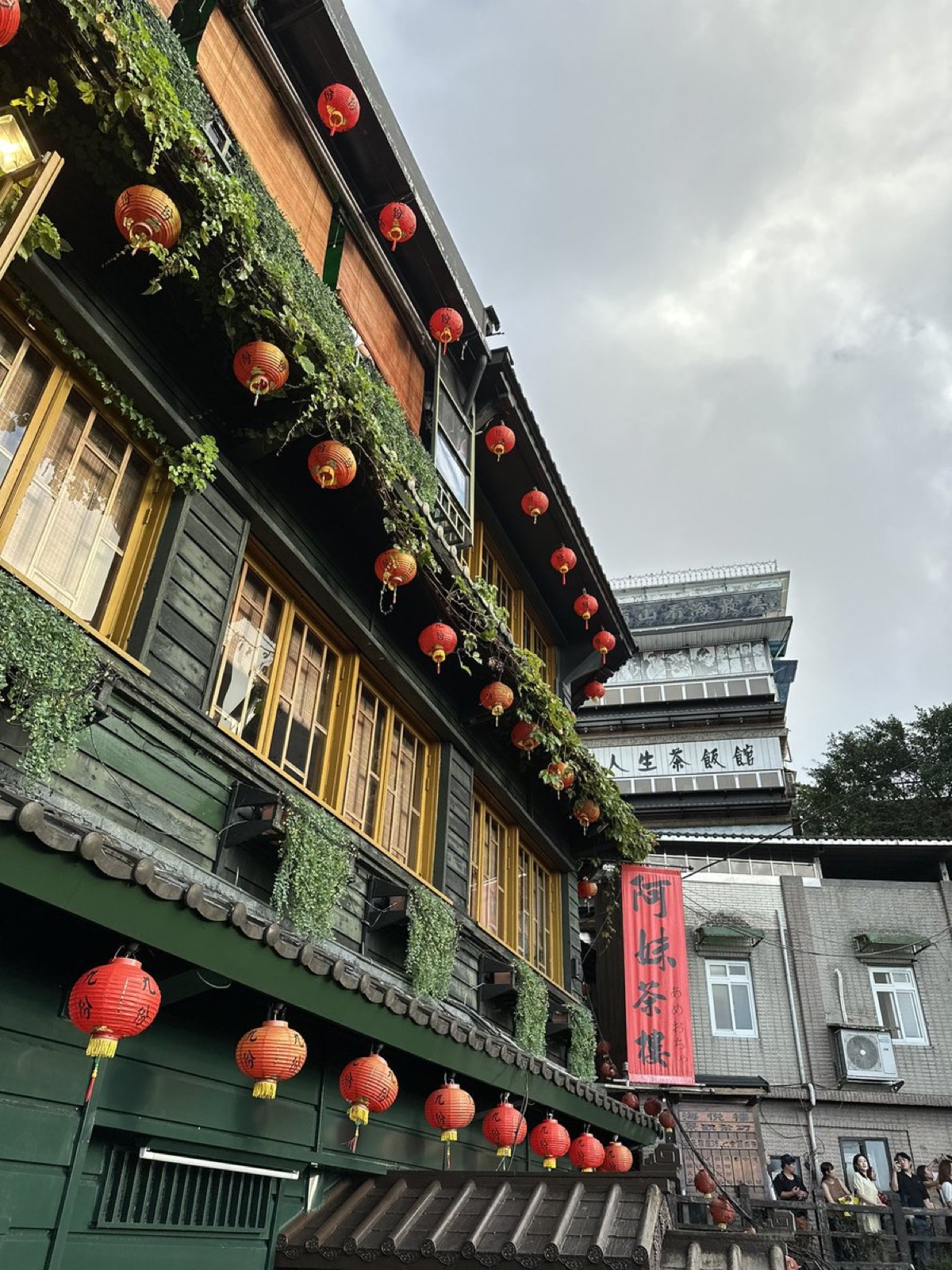
The fruit and the fruit fly
Now for the economic construction.
Personal computers had just started to catch on in Hong Kong in the early 1980s. Only rich people could afford them. Ordinary people bought a kit and soldered it together at home: what we called a "compatible."
Houses, relatively speaking, were cheap then, and computers were expensive. The sales pitch for computers in those days is something you'd hardly believe now. It was all about 1997, when Hong Kong would go back to China. You can't take your house with you. You can take your computer.
"When the Communists come, they'll take your house. They can't take your computer."
California is famous for its orchards, and at that time, apart from Apple, there were computers named after all kinds of fruit. Plenty of young people in Hong Kong had part-time jobs selling California "fruit."
I went my own way. I sold a German personal computer brand called the Medfly.
The Medfly. The Mediterranean fruit fly.
And it sold quite well. Part of me thought: fine, you sell the fruit, I'll sell the fruit fly. Let's see who wins. (Laughs.)
The computers of those days could do very little. Some limited word processing, a spreadsheet, a database. A lot of people mainly used them to play games. The most popular was Pac-Man.
In Hong Kong then, one sign of being rich was having a computer at home. And personal computers had to be installed by a specialist who came to your house.
So I went to a great many mansions and villas in Hong Kong to install personal computers.
Personal computers all had to be installed at your home by a specialist. I went to a great many mansions and villas in Hong Kong to install them. You could call it my first lesson in inspirational education: it's great to be rich.
— 2023-09-17
Mansions and villas, and then back to my rented room. It's great to be rich. That was the whole lesson, and I learned it thoroughly.
The soldering iron
The fruit wasn't only something to sell. It was something to build.
At the Golden Shopping Centre, the place in Hong Kong for electronics, I bought an Apple II kit. Steve Jobs's Apple II. I carried it home and soldered it together myself.
I also mailed five US dollars to Bill Gates and got his MS-DOS operating system back by post.
Five dollars to Bill Gates. (Laughs.) I should have asked for shares.
And I taught myself to program in BASIC, as a hobby. Hardware and software, both. I was a real computer fanatic.
At the time, none of it seemed connected to anything. It was what I did with my time: the endless time that was my only resource. Soldering a kit in a rented room. Selling fruit flies to millionaires. Writing little programs nobody needed.
I didn't know I was building the answer to a question that hadn't been asked yet.
The three things I didn't have
Let me come back to those three.
No diploma. That one hurt the most. I had come through the Cultural Revolution, and like so many of my generation, I hadn't had a proper education. In Hong Kong, the foreign firms with their Pantries and their free Coca-Cola were full of people with degrees. Some from America. Some from the Ivy League.
No family money. The inheritance had turned out to be a tofu-sized stamp shop.
No connections. I had one benefactor, my father's acquaintance, and I had already had my miracle from him.
And yet. Hong Kong, I had started to notice, didn't seem to care about those things nearly as much as I did. The bosses here had come from everywhere. Many had come with nothing. People admired the ones who had started out eating rice with soy sauce, and looked down on the ones who were born rich.
Maybe, I thought, nobody here is going to ask what my diploma is.
Maybe nobody here asks where you came from.
I was about to find out.
Early 1980s: The Interview
In a light suit, flares, pointed shoes and a perm 'like a big hat,' with a long umbrella for a cane, he walks into an interview at an American computer company, is asked what kind of people annoy him, gives an honest answer, and forgets to ask about the salary.
I remember the day of the interview very clearly. Mostly because of what I was wearing.
A light-colored suit, all one color.
Under it, flared trousers, and at the bottom of the flares, a pair of pointed leather shoes.
My hair was permed into tight little curls. So much hair, so curly, it looked like I was wearing a big hat.
It was drizzling a little that day, so I carried a long umbrella, and I used it like a walking cane. Tap, tap, down the pavement.
There is a photograph of me in my album from around then to prove it. By the standards of the time, I was right on trend. Very "in," as young people say now.
One day in the early 1980s, I wore a light-colored suit, with pointed leather shoes under my flares. My hair was permed into curls, like I was wearing a big hat. It was drizzling a little that day, so I carried a long umbrella and used it as a cane.
— 2023-07-10
The Boy from the round-windowed tower had come a long way, at least from the neck down. (Laughs.)
Choosing them
In those days, applying for a job at a foreign company meant a cover letter, and I had worked on mine with great care. But I knew the letter only got you through the door. After that it was what you wore. Then how you talked. And how you talk is not something you can prepare in a day or two.
There was one more thing I wanted them to understand: while you are choosing me, I am also choosing you.
The company I was going to see that day was an American company's wholly owned subsidiary in Hong Kong. Wang Computer.
Wang Laboratories, the Americans called it. Everyone in Asia called it Wang Computer. It had been founded by Dr. An Wang, a Chinese man who graduated from Jiao Tong University in Shanghai and then took a doctorate at Harvard. He started the company by himself in the 1950s with six hundred dollars. By 1984, Forbes would say he was worth 1.6 billion US dollars. The company employed 33,000 people and had annual sales of more than three billion. He owned fifty-five percent of it.
Wang's word processors were everywhere. Besides all the business customers, American embassies and consulates around the world used them. At that time it was the third-biggest computer company in America.
I knew what kind of company it was. I knew they valued individuality. So my cover letter was written specially for them, carefully targeted. No formulas. No stock phrases. If you went to the Commercial Press bookshop and bought one of those books of sample cover letters and copied it out, you would ruin your chances for sure.
Who is this man?
The man who interviewed me was not a department manager. No one from personnel was sitting in either.
So who was he?
He turned out to be the president of Wang Computer for the whole Asia-Pacific region.
The interview was in English. All those evenings on the Pearl channel, the church confessions, the matchbox ad, the bars in Wan Chai. This was where they had to work.
Near the end, he asked me a question I have never forgotten.
"What kind of people really annoy you?"
I didn't think about it very long. I gave him the true answer.
People who keep asking you what you studied, and what diploma you have.
No diploma. No family money. No connections. I had carried those three things across a bridge and through every job advertisement since. Now someone had asked me what annoyed me, and out it came.
He looked at me and said:
"Guess what I studied?"
Before I could answer, he told me.
"Drama."
The Asia-Pacific president of the third-biggest computer company in America hadn't studied computing at all. He had studied drama. Acting.
I almost laughed out loud.
A man who had studied acting was running the Asia-Pacific region of a computer company. A young man with no diploma at all was sitting across from him, asking to be let in. Maybe the two of us were proof of the same rule.
Please stop looking
Then he said he had one request for me. He hoped I would stop looking for other jobs.
But he hadn't yet decided which department to put me in.
During the interview he had seen how much I loved computers. My hobby was writing programs in BASIC. I'd been to the Golden Shopping Centre and bought Apple II parts and soldered them together myself. And I was stubborn about everything; I always followed things through. They liked people like that.
Nobody asked about my diploma. Nobody asked who my father was, or how I had come to Hong Kong, or which school I'd gone to. He asked what I could do and what I cared about, and what annoyed me, and when he heard the answer, he hired me.
That was the moment I understood Hong Kong's first rule. Not as a saying. As a fact.
No one asks where a hero comes from.
I wasn't a hero. But nobody asked.
Done
I walked out of the building and found a public phone. I called a good friend of mine at the time.
"Done," I told him. "I've got it."
"How do you know?" he said.
Let me be modest here. The big boss had grown up in Shanghai. So had I. So that interview was really decided in Shanghai. (Laughs.)
And then it hit me.
"Oh no," I said. "I forgot to ask how much the salary is."
He had told me my position and my grade. But I had never asked about money. Not once. A young man who had arrived in Hong Kong with twenty dollars and lost all of it in half an hour, who had eaten Life Bread on the street with tears in his eyes, who had counted out a month in seven loaves: I walked out of the most important interview of my life without asking what they would pay me.
"Oh no," I said, "I forgot to ask about the salary!" They had only told me the position and grade. But it couldn't be bad, because while I was waiting I'd seen an enormous Pantry, stocked with Nescafé and Coca-Cola, every kind of food and drink (laughs).
— 2023-07-10
But I wasn't worried. Not really.
Because while I was sitting there waiting for the interview to begin, I had seen it.
The Pantry.
A big one. Nescafé. Coca-Cola. Everything to eat, everything to drink.
In the tower with the round windows, I had been the one making the tea for everybody else. One sugar or two. Here, the drinks were waiting for whoever wanted them.
The room with the free Coca-Cola
I want to stay with that a moment, because it means more to me than it might to you.
On my first day in Hong Kong, the thing I had heard about foreign companies, the one detail that stuck, was that room. A room where you could pour yourself a free Coca-Cola, and a cup of Nescafé, and nobody would charge you, and you could chat with the pretty girls from the office.
That same day I had cried over an eighty-cent loaf of bread.
And here it was. A big Pantry, stocked with everything, in an American computer company. And they wanted me to stop looking for jobs so they could keep me.
I didn't know the salary. I didn't know the department. I knew I was going to get a key to that room.
Sometimes, when people ask me what success felt like when I was young, I think they expect me to say something about money, or a title. Honestly? It felt like a free can of Coca-Cola.
My most respected American
Years later I would write a series of tweets with the title The American I Respect Most. People were surprised when they found out who it was. He was Chinese, after all.
But he became an American, and built one of the great American companies, and I worked for him.
When I say I respect him, I don't mean because of his money, or because he gave me a job. I mean the way he cared about people, how hard he worked at technology, and how bold he was in business. Dr. Wang was hard-working and frugal all his life, generous and modest. He called his autobiography Lessons.
He had started in a garage with six hundred dollars.
I had started on a bridge with twenty.
Different scale. Same idea.
When he was alive, Dr. Wang was a household name in America. He had all kinds of awards, and honorary degrees from more than a dozen universities, and his donations were everywhere you looked around Boston. At one time he was the fifth-richest man in America. Many young people today have never heard of him.
But there is still a group on Facebook called "ex-Wang," for people who used to work there, and the members come from every country you can think of. A retired Dutchman even started his own Wang museum. If you were one of us, I wave to you from here.
No business school
Many years later, someone online came to me with a question about business school. I had to tell him the truth.
You've got the wrong man. I've been in business my whole life, and I never spent a single day in a business school.
— 2023-05-28
What I had, that drizzly morning, was a perm, a pair of pointed shoes, a cover letter I had written myself, a soldering iron at home, and a true answer to one question.
It was enough.
The Living-Room Head was going to work for Wang.
Early 1980s: Shanghai Little Friend
Three floors above a Japanese department store in Causeway Bay, the youngest Shanghainese in the office becomes Mrs. Wang's 'Shanghai little friend,' learns what an American company does for its people, and takes his backpack and jeans across America.
The Asia-Pacific headquarters of Wang Computer was in Causeway Bay.
In those days Causeway Bay had three big department stores. One of them was called Mitsukoshi. Above it, in the same building, Wang had three floors.
The stamp shop the size of a block of tofu was in Causeway Bay too. On a side street, a short walk away. I had gone from minding one to riding the lift up to the other.
There were a few older people in the office who spoke Shanghainese. I was the youngest of them. Mrs. Wang couldn't remember my name, so she called me Shanghai xiao pengyou.
"Shanghai little friend."
I never imagined that one day the little friend would become a Shanghai old man, and sit down to gossip about the Wang family's affairs in public. (Laughs.)
There were a few older people at the company who spoke Shanghainese, and I was the youngest. Mrs. Wang couldn't remember my name, so she called me "Shanghai little friend." Who knew that today I'd be a "Shanghai old man," gossiping about their family's business.
— 2023-07-09
Rich, and stingy
Everybody around Dr. Wang, the people close to him and the tens of thousands below him, liked to discuss two things.
How rich he was.
And how stingy he was.
The truth was: being rich, he wasn't going to hand his money out to the staff. And being stingy, he never short-changed his employees either.
He had started on his own in the 1950s, in a garage, with six hundred dollars. In the first year his sales were fifteen thousand dollars. By the middle of the 1980s, they were more than three billion.
His trademark was the bow tie. He never wore an ordinary necktie. Some people said he only owned three bow ties. Others said more.
Playing mahjong with him was the dullest thing the senior people in the company could do. In the Wang household, the limit was twenty dollars. If anyone won or lost more than that, it didn't count. Otherwise, Mrs. Wang would say:
"Wang An is gambling."
Twenty dollars. I knew a little about twenty dollars.
The big family
Wang Computer's people were like a global "big family," and the pay and benefits were among the best in the industry. Remember, that was the standard forty years ago.
Everyone had the right to buy preferred shares. Every quarter, ten percent of your pay, at the best possible price. And the shares had voting rights, so that the employees really could steer the company. You were not just a worker. You were a part-owner.
Every year the company held a convention somewhere famous, and you could bring your family. Fiancées, boyfriends, girlfriends: all welcome. The company paid.
In Hawaii and in New Orleans the slogans were:
Catch your wave.
Blow your horn.
Phone calls between China and America in those days had to be routed through a third country, and the price per minute was astronomical. The company let every one of us claim back the cost of one call home to the family each week.
Anyone sent to work in China got a fixed allowance of twenty-five US dollars a day, and their salary went up by twenty-five to seventy-five percent, depending on how long they'd been away from home.
And the salespeople. Their commission was between one and three percent of the contract. Where the reward is great, brave men will come forward. Everyone treated the job as if it were his own business.
The pay attracted all sorts of talent. Ivy League graduates were nothing unusual. And the people who got hired worked extraordinarily hard.
I was not an Ivy League graduate. I was a Shanghai little friend who had once been the Boy. But I was in the family now, and I worked as hard as any of them.
Wang Dollars
Most people can't imagine how extravagant the annual convention of a company founded and run by a Chinese man could be.
The company booked the best five-star hotels and conference centers. The PR firm that organized it sent more than five hundred staff. Every plane, ship and bus had the WANG logo on it. Whenever the delegates from all over the world went anywhere, motorcycle escorts rode ahead of us in formation like a flight of geese, clearing the road. Every single one of us, whatever our rank, got the treatment of an American president.
Sometimes the wine glasses at the banquet were printed with the Wang logo, and you could take them home afterward. Some of the gift boxes had your own photograph printed on them. You felt like a movie star.
One year, at a holiday resort in America, the company rented an entire shopping street. Every shop put up a sign: No US dollars accepted. Wang Dollars only. Each of us was handed the company's own "currency."
All the packaging and atmosphere of the convention made every Wang employee there feel that this was the greatest company in the world, that we were a group of extraordinary people, and that there was nothing we wanted to do that we couldn't do.
— 2023-07-09
I thought back to a young man on a bridge, holding one Hong Kong twenty-dollar note and nothing else.
Now a company was printing money just for us.
Backpack and jeans
Those conventions and training courses gave me a chance to go to America every year. I took every chance I got.
I put on my jeans and a backpack and, you could say, I travelled all over America. The first time I visited Las Vegas was 1982. But the place I went to most was Washington, the capital. It was dirtier and messier then than it is now. But there was so much to see.
Let me put my feelings about America in one sentence, the way I'd put them now:
I fell for it because I misunderstood it, and was disappointed in it once I understood it.
And the other thing I learned: the people there could not be more different from one another.
Lunch at a church
One day I stopped someone on the street to ask for directions.
He was a veteran, and he had lost a leg. He had no money. But he was extremely hospitable, and he insisted on taking me to lunch.
Where? A very big church. We sang hymns with a crowd of strangers first, and then we ate our fill. The food was actually very good.
So that was one kind of American.
The lawn by the White House
Another day I was sitting on the grass near the White House, reading a book, and someone came over to pick a fight.
"Are you Korean?"
You people wanted Americans to go and fight in your country, he said, and we lost a lot of men. He grumbled on and on. I told him I wasn't Korean.
"Then you're Japanese. You're no good either."
He used an insulting word. I remember it.
"Jap."
So that was another kind.
One day I was sitting on the grass near the White House reading a book, and someone came over to start trouble. He asked if I was Korean: "You wanted Americans to go fight over there, and a lot of us died." He went on and on. I told him I wasn't. "Then you're a Jap. No good either."
— 2024-03-02
The steps of Capitol Hill
And then there was the third kind.
On the steps of the Capitol, a stranger came over and said hello. A typical-looking American. And he spoke good Mandarin.
It was his wife's birthday that day, he told me, and he was going to give her a present. The present was that he would run several miles. So that he would stay healthy for her.
So this is how Americans give presents?
He had never spent a single day in China. He'd learned his Chinese at Harvard. He ran a chain of thirteen hotels in Honolulu, and he invited me to come and visit.
We became good friends. He explained a great many things about America to me. I explained a great many things about China to him. And of course we visited each other.
I met him by accident, on some stone steps, on a day with no appointment. That was a trick I had learned in my early Hong Kong days, when I had all the time in the world: meet as many people as possible who are nothing like you. It worked in Washington too.
Questions in bars
In bars I met yet another kind of American.
Some of their questions left me speechless.
"Which is bigger, Hong Kong or China?"
Someone asked me, quite seriously, whether Chinese men still wore their hair in a queue.
Americans usually knew the name of the president's dog. The leaders of other countries, they couldn't care less about.
And there was a phrase I kept hearing that I couldn't understand. Redneck. There was no easy way to look things up then, and when I asked people, nobody could explain it properly.
So I made up my own explanation. I decided it must mean the people from remote places who drank all day, talked very loudly, and got so worked up that their faces went red and their necks went thick. In Chinese we have exactly that expression: lian hong bozi cu, red in the face and thick in the neck.
It was a good guess. It was also wrong. I only found out much later where the word really came from.
What a Party secretary does
There was one more thing the Wang family taught its people, if they were going to work in China. It sounds like a joke, but it was serious.
You had to learn who did what. What does the Party secretary do? What does the factory director do? Which of them is the bigger official?
Very interesting, isn't it?
I was about to need every bit of that.
Because the Shanghai little friend, who had grown up in Shanghai, been sent inland, crossed a bridge into Hong Kong and backpacked his way around Washington, was going back to the mainland.
Not as a mainland boy.
As a man from an American computer company, with a business card.
1984: Beijing
With a shiny title on his business card and no real power at all, the small fry in Beijing helps bring Dr. Wang to meet Deng Xiaoping, watches three future leaders up close, and learns on a beach in Hawaii what a country thinks a life is worth.
I remember it was some day in 1984 when headquarters called.
"The big boss is coming to China to meet the top leader."
Nobody needed it spelled out. The big boss was Dr. Wang. The top leader was Deng Xiaoping.
Carrying the sedan chair
At that time the company had a policy. We called it, privately, tai jiaozi: carrying the sedan chair.
When you dealt with Chinese officials, you raised up your boss. Your boss raised up his boss. And so on up, until the person at the top was high enough to sit across from the people who actually made decisions.
Dr. Wang was probably the richest Chinese technologist in the world then. China was trying to carry out the Four Modernizations, and computerization was obviously the most important of them. The people at the helm sat on things like the Central Finance and Economics Leading Group and the Central Advisory Commission. The Chinese leadership took his visit very seriously.
I was in Beijing by then. The company had printed me a very shiny title for my business card.
In reality I was a xiao louluo. A small fry. A foot soldier.
But I took every task I was given extremely seriously. I wanted to help the company grow its business. I wanted to help China modernize. And yes, I was thinking about my next promotion and raise as well. All three at once. I see no shame in it.
At that time I was in Beijing. The company printed me a shiny title, but in reality I was just a small fry, and I took every task I was given very seriously: helping the company grow, helping China modernize, and thinking about my own promotion and raise.
— 2023-07-07
The plane goes the long way
Before Dr. Wang had even arrived, there was a problem.
The Civil Aviation Administration would not allow his foreign-registered plane to fly a domestic route, Beijing to Shanghai. So it had to go the long way round. Beijing to Hong Kong, then Hong Kong back up to Shanghai.
All that time and fuel, wasted, over a rule.
A border, in 1984, was still a border. Even for one of the richest men in America.
The line on the floor
The protocol department of the Foreign Ministry briefed us in great detail.
The line where the two men would shake hands in front of the cameras was marked very precisely. Deng Xiaoping would be standing on the side with a raised platform. Dr. Wang was a small man too.
Was all that really necessary? I wondered.
At the banquet Dr. Wang was going to give a speech in Chinese. Even that turned out to be a challenge. I discovered there were quite a lot of characters he couldn't read. Qiaoliang, "bridge," for one.
And then the meeting itself. Deng Xiaoping spoke Sichuanese. Dr. Wang spoke Shanghainese. It was like a chicken talking to a duck, as we say. Even the interpreters couldn't help.
Deng said to Dr. Wang, in a very heavy Sichuan accent:
"Ni jia da ye da, huilai zuo dian hao shi."
Your family is big and your business is big. Come back and do some good.
I am quite sure Dr. Wang didn't understand a word.
I said to the colleague standing next to me: Shanghainese into Sichuanese, Sichuanese into Shanghainese. Isn't that exactly my specialty? In that photo, I should have been the one sitting in the middle. (Laughs.)
Deng Xiaoping said to Wang An, "Your family is big and your business is big, come back and do some good" — in a very heavy Sichuan accent. Dr. Wang certainly didn't understand. I said to a colleague: Shanghainese into Sichuanese, Sichuanese into Shanghainese, isn't that my strong point? I should have been sitting in the middle of that photo (laughs).
— 2023-07-07
Shanghai, Sichuan, Cantonese, English. The man who had once failed to recognize his own name over a loudspeaker at Lo Wu was now the only person in the room who could follow both sides. Nobody asked him to.
Shaoxing wine
In Beijing, Mrs. Wang asked me where she could buy some Shaoxing wine.
I said I'd better ask our Shanghai colleagues to help. Then I thought again. No, wait: there's Chinatown in Boston, you can get it there.
Mrs. Wang said, in Shanghainese:
"Xiao gui tou, e mian da te gui le."
Little rascal. It's far too expensive there.
Far too expensive. This from a woman who had come to China on a private plane.
And this from the young man who, on the day he found his first job in Hong Kong, had spent a thousand borrowed dollars on a haircut, shoes and a suit.
Death of a salesman
There's an old Broadway play, Death of a Salesman. A very sad story about the American Dream.
But in that particular moment in history, a salesman like me could meet the heads of some of the most important departments in a whole country. And some of those men went on to lead it.
It is a very strange thing, and worth remembering. I'll tell it as I remember it, briefly. If my memory is wrong, please feel free to correct me.
Selling a computer to China then was enormously complicated. Apart from China's own approvals, it had to go through an international body called COCOM, the Coordinating Committee in Paris, whose job was to restrict technology exports to Communist countries. Very often, by the time a computer arrived in China, it had already been replaced by newer models two or three times over.
One day a computer arrived at the Ministry of Water Resources and Electric Power. It was a size smaller than expected. In every way it did the same or more: more memory in the main unit, more terminals you could connect. But the people in charge of computers wouldn't sign for it. It wasn't the box they'd been promised.
The minister was Li Peng. He couldn't make up his mind either. I watched him with sweat all over his nose, worrying about a metal box that was a bit too small. In the end they had to ask the old minister above him.
At the Ministry of Electronics Industry, the minister was Jiang Zemin. We were negotiating a joint venture: our side wanted the majority, and wanted it in Shanghai, Dr. Wang's hometown. China didn't even have a joint-venture law yet. Everything had to wait for a nod from above. The talks never quite came together. Somehow, instead of founding a company, the two sides ended up co-sponsoring a Peking opera. A University of Hawaii troupe that sang Peking opera in English performed The Phoenix Returns to Its Nest at the Chang'an Theatre in Beijing.
And at the State Economic Commission there was Zhu Rongji. Dr. Wang had donated a VS100 minicomputer to the new management school at Tsinghua, of which Zhu was honorary dean, and the commission wanted to negotiate after-sales support. Why negotiate over a gift? Zhu said: why give it to me and not to someone else? There must be a commercial interest in it, right? He was right. Later in the talks he said: who's the "boss" here? Me, of course. "The man named Zhu."
That sounds ordinary today. At the time, from a Chinese official, it was startling. My colleague and I looked at each other. This was a man to watch.
When those three later ran the country, none of it had anything to do with my life. But I would see the shadows of those meetings in their decisions.
Strike hard
There was another thing in the air in Beijing in those years.
Suddenly the whole country, from top to bottom, everyone was shouting yan da. "Strike hard." A campaign against crime.
I thought: strike hard? Does that mean that until now we were striking softly? The law is always there. It doesn't tighten or loosen because somebody shouts. People who shout these things want something.
I had grown up with slogans. I had sat under a sign in Hong Kong asking people please not to discuss affairs of state. In Beijing there was no such sign, and no such table. I worked for an American company, and I did my job.
A man faints in Hawaii
In 1984 I also went to Hawaii on my own.
On the plane I got talking to a tour guide who was leading a group of shareholders from a Taiwanese textile mill, and I decided to join their tour.
At the very first buffet lunch after we landed, something happened. One of them, an elderly Taiwanese gentleman in a suit and tie — on an island that hot, I never saw anyone else in a suit and tie — fainted from the heat.
I thought it was a small thing.
But in front of me appeared a whole crowd of people in uniforms. Police. Security. Paramedics. Medical staff. And somehow, I became the interpreter.
When the guide went off in the ambulance with the old man, the people left behind, including reporters, surrounded me. Someone from a charity gave me a business card and said they would pay the medical costs. Most people simply wanted to know how the old gentleman was.
At that moment I thought of a girl I had seen in Beijing.
She had been riding a bicycle, and a car hit her and killed her. She lay outside the Soviet embassy for hours.
I thought of the girl on the bicycle I'd seen in Beijing, hit and killed by a car and left lying in front of the Soviet embassy for hours. That this nation valued life so much moved me deeply, and I said some emotional things to the people there, the press included.
— 2023-02-12
Before we had even finished lunch, the old Taiwanese gentleman was back at the table, eating.
When I finally wrote this story down, I put it next to another one, from America fourteen years later, that showed the other side of the same country. But in 1984, standing on that hot island with reporters around me, I only saw the one side.
A girl on the ground in Beijing, and nobody came.
An old man on the floor in Honolulu, and everybody came.
The small fry with the shiny business card went back to Beijing having seen, with his own eyes, how much one life could be worth.
Not everywhere. But somewhere.
Mid-1980s: Census, Locomotives and Postage Stamps
Selling computers across China, he puts Wubi into a Wang keyboard, visits the locomotive works, lives in the Friendship Hotel, hands out American university catalogues to students who need stamp money more than tuition, and rescues a British colleague from a little trouble at a dance in Xi'an.
In those years China was a very good place to be a Wang man.
Our biggest competitor, IBM, didn't even have a Chinese name for itself yet. And Wang machines could already take Chinese in and put Chinese out.
There was a man in Henan called Wang Yongmin. He had invented a way to type Chinese characters by their shapes, called Wubi, "five strokes." Some people later called it the "Wang Code," because of his surname. We got in touch with the Henan provincial science commission quickly and made an agreement with him, and built his input method into the Wang keyboard.
A Wang typing in Chinese on a Wang. (Laughs.)
The seven ministries
The main information systems at the State Planning Commission and the State Economic Commission ran on Wang equipment. So did the national materials bureau.
So did the big steel mills: Capital Steel in Beijing, Anshan, Taiyuan, Ma'anshan, the special steel works at Panzhihua.
Some of the 156 projects the Soviet Union had helped China build in the 1950s chose Wang for their information systems. The ones that made the deepest impression on me were in Luoyang, in Henan: the bearing factory, the tractor factory, the mining machinery plant.
Then there were the ministries. In those days China had the First through the Seventh Ministries of Machine-Building, and I can still recite them in order today:
Machinery. Nuclear. Aviation. Electronics. Ordnance. Shipbuilding. Space.
I learned them the way I had learned the quick brown fox. Over and over until my mouth knew them better than my head.
The census and the locomotives
There were two famous projects. One was the United Nations-funded census. The other was the World Bank's locomotive project.
I was involved in both, from beginning to end. In particular I went to the places where they built the locomotives: Qingdao. Zhuzhou. Beijing. And a place called Qishuyan, which most people have never heard of.
At that time the main information systems of China's planning commission and economic commission used Wang equipment. There were also two famous projects: the United Nations census and the World Bank's locomotive manufacturing. I was involved in both from start to finish, especially going to the places that built locomotives: Qingdao, Zhuzhou, Beijing, and a place called Qishuyan.
— 2023-07-09
Imagine it. A few years before, I had been a young man who couldn't pay for a taxi across the harbour. Now I was riding trains across China to the factories that built the trains.
We also set up joint-venture companies and factories in Shanghai and Xiamen, called Wang Computer China. When we negotiated them, China didn't yet have a law for foreign joint ventures. So first came the Wang joint venture. Then came the law.
And Dr. Wang donated computers all over the Jiao Tong university system: Shanghai Jiao Tong, Xi'an Jiao Tong, Northern Jiao Tong, Emei Jiao Tong. His old school's family.
The Friendship Hotel
Wang people who were sent to China all had to be able to understand, speak, read and write Chinese. Even the foreigners. Compared with other foreign companies in China, Wang people knew more about Chinese culture. That's why the company chose the old-fashioned, beautiful Friendship Hotel in Beijing as our base.
I lived there for long stretches.
It belonged to the Foreign Experts Bureau, out in the western suburbs of Beijing on Baishiqiao Road. It had many buildings, and many gates, and gate guards in army uniforms. The Cambodian government of Prince Sihanouk was inside it too.
Next door was Renmin University, and the company rented its sports facilities. But the students we got to know best were from Peking University and Tsinghua.
Mahjong, dancing, TOEFL
Those students divided themselves into factions.
The mahjong faction. The dancing faction. And the TOEFL faction: the ones studying for the English test to go abroad.
University in China, then, was the opposite of abroad. Hard to get in, easy to get out.
The ones getting ready to study in America were the ones who found me. And the strange thing was what they needed money for. Many of them had family members scraping it together for them, or took part-time jobs. But not for tuition. Not for living costs.
For postage stamps.
To apply to American universities, you had to send out a great flood of application letters. Stamps were what they worried about. Stamps, and maybe one day a plane ticket.
Students from Peking University and Tsinghua had good chances of getting scholarships and teaching assistantships. Some got everything: tuition, living costs, even the airfare there and back.
I got hold of a few American university catalogues and yearbooks from the States. The students treated them like treasure. They passed them from hand to hand. And then they started writing letters.
In those days going abroad to study didn't take a fortune, only the idea of it. I got a few American university catalogues from the US, and the students treated them like treasure and passed them around. Then they sent out a flood of applications. The acceptance letters they got back later turned into American passports, one after another.
— 2024-02-28
Volunteer work
In the Beijing and Shanghai offices of an American company in the early 1980s, the unpaid work I did more than anything else was helping university students go to America.
The help covered everything. Changing money into US dollars. Making phone calls. Sending faxes. Booking plane tickets. Paying fees for them, or arranging for someone to meet them at the airport.
I saw their excitement and their joy with my own eyes.
And I remember clearly that most of their English, at the time, was about the level of someone just out of primary school. America took them anyway.
When I write this now, I can't help thinking of the stamp shop the size of a block of tofu, where I had spent my weekends in Hong Kong. Stamps, again. This time they were what stood between a young person and the rest of their life.
"Are you testing me or asking me?"
For a while, working for the American company, I practically lived in hotels in Shanghai and Beijing. My colleagues and I were together almost twenty-four hours a day.
Every week we had to write a lot of reports in English. My colleagues were graduates of four-year American universities. And their English could be very, very different from one another's.
Sometimes one of them would come over and ask me how to spell a word.
I always asked first: "Are you testing me, or asking me?"
The young man who had read only the English on the street signs, and watched the news twice a night, was being asked for spellings by people with American degrees.
I noticed one difference between them. Whether their roommate at university had been a foreigner who spoke English, or someone from Hong Kong who spoke Cantonese. Their English could be worlds apart, just because of that.
You choose your environment today, and it makes your result tomorrow.
Plenty of time
In Shanghai I got to know one of the city's earliest lawyers.
He hadn't graduated from any school of politics and law. He had studied law at a night university of the kind called a "721" university. But his practice was thriving, and I often went to him with questions.
Once he asked me for a favour. There were no credit cards in China then. Could I pay his daughter's TOEFL and GRE test fees for her?
I happened to see her results. They gave me a fright. A perfect score on the TOEFL. And she had taken the graduate entrance exam without going to university.
I was still single then. I asked him: how did you teach your child?
He told me: in those days we had no money. But we had plenty of time.
When he told her about trains, he carried her on his back to the railway station. When he told her about frogs, he carried her out to the fields to catch frogs.
No money, but plenty of time. I had heard that before. I had lived it, in my rented room in Hong Kong. Here it was again, in Shanghai, raising a girl who would get a perfect score.
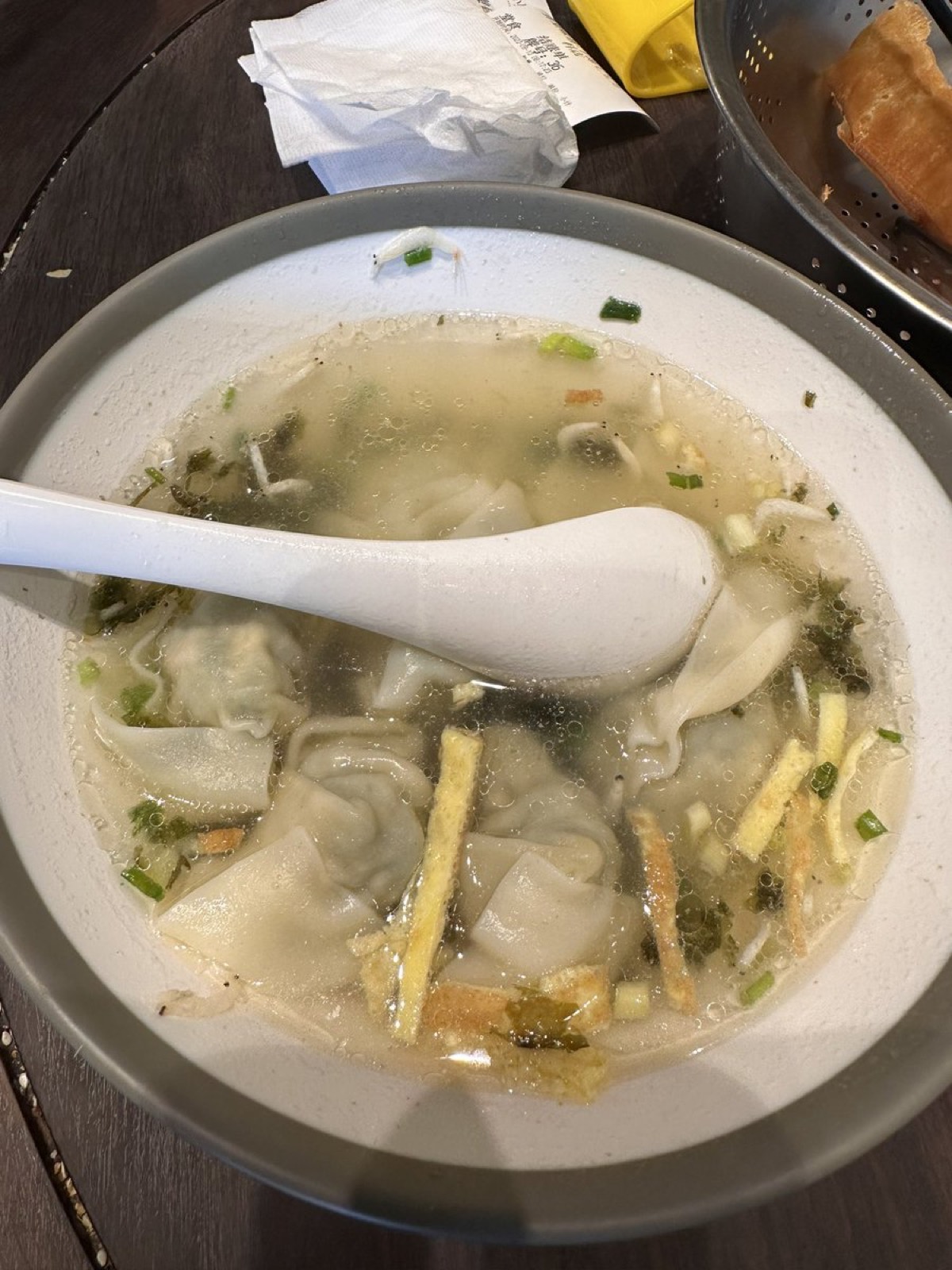
A colleague called M
When we visited customers around China, I always had a computer engineer with me.
One time it was a young man from Britain I'll call M. He was half Chinese and half British, but with fair hair and blue eyes. He was the same age as me. He knew a few phrases of Cantonese, mostly the ones his Cantonese mother used to scold him with, and his halting Mandarin was very easy to misunderstand.
Managing a foreigner who could speak a little Chinese was a challenge. I was afraid he'd get into trouble. So I frightened him: conditions in Chinese prisons are terrible, I told him, people die just from drinking the water. You'd better behave.
That trip was to Xi'an. Our hosts were the Shaanxi provincial planning commission, because the United Nations had given China money to buy computers for a national census.
If you don't know how many people there are in China, you don't know how many people there are in the world.
The madmen
Our hosts took us to the Huaqing Pool, outside Xi'an, to eat yangrou paomo, mutton soup with crumbled flatbread.
On the way we passed a few beggars. The interpreter sent by the provincial foreign affairs office wanted to save face, and insisted they were just "some madmen."
While we were waiting for the soup, M suddenly announced loudly:
"I'm mad too!"
Everyone at the table was stunned. "You Chinese," he said, "when people are hungry, you call them mad."
He didn't give anybody any face at all.
While we were waiting for the mutton soup, he suddenly shouted, "I'm mad too!" Everyone there was stunned. He said, "You Chinese — when a person is hungry, you say he's mad." He didn't leave anyone any face.
— 2024-03-21
A little trouble at a dance
In Xi'an in those years, once the day's work was done, there was no entertainment at all in the evening.
So I took him to a dance. A dance for "older young people," the ones who were past the usual age and still unmarried. In winter, wearing a padded hat and a big coat, it was very easy to slip in.
Foreign guests were not allowed.
You can guess the rest. Someone reported him, and the organizers held on to him. He got into a little trouble.
And I had to get him out of it.
He'd be retired now too, like me. I think he would remember how I rescued him.
The madman, the soup, the dance. I was a long way from the Boy pressing the lift button in the tower with the round windows. I was the one getting a foreign colleague out of trouble.
Postage stamps
When I think about those years now, I don't think first of the ministries or the steel mills.
I think of students passing a catalogue from hand to hand in a hotel next to a university. Of a lawyer carrying his daughter to see the trains. Of how little it took, really. Not a fortune. A catalogue. Some stamps. Someone to make a phone call.
Somebody had done that for me once. An acquaintance of my father's, with a job on the spot. Relatives who scraped together a thousand dollars.
I was only passing it on.
Late 1980s–1990s: From Old Wang's to Old Sun's
He leaves Wang for SUN with a Wang computer written into his contract, watches the company he loved fall to its own closed doors, finds his future wife a bouquet on Huaihai Road, and on the strength of a free dinner and a hunch, chooses Canada.
Every Wang man knew a joke.
The computers of those days broke down very easily. And apart from the Chinese, a lot of people couldn't work out why the company had such a strange name. So whenever a customer called to complain, we'd say:
"Do you know what WANG stands for?"
"We Are No Good."
(Laughs.) If you know someone called Wang, you can try it on him.
Old Wang's and Old Sun's
Eventually I left WANG and joined SUN.
My relatives back home saw it very simply. I had left Old Wang's place and gone to work at Old Sun's place. Either way, I was still working for somebody else.
They had no idea that those were two of the giants of American computing.
SUN stood for Stanford University Network. People who work with computers today may not know the name, but they certainly know some of the things it invented. Java, for one.
I left WANG and joined SUN. My relatives in China thought I'd left "Old Wang's" and gone to "Old Sun's" — it was all just working for someone. They had no idea those were the American computer giants of the day.
— 2023-11-23
A Wang in the middle of the office
I was so loyal to Wang, you could say I'd been poisoned by it.
Wang's slogan, back then, was this. Other companies put people in front of the computer. We put the computer in front of people. Many computers needed two or three keys pressed at once to do one thing. Wang put all the common word-processing functions on single keys. Simple. Easy to use.
So when I negotiated my employment contract with my new American company, which was also listed on the stock market, I made an outrageous demand.
I wanted them to install a Wang personal computer for me. The one that was so good at word processing.
My colleagues told me later that it became the company's "disgrace." There in the middle of the office sat a competitor's product, reminding everybody every day of the company's own weakness.
Apple, Microsoft, Google: I don't think any of them would put up with that today. (Laughs.)
The young man who had once walked out of an interview without asking about the salary was now negotiating which computer he would have on his desk. Something had changed.
The network is the computer
To understand SUN, you have to remember how people thought about computers then.
The whole industry lived in the shadow of IBM, Big Blue. Most people's idea of a computer was "master and slave." The computer rooms of the day were bigger than a basketball court, though still smaller than a football field. The designers all thought the same way: make the main machine as big as possible, and connect as many terminals to it as you can.
In 1984, SUN said something new.
The Network is the Computer.
On the Stanford campus, they connected thousands of workstations and personal computers together and used them to calculate one picture: a Ferrari, standing in a showroom where all four walls, the floor and the ceiling were mirrors. Every reflection of every reflection, to infinity.
From then on, nobody envied the giant computers any more. People slowly began to understand what distributed computing power meant.
SUN had another famous line:
Open Systems for Open Minds.
Almost all its hardware came from standard parts you could buy off the shelf. Its operating system was industry-standard Unix.
SUN was once the company that crossed a billion dollars in sales faster than any other in American history. It looked for a while as if it might swallow the whole computer world. When Apple got into trouble, SUN even thought about buying it. "The Sun buys the Apple" would have made a lovely story. In the end they decided Apple was too small.
Steve Jobs's table
In those days, almost everyone who worked in the computer business in California hated Steve Jobs.
My colleagues had a routine before they went to a restaurant. They would phone twice and book two tables. The big table they booked under the name of Steve Jobs.
Then they'd sit at the other one and enjoy listening to the waiters curse the Mr. Jobs who never showed up.
I was the last person in my family to use Apple products. I resisted for years. Much later, after he died, I read his biography and decided he wasn't so bad after all.
Closed doors
Meanwhile, the company I loved was dying.
Many people blame Wang's failure on Dr. Wang handing it to his son. But there was a deeper reason. Wang's systems were proprietary. Closed.
So were all the big, medium and small computers of the time. You'd think that when a customer spent a hundred dollars on a computer, the company made thirty. In fact it was more like three hundred, at least. Because from then on the customer was on your boat for good. He had to learn your operating system, your applications, and buy everything from you forever.
When Wang brought out its personal computer, it refused to use the operating system the industry had agreed on. It stayed closed. In that instant, its fate was decided. Either it would carve up the world, or it would die. By the time it changed direction, it was too late.
I had soldered my own Apple II. I had mailed five dollars to Bill Gates for his operating system. Now I worked for a company whose motto was open. And I watched, from the outside, as the company that had given me my start closed its own doors on itself.
Dr. Wang was like a typical Chinese parent. He never said "I love you" to his children. At the end, in his hospital bed, he wrote it on a slip of paper in English. I Love You.
The advice he left them, as his son told it at his funeral, I have never forgotten.
Don't live in the past; look to the future. Always rely on education. Be humble, admit your weaknesses, and learn from others. In short: the world doesn't need us; we need the world.
— 2023-07-12
Shanghai in the 1990s
In the 1990s I was doing business and going back to Shanghai often. My office was in one of the big hotels. I used to eat on Huanghe Road.
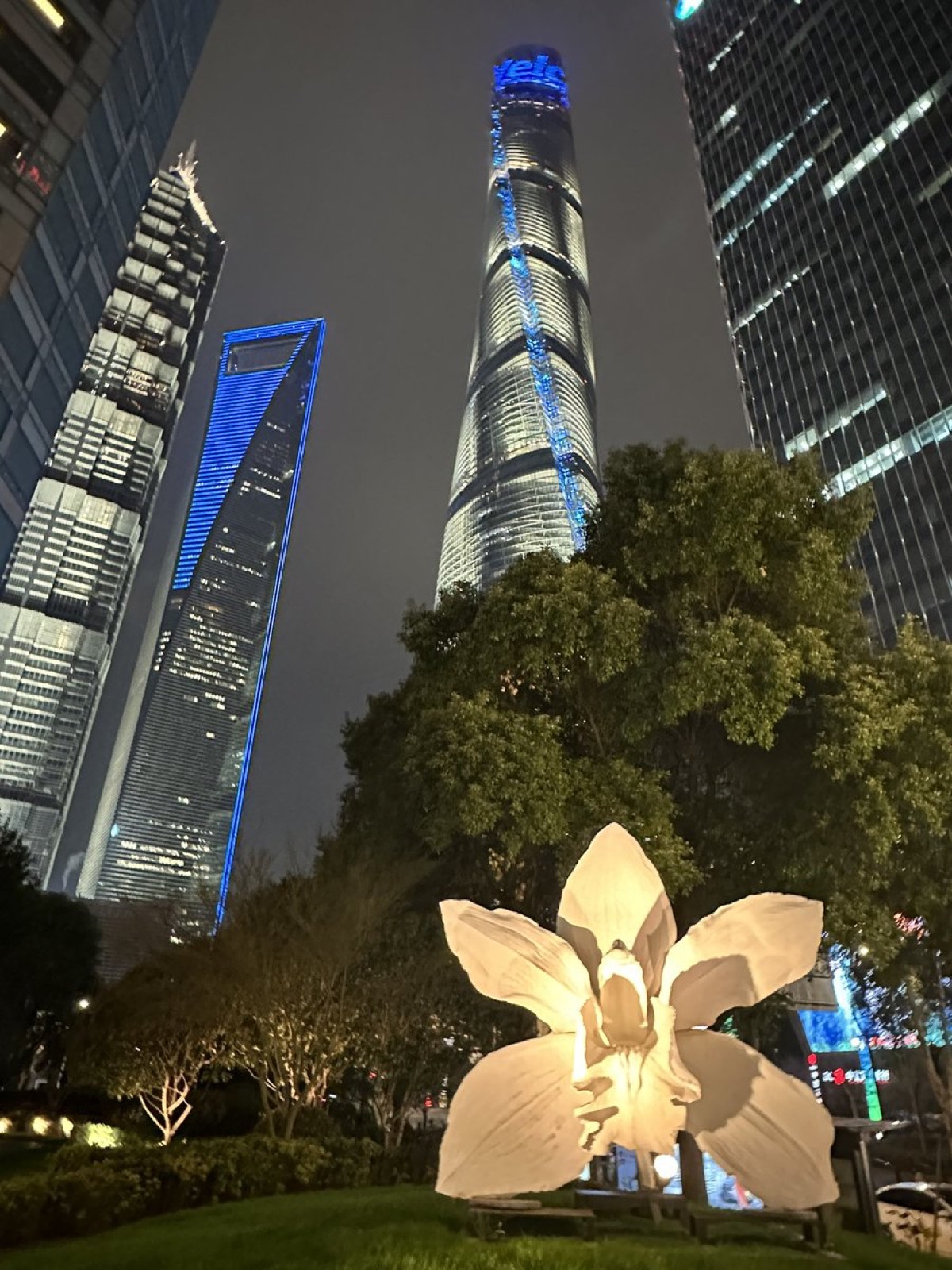
One day, around then, a Shanghai newspaper reported that the police had caught three thieves from out of town.
I complained. You can't write it that way.
They said: but it's a fact.
So I asked the editor-in-chief: will you one day report that you've caught a single-eyelid murderer? Unless you can prove that local people never steal, and that no murderer has ever had double eyelids.
He completely failed to understand me then. I believe he understands now. Shanghai newspapers don't talk like that any more.
I had been the label once. Black category. Stinking ninth. Mainland boy. Illegal immigrant in the back of a taxi. I wasn't going to sit quietly while a newspaper pinned a new one on somebody else.
Flowers from a bin
One year in Shanghai, on Valentine's Day, I realized, to my horror, that I had forgotten to buy flowers for my girlfriend.
On a gleaming rubbish bin on Huaihai Road, someone had left a bouquet of fresh flowers, beautifully wrapped. Surely some poor, disappointed boy had been turned down and left it there.
I didn't ask anyone. I picked them up and put them straight into her hands.
I did it right in front of her. She just smiled. I, of course, smiled even more.
I didn't ask anyone, just handed them straight to her, and in that instant I knew I could spend my whole life with her.
— 2023-05-03
Some people won't understand that. Don't force them.
She was my girlfriend then. She is my wife now.
Two family meetings
Around that time I had the honour of being asked to sit in on two very serious family meetings.
The two families were alike in many ways. But one was in Shanghai and had never been to America. The other was in New York and had lived in America for ten years.
I don't think they asked for my opinion because of my age or my experience of life. More likely it was because I was then a manager at an American listed company, knew more about American society than they did, and lived in both cultures.
The Shanghai family wanted to emigrate to America. Language was no problem, they told me: the wife had graduated in English from a teachers' college. I said: my father is a university professor of foreign languages, and he has translated for the United Nations, and as far as I know even he would have problems.
My advice: you're seriously underestimating the difficulty. You're not ready.
The New York family were really discussing whether to go back to China or stay. In the middle of it I suddenly asked them about Michael Jackson, then about as famous as a singer can be. Neither of them knew who he was.
My advice: if you're not going to join the society you live in, don't stay. Go home.
Neither family was wrong for emigration at the root. It was only attitude. One mustn't look down on the difficulty. The other had to go out and join in.
Meanwhile, quietly, on the ninth of July 1992, I registered a company of my own in the United States.
Squat by the road
Before 1997, the most serious question anyone in Hong Kong discussed was: do we emigrate, and if so, where?
There was a test people talked about. Go and squat by the side of the road somewhere, and pretend you have a stomach ache. See how many people stop to ask if you're all right. Then decide whether you want to spend the rest of your life there.
Neither I nor anyone around me actually did it. I chose Canada on impressions.
My impressions weren't all good. I'd once met a Canadian colleague at an American company convention, and we got on well, and spent a weekend together. A friend had asked me to buy a Jane Fonda aerobics tape, the kind where you jump. My Canadian friend asked me: what do you want that for? My wife weighs over two hundred pounds.
Yes, I thought: Canadians are rough around the edges. Lots of land. Very rural people.
Then, one evening in the 1990s, a friend with Canadian connections phoned me. There was a banquet that night and he needed someone to fill a seat. A free dinner. Who says no to a free dinner?
I arrived at a dazzling hall and stopped in my tracks. The host was the premier of Canada's biggest province, Ontario. He wore a suit with a pair of casual shoes. It was a promotion to attract investment from Hong Kong.
His name was Mike Harris. He was a very experienced politician, and his powers of persuasion were first class. I already had a plan to emigrate somewhere. I swallowed everything he said, whole.
There was one more thing that weighed on me before I left. I went back and forth for a long time, and what I thought about most was whether, in the place I chose, people of different races would live in harmony. I had grown up wearing labels. I didn't want to move somewhere that handed out new ones.
Full marks
My immigration interview was at the Canadian consulate in New York.
The officer and I talked very easily. He walked me to the door afterward. He encouraged me, and said I would certainly have a good future in this brand-new country.
Many years later I got my file out and saw what he had written. He had given me full marks.
No diploma. No family money. No connections.
A man who had crossed a bridge with twenty dollars and a violin was being walked to the door by an immigration officer and given full marks.
Nobody asked me where I came from.
Well. They asked. It was on the form.
It just didn't decide anything.
Night
An old man in Canada, with the violin that came with him from Shanghai, a radio station that plays beautiful music for a crazy world, a father in a care home on the other side of the earth, and one twenty-dollar note he wishes he had kept.
It is night, and the house is quiet.
The radio is on low. FM 96.3, classical music, all day and all night. Every so often the announcer repeats the station's slogan, the same one it has used for as long as I can remember:
Beautiful Music For A Crazy World.
When I first came to Canada, somebody interviewed me and asked: what attracts you most about Toronto?
I said: "96.3."
I meant it. It turned out to be one of the most important reasons I emigrated. (Laughs.)
When I first came to Canada, someone actually interviewed me and asked, "What attracts you most about Toronto?" My answer was "96.3." It's a Toronto FM station that plays classical symphonic music around the clock, and it keeps repeating one slogan: "Beautiful Music For A Crazy World!"
— 2023-02-05
The violin is in the room with me.
The only one who came all the way
It is the same violin. German-made, with the mother-of-pearl flowers on the fingerboard and the pegs. My parents spent half their savings on it. My father told me, if you can't make it, sell it and buy a plane ticket home.
I never sold it.
On the train south and across the bridge, I held it in my arms. In Hong Kong, sometimes, when I was lonely, I wanted to hold it to sleep. How could I ever have sold it?
Of everything I own, it is the only thing that came with me from the mainland to Hong Kong, and then across the ocean to Canada.
More than ten years ago, I started learning the violin again. My teacher told me a story I still think about.
In 2007, a newspaper asked one of the most famous violinists in the world to stand at the entrance to a subway station in Washington and play, like a busker, for forty-five minutes. Bach. Schubert. Some of the hardest music there is, on a violin made in 1713, worth millions of dollars. More than a thousand people walked past. Seven stopped to listen. He collected thirty-two dollars and seventeen cents, not counting the twenty dollars from the one person who recognized him.
It shows, I think, how often people stop at the label. They don't hear the music. They see a man with a case open on the ground.
That was what my parents had feared for me. A son with a violin case open on a street corner, waiting for coins.
It never came to that. But I understand now how close the two things are. The busker and the soloist. The mainland boy and the manager. Same man. Different label.
These days my sheet music lives on an iPad, the same one I read the news on in the morning, with a cup of milk.
The reset button
Canada, when I arrived, was a game already half-played.
When I was a boy on the university campus in Shanghai, every summer there were men playing Chinese chess outside, with crowds standing around them. The bigger the crowd, the better the players. There was one golden rule. If you were a newcomer watching, you kept your mouth shut. Open it too soon and you'd be chased away. How long you stayed silent depended on how far into the game it was.
Every immigrant arrives in the middle of somebody else's game.
My wife spoke no English then and didn't drive. Our children were small. I needed to earn Canadian dollars, speak good English, and get to know the society. So I started working from home. In 1996 I registered my own domain name. Most Canadians then had no idea what one was. If you said "open Windows," someone might go and open the window. I ended up selling domain names, hosting and websites from the house, and the business was surprisingly good.
Then I applied for a job at Future Shop, an electronics chain that Best Buy had just bought. I was ready to start lower than before. The job I got was the very lowest. All my years in business were wiped clean. Immigration, I found, is a reset button.
They sent me onto the shop floor to sell laptops.
Old habits. Everywhere I've ever worked, I look for what can be improved. I loaded every laptop on display with the latest movie trailers, dozens of them, all playing different films at once. It was quite a sight. Canadians, it turned out, hadn't realized you could watch films on a laptop. Sales shot up. I was voted "best employee" for several months running.
There was one more reason, I found out later. Many of my colleagues had names customers found hard to remember. Mine was Vic. Easy. So they voted for Vic.
The Boy who had once pressed the lift buttons in advance was back on the bottom rung. It didn't frighten me. I had been there before. I knew the way up.
The island
My wife's English, when she arrived, was zero. At school, she says, English was her least favorite subject.
So I rented a spot in a trailer park on an island in a lake, about an hour north-east of Toronto. Eight hundred households. We were the only Asians. We spent every summer there for more than ten years.
One morning I came back from golf and a neighbour told me my wife had been having an argument with some fishermen who'd come over to the island. She told me afterward she had only been speaking a little loudly.
After that, the neighbours all agreed. The quiet one, the only Asian woman on the island, now spoke fluent English.
When I was small, my father was studying at the foreign languages institute in Shanghai, and the menus in the school dining hall were written in English. I made one out of the Star Ferry and the bars of Wan Chai. My wife made hers on an island, arguing with fishermen.
For more than twenty years now we have lived part of every year in a recreational vehicle. Our dog Koa likes the window seat.
Goodbye, Father
My father is in his nineties now. He lives in a care home in Shanghai.
He has been to more places in America and Canada than many people who live here. He always went wherever he wanted. Once he announced that he was going to the Philippines to visit one of his pen-friends. I worried about his safety. He said: "I have no money and no looks. What are you worried about?"
When he got there he phoned me: "He took a week off work to look after me. He's nicer to me than you are."
He doesn't come to Canada any more. Every insurance company has turned him down. He has finally admitted that he is old. Now he can't come to see me, so I go to see him.
On a Sunday morning during that visit, I took him down to the hall to listen to another resident play the piano.
The day before I flew out, I said goodbye to him. He insisted on walking me to the door of the care home. Then he stood up and gave me a very strong hug.
Every time, we both understand without saying it: we live on opposite sides of the earth. That is the price of emigrating. Luckily he knows the place I live very well, and I know the place he lives very well.
— 2023-09-22
We have one rule between us, my father and I. He respects my choices. I respect his. The well water doesn't trouble the river water.
He was the one whose United Nations translations I typed at seven US cents a thousand words. He was the one who lent me a book of famous people's mistakes. He was the one who said, sell the violin and buy a ticket home.
Goodbye, Father. Take care of yourself.
I tell people I'm a filial son, but not in the old way. I don't mean filial to my father. I mean filial to my sons. For a first-generation immigrant, raising your children and seeing them educated is the contribution you make to your family. I have said this to my father's face, too.
Every choice, emigration above all, costs you something and gives you something. The trick is to make what you gain as large as possible, and what you lose as small as possible.
A photograph on a Greek island
I didn't expect to end up telling these stories.
In October 2022, on a small Greek island, I was up early to watch the sunrise and took a photograph of a couple celebrating their anniversary on a rooftop. I sent the picture to them, and posted it on Twitter. More than ten thousand people saw it.
I couldn't believe it. I could share what I saw and what I thought with that many people, straight away. From then on, I stopped lurking. It fitted my plan anyway: from half-retired to fully retired.
So now, at night, an old Shanghai man in Canada sits and types out how he got to Hong Kong with twenty dollars. People read it on the other side of the world. Some of them write back.
Twenty dollars
I'm not someone who collects things. But there is one thing I wish I had kept.
That twenty-dollar note.
The one I ran around for days to get, from office to office, collecting red seals. The one I handed to a taxi driver in a fury, with his hand on my collar, before I had been in Hong Kong for half a day.
I'm not a fetishist about objects, but I wish I had kept that "twenty dollars." Imagine: the grandfather I was meeting for the first time in my life, in Hong Kong, paying that taxi fare for me — today I would have a keepsake like that.
— 2023-07-16
If my grandfather had paid the fare instead, I would have it now. I would keep it next to the violin.
But maybe it's better this way. Maybe the twenty dollars had to go. You can't keep the ticket and take the journey too.
Where a hero comes from
It is late. The radio is still playing. Somewhere on the other side of the earth, in a care home in Shanghai, it is morning, and my father is getting up.
I think of a bridge that was falling apart. A soldier shouting, and a policewoman smiling. A pass on the thickest paper I had ever held. A loudspeaker calling out a name in a language I didn't speak, and me not knowing it was mine.
That young man didn't know if he would make it. He had no diploma, no family money, no connections. He had all the time in the world, and nothing else.
The Hong Kong people taught him a sentence, and he has been trying to live up to it ever since:
No one asks where a hero comes from.
They don't care how you got there. They don't care who your father is or which school you went to. They want to know what you can do for their business, their lives, their city.
I'm not a hero. I was the Boy. I was the mainland boy, the Shanghai little friend, the small fry with the shiny business card, the man who sold laptops at Future Shop.
But nobody asked where I came from.
They called my name. Eventually, I learned to answer.
Good night.