Then and Now
A Shanghai Boy, Twenty Hong Kong Dollars, and the Long Way to Toronto
A first-person memoir built from Vic Wong's own posts: a capitalist's grandson in Cultural Revolution Shanghai, a boy crossing into Hong Kong with a violin and twenty dollars, the computer years with Wang and Sun, and starting over in Toronto. Each chapter sets what he wrote then beside what he sees now.
Modelled on:Educated
Prologue
Lo Wu Bridge
A young man from Shanghai stands on the border bridge at Lo Wu with too many bags, a German violin, and twenty Hong Kong dollars, and fails to recognize his own name.
The bridge is shabby. Its planks have been walked smooth by people who were in more of a hurry than I am. I am carrying too many bags, the kind with no wheels, because nobody I know has ever seen a suitcase with wheels. Under one arm I have a violin case. Inside it is a German violin with mother-of-pearl flowers set into the fingerboard and the pegs. My parents paid about a thousand yuan for it, half of what they had saved in their lives.
In my other hand I hold a travel pass. It has Chinese and English on it, and the Chinese is printed in the old full characters, which I have not seen used like this in years. The paper is thick. I have never held paper this thick.
In my pocket is twenty Hong Kong dollars. I spent several days going from office to office and collecting several red stamps for the right to change my renminbi into this one note. The rate was 0.26 yuan to the Hong Kong dollar. I have done the arithmetic many times. It does not change.
Halfway across, there is a line. It is not painted very well, but everyone knows where it is. I stop at it. I look back.
Over the bridgehead behind me hangs a pair of slogans, red on white: Love the motherland, defend the homeland.1 A soldier of the People's Liberation Army stands near them in a grass-green uniform that looks thin even to me, and I am used to thin uniforms. He waves me on. He is not polite about it. He wants me gone.
On the far side stands a policewoman in a black wool uniform. She smiles at me. Then she points, with her whole arm, at the path I should take.
I step over the line.
The waiting hall
The hall for arrivals is full. People have come from every province, and we all sit on benches holding our papers. At noon somebody hands out boxed lunches, one each. I eat mine. The afternoon goes on. Behind the counters, the staff begin to look like people who will soon go home, and still nobody has called me.
A loudspeaker on the wall keeps repeating a name. It is a Cantonese name, said in Cantonese, and I do not speak Cantonese. I listen to it the way you listen to rain. Whoever that person is, he has nothing to do with me.
Much later I understand that the loudspeaker has been calling me, many times, for a long time.
The train
The train to Hung Hom carries people and freight together. Some cars are closed boxcars. Some carry pigs or vegetables. I find a seat and look at everything, because everything is new.
The woman across from me is in her forties. She has a kind face. She speaks to me in Mandarin, and her Mandarin is better than mine. She offers to help with my bags.
I say no. I say it firmly. I grew up in a time when everyone was taught to keep one string inside the chest pulled tight, the string of class struggle, and right now my string is very tight. A stranger who wants to carry your bags is a stranger who wants something.
The bags do not care about my principles. I am the clumsiest passenger on the whole train. In Cantonese there is a word for this, lun zun, and I will learn it soon enough. People keep wanting to help me. Finally the woman offers to give me a hundred Hong Kong dollars as a deposit, so that I can be sure she will not run off with my luggage. A stranger is offering me five times my fortune so that I will let her do me a favour.
I am nobody's fool, I tell myself. I am holding a violin and a slip of paper with a name, a phone number and an address on it, and I am exactly that kind of fool.
That is the picture. I have carried it for about fifty years, and it has not faded the way other pictures have.
When I look at it now, I can see what I could not see then. A man in green on one side, a woman in black on the other. Behind me, a slogan telling me to love a country I am leaving. In front of me, a smile I have no reason to trust. Twenty dollars in my pocket and a thousand yuan's worth of violin in my arms. And a loudspeaker calling a name I don't recognize as mine, in a language I can't understand.
Everything I would spend the rest of my life doing is somewhere on that bridge. I have been learning languages ever since, and changing my name to fit them. I have been working out whom to trust. I have been converting one kind of money into another at bad rates. I have been carrying something fragile through crowds.
My father, before I left, told me that if things went badly I should sell the violin and buy a plane ticket home. It was meant kindly. It was a plan. Many people in Shanghai who loved me came to see me off, and they did not agree on much. Some told me to bring national grain coupons. Others said I would need the international kind. Nobody knew whether Hong Kong used grain coupons at all.
So this is the question I was carrying across the bridge, though I did not know how to ask it then: how long does it take before you hear your own name in a new language and turn around? And what do you have to sell to get there?
The answer is not short. It begins before I was born, with a family that kept changing what it called itself, and it ends, for now, in a house in Greater Toronto where the violin still lives and nobody ever sold it.
I will tell it in order. Where I am not sure, I will say so.
Chapter 1
Viktor
A Russian name, a newspaper from the day I was born, and a three-day train ride through the famine that ended with my mother leaving me in Shanghai.
Part One: Shanghai and Sichuan
The first word anyone ever gave me was Russian.
My parents both spoke fluent Russian. In the China of the 1950s that was not strange. The Soviet Union was the elder brother, Russian was the language of the future, and a young couple who taught at a university would have been studying it the way people in Toronto today study coding. So when I arrived they chose a name from that language: Виктор. Viktor. Victory. Later, in Hong Kong and in Canada, it would shrink to Vic, which is what nearly everyone calls me now. But it started out Russian,, spelled with a k, the way nobody in Canada has ever spelled it for me.
My mother liked to tell me a story about the maternity ward. In the bed next to hers lay a Russian woman who had just given birth too. My mother would describe that woman and her newborn to me, what they looked like and what they did. I have forgotten most of the details. What I kept was the picture: two mothers in two beds, a Chinese baby and a Russian baby, in the same room on the same days.
Russian became my first foreign language at school. I have lost almost all of it.
My parents both spoke fluent Russian. Russian was also my first foreign language, though I have nearly forgotten it now. Even my name comes from Russian: Viktor = Виктор.
— February 22, 2023
I wrote that at a time when I was refusing to eat borscht or drink vodka, because Russia had invaded Ukraine. Followers on Twitter were kind enough to point out that Ukrainians make borscht and vodka too. They were right. I had grown up thinking everything Russian was good, and I had spent the last year thinking the word itself was bad, and the one thing those two feelings had in common was that they were both mine.
The newspaper
I cannot tell you the year I was born with the certainty you would expect. I can tell you it was the late 1950s.1 I can tell you the date, because I gave it to a shopkeeper once and he found the newspaper.
This was in Chengdu, more than ten years ago. Many Chinese cities have a "culture street" now, lined with shops selling brushes, ink, paper and old things. On one of these streets I found a shop, apparently run by some archive, that sold newspapers from any day in history. You chose your day; they found the paper and put it in a very expensive frame.
I spoke to the owner in Sichuanese, and he clearly took me for a local. I told him my date of birth. He asked which paper. I said the Shanghai Wenhui Bao. He went into mountains of yellowed newsprint and came back with that exact day.
I told him I only wanted the paper. No frame, no box.
I opened that day's paper and, good heavens, it was wall-to-wall anti-American slogans. So many years later, and the place where I was born seems hardly to have changed at all.
— August 24, 2023
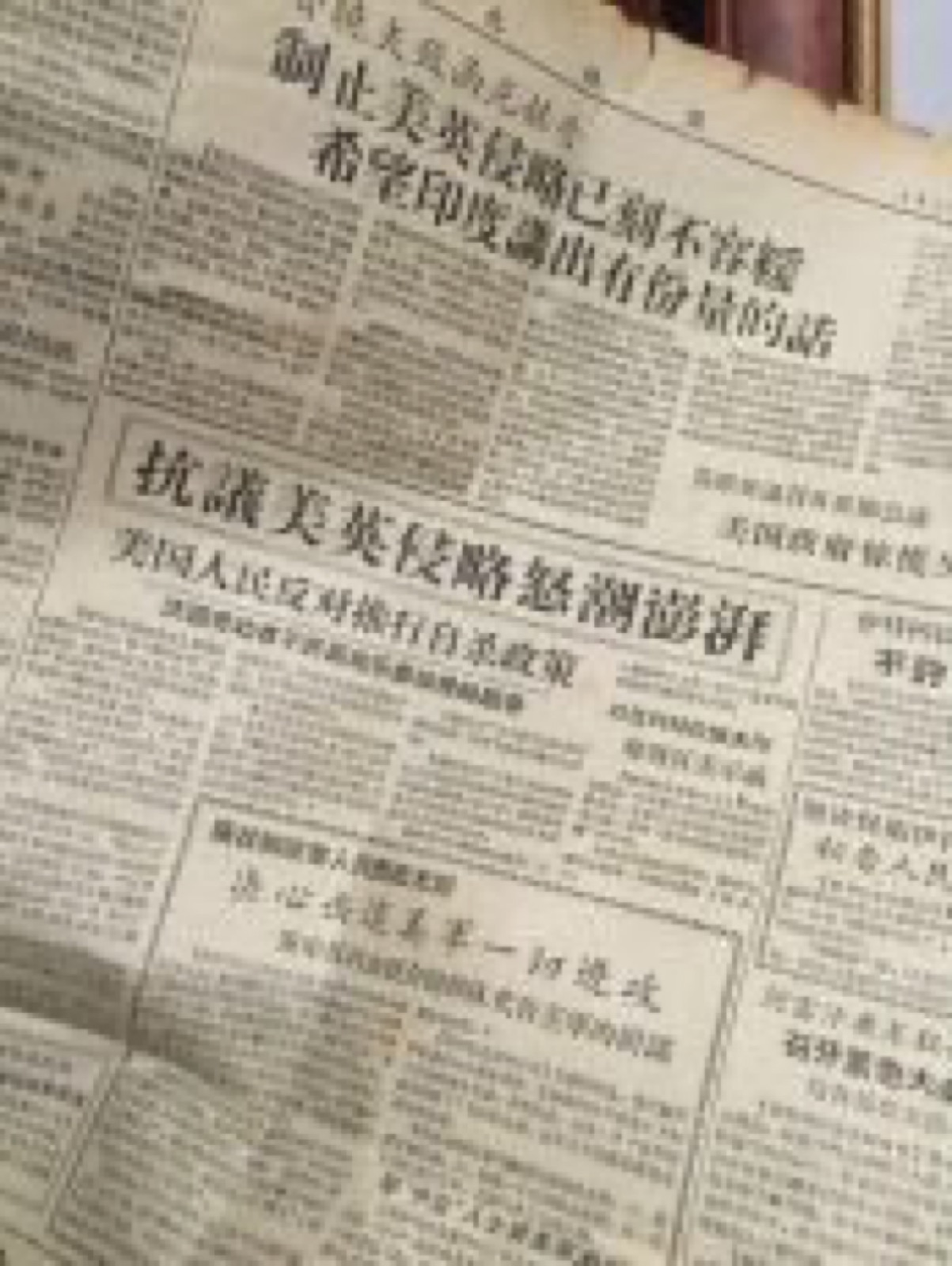
I paid for it. I read it for weeks. I went through every column looking for something that was not about American imperialism and found very little.2
What I did not say in that tweet, because it did not seem important then, is what it means to have to buy the record of your own birth from a stranger on a street in a city where you were not, as far as anyone can now prove, born. My family kept no genealogy. There was no box of papers in a drawer. I learned about my beginning the way you learn about a foreign country: from documents printed for somebody else.
Who my parents were
My father had gone to a church school in Shanghai, which meant he had studied in English all the way through secondary school. Later he went to a Russian-language college set up by the new government. He was teaching foreign languages before I was born, and he would go on teaching them for most of his life, at a university in the interior, in a city I will describe as conservative, inside a campus that was more open than the city around it.
He had joined the Communist Party before I was born. I mention this because it will matter later, on a day when a neighbour shouted it out to protect me.
My mother loved to look beautiful. I say that with admiration. She was also very careful, which I only understood much later, when I watched her deal with people who wanted information she did not want to give. She never lost a friend doing it.
They were what the Cultural Revolution would soon call the "Stinking Ninth": intellectuals, the ninth and lowest category of bad people, below landlords and rightists. My father's parents in Shanghai were in a different bad category, as I will explain. Between the two sides of my family I managed, as a child, to belong to almost every group that was looked down on in those years. Later, in Hong Kong, I would add another: mainland boy.
Three days and three nights
The story I want to tell is about a photograph.
When I was very small, China entered the years that the textbooks called the "three years of natural disasters". Today most people call it the famine. Everyone was short of grain coupons. Everyone was hungry.
My mother decided to take me from Chengdu to Shanghai by train. It took three days and three nights. She had two reasons. One was to visit my father's parents. The other was to see for herself how bad things were in Shanghai.
On the train there was one great advantage. At mealtimes you could buy food with money alone, without grain coupons. Each person was allowed one bean cake. The bean cake was what it sounds like: the pressed residue of beans, the kind of thing that in better years was fed to animals.
The attendant looked at me and decided I was too small to count. He would not sell my mother a bean cake for me.
My mother went to find the head of the train.
"A child is small," she told him, "but he is a person. He has a mouth, and the mouth has to eat."
She won. I got my ration. My mother did not eat all of hers. She saved what she could.
When we got to Shanghai, she brought out the saved bean cakes for my father's younger brothers and sisters. They fought each other for them and ate them as if they were delicacies. My mother's heart sank. If people in Shanghai were this hungry, then Shanghai was worse off than Sichuan, the "Land of Abundance".
We stayed several weeks. She watched. She found that she was wrong. The grain in Shanghai was limited, but it came steadily. It was better than the interior.
So she decided to leave me there with my grandparents.
The photograph
She could imagine what the separation would feel like, so before she went back to Chengdu, she took me to a photographer's studio.
She did not appear in the picture. She was so thin by then that she thought she looked ugly, and she was a woman who cared how she looked. She had grown thin because she kept giving her food to me. The photographer did not understand why a mother would pay for a portrait and then stand outside the frame. She did not explain.
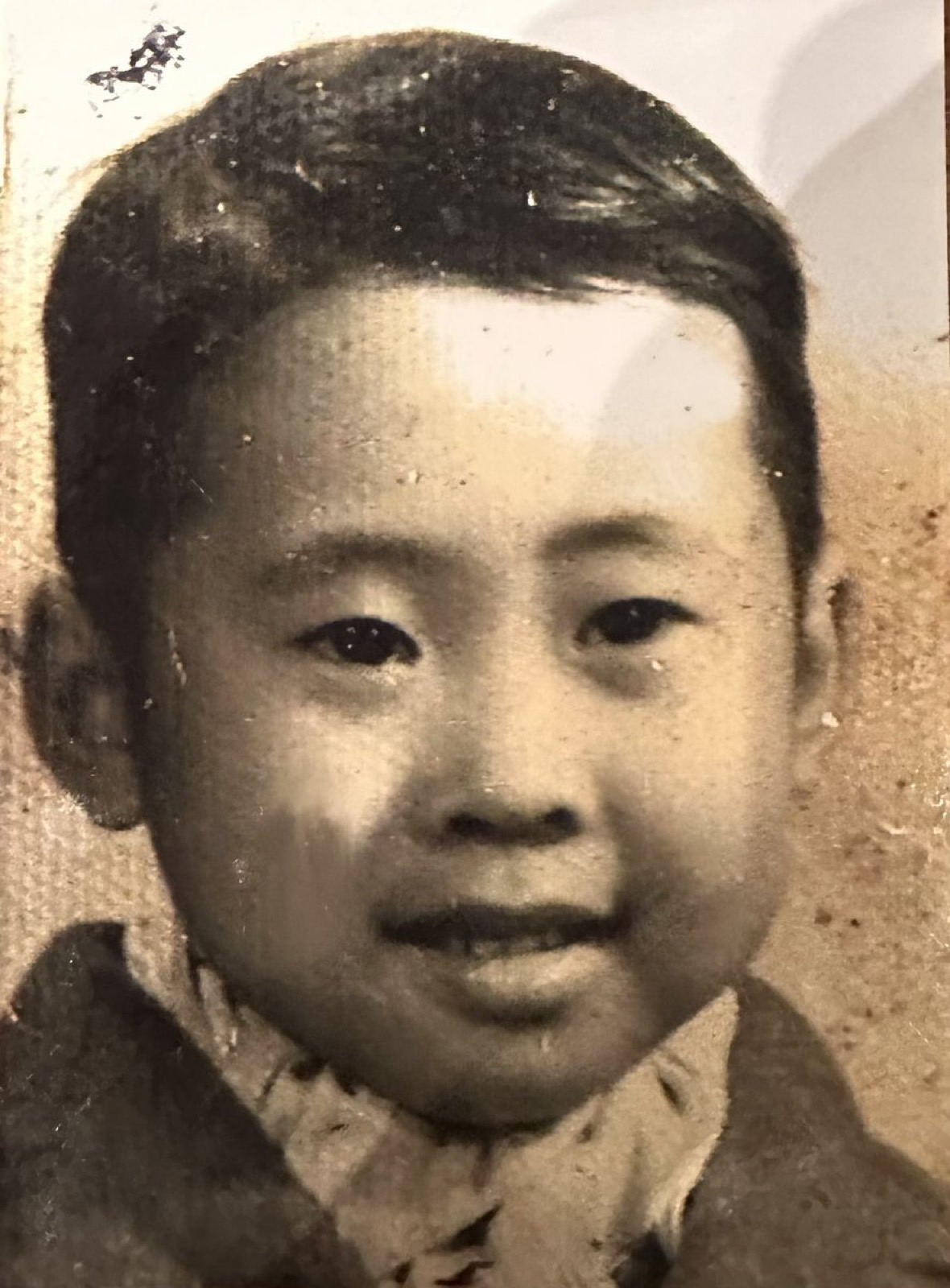
Sixty years later I put a childhood photo on Twitter.3 People wrote underneath it. Some said I must have been born abroad. Some said I was obviously a rich man's son. Nobody knew the story behind it, so I told it.
Look how chubby I was. Who would think I was going hungry? So small, and eating more than an adult. I was too young to understand anything. Thinking about it now, it hurts.
— October 27, 2023
That is all I wrote. I want to add one thing here that I could not fit into a tweet.
A photograph is supposed to be evidence. People looked at mine and drew conclusions: foreign birth, money, comfort. They were reading it correctly. The boy in it was well fed. The evidence was real. It was the wrong evidence. The person who made it true was standing just outside the frame, too thin to agree to be photographed.
I have thought about that a great deal since I started writing my life down in short pieces on the internet. A tweet is a photograph of a kind. What I post is true. Other people draw conclusions from it. Most of what made it true is somewhere outside the frame.
So in this book, every chapter has a tweet or two, the way a family album has pictures. Around each one I will try to show what was standing just outside.
A boy left in Shanghai
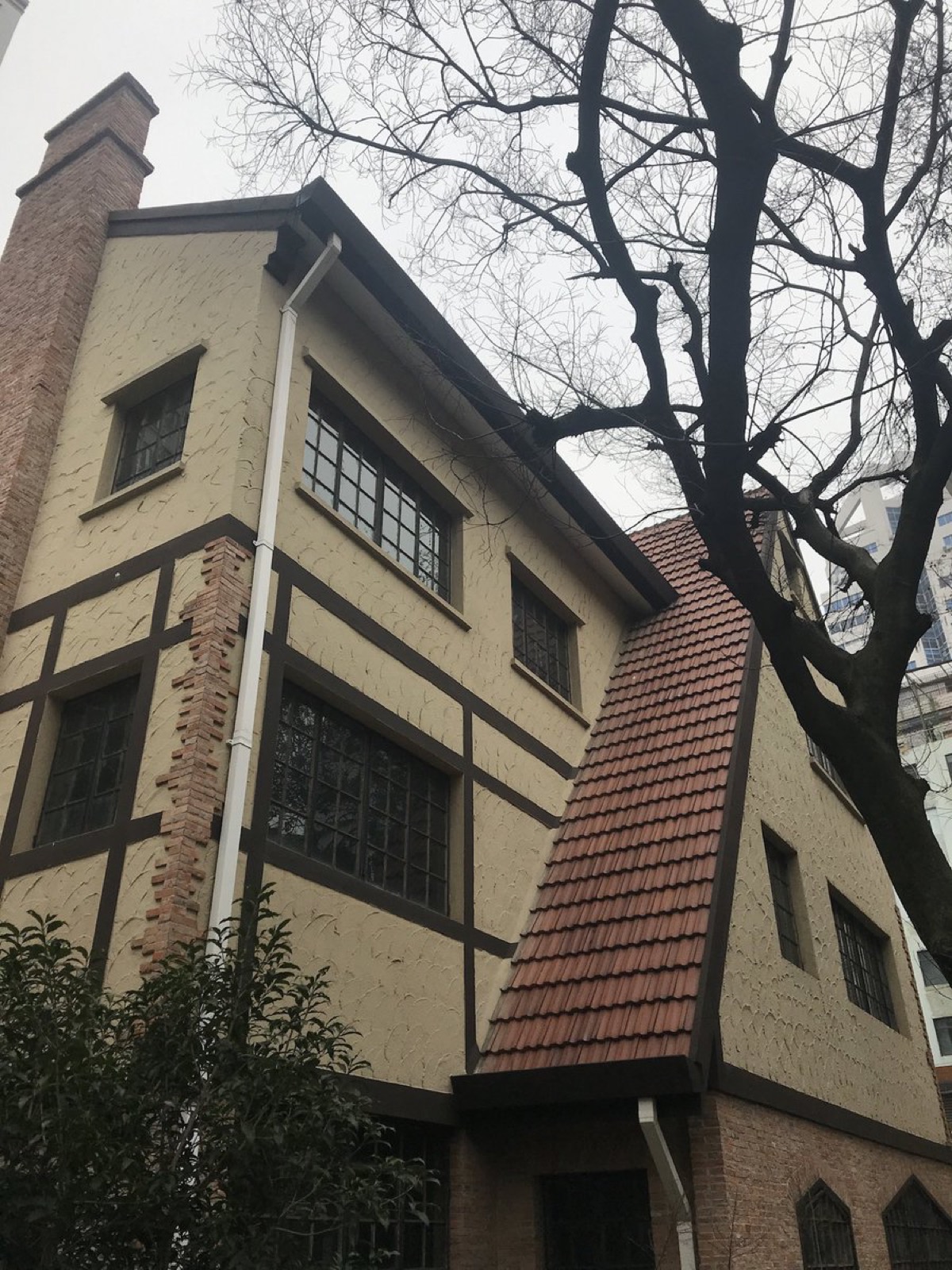
My mother went back to Sichuan. I stayed in Shanghai, in a house with a red tile roof, with my father's parents and a varying number of uncles, aunts and cousins.
I was the only grandson of my generation, the only one who could pass on the family surname. You would think this made me precious. It did not, at first. My grandfather did not like me, and I did not like him, and for a long time the two of us lived in the same house in what I can only call a stand-off.
The reason he did not like me had to do with paperwork, with a word that could or could not be written in a small box on a form. It had to do with the year I was born. And it had to do with the fact that the surname I was supposed to carry on was not really ours at all.
That is the next chapter.
Chapter 2
Is a Capitalist a Cadre?
My grandfather, an orphan who borrowed a surname and made a fortune from what Americans left behind, and the family argument that came back every time someone had to fill in a form.
Every few months someone in the house had to fill in a form, and every time, there was an argument.
In those years everybody filled in forms. For school, for work, for a ration, for permission to travel. Every form had a box marked family background, and the box was small. It was built for two characters. Worker. Peasant. Clerk. Good, short words that fit.
The word that was true of our family did not fit. The true word was capitalist, or bourgeois, and in the Shanghai of my childhood it sounded the way certain diseases or certain crimes sound now. Nobody wanted to write it. There was not even room to write it.
So my uncles would argue. Grandfather was a cadre, they said. A manager. He had not only put in money; he had run things. Managers were cadres. Cadres were fine.
This was the question that troubled me all through my childhood, and I still don't have an answer.
— October 11, 2023
I wrote a series of ten posts under that title, "Is a Capitalist a Cadre?", more than half a century after the arguments stopped. I wrote it as a question because I still could not settle it. I knew by then that there was no form left anywhere that wanted the answer. I wanted it anyway.
The borrowed name
The first thing to know about my grandfather is that he was not a Wong.
He grew up in an orphanage run by a Buddhist temple. A single woman named Wong adopted him and took him to Shanghai, and the two of them lived there together, mother and son, with nobody else. That is where our surname comes from. There was no clan hall, no ancestral village, no book of generations. There was a woman who chose a boy.
I did not make much of this until a man on Twitter asked me whether I had given money to some Wong clan association in Guangdong. I nearly answered: I'm not even really a Wong. Instead I wrote the whole thing down.
Imagine it. Our "big family" never had a genealogy. We have lived our whole lives under a borrowed surname, and so will the generations after us.
— August 20, 2023
He arrived in Shanghai with no money and nobody to call on. The city then was the place they called the Ten-Mile Foreign Concession, a paradise for adventurers. His first job was at a trading company run by Americans. To talk to his bosses he had to speak English, so he learned it the way a parrot learns, by repeating. He did it to support the woman who had taken him in.
He had one real gift that set him apart. His brush calligraphy was beautiful, so even and controlled that it looked like the printed copybooks children practised from. I have always assumed he learned it in the temple, though nobody told me so.
He also fell in love with Peking opera. He could sing it and he could play the jinghu, the high, thin fiddle that leads an opera band. Once he had a little money, he would hold opera parties at home for the festivals, inviting real stars and keen amateurs, and he would play and sing for them himself. Among the businessmen of Shanghai this made him unusual.
Business without capital
As a child I was curious, in the suspicious way my generation was taught to be curious. My school taught us about wicked landlords who crowed like roosters in the middle of the night to get their labourers out to the fields before dawn, and rent collectors who cheated peasants with rigged scales. However much love the older generation gave us, school taught us to look at them sideways.
My grandfather had been an orphan with nothing. How did he become rich? There had to be something shameful in it.
He never talked about it. But our family was large, and I pieced it together from what different people let slip.
He ran a warehouse. It held small everyday goods, and it held surplus stock that came from America. American merchants did not like to send ships to Shanghai empty, so they filled them with whatever they could not sell at home. Some of it arrived broken or loose, and a percentage of loss was allowed. My family told me that whatever was in the warehouse was also in the house. They were rarely short of food or soap.
Warehouse rent went up the longer goods stayed. American merchants often simply walked away and left their stock to cover what they owed. Once it was a whole warehouse of cotton. Another time, a whole warehouse of coal.
The Chinese phrase for this is "business without capital", and it is usually an insult. In his case it was nearly literal.
When I had finished putting it together, I came to a conclusion I was not supposed to reach. If he had exploited anybody, it was mostly the Americans.
Before I knew him
He had been a handsome man. He dressed in white suits and wore black-and-white two-tone shoes. Shanghai people had a word for a man like that: lao dike, an old dandy. Strangers took him for the spoiled son of a rich family. He was in fact the first generation; he had made it himself.
My grandmother told me that their old house on the street that is now Hunan Road had a staircase so wide that the turn on the landing could hold a full banquet table. Later, when money grew tighter, they moved to a smaller house on what was then Great Western Road and is now Yan'an Road. Every time they swapped a bigger house for a smaller one, they got gold back, in ten-tael bars that people called "big yellow croakers", after the fish. That gold raised a lot of children.
Once I asked my grandmother why other women wore gold and silver and she never did.
"If I'd had that habit," she said, "back then I'd have been crushed to death under it."
I thought at the time that this was a very big boast for a small old woman. I see now that she was telling me exactly how rich they had been, and that she had decided long ago not to let it show.
Singapore, Xinjiang
There were two trains he did not take, and I sometimes think my life hangs on them both.
In 1949, as the guns came closer to Shanghai, he bought a ship's ticket to Singapore. His adoptive mother heard he was going abroad. She swore she would dash her head against the wall and die in front of him. She had taken him out of an orphanage; how could he abandon her? The new government was also telling people like him that their work had been useful and they had nothing to fear. He stayed, out of filial duty.
In the chaos of those years he wanted a pistol to protect the family. To buy a gun he had to join some organization, and he filled in a form. My grandmother objected, and the gun stayed in the house for one night. The form stayed in the files much longer. He found that he had joined something the new government counted as reactionary, and he was sentenced to be sent to Xinjiang, in the far northwest.
The whole family went to the station: men, women, children. On the platform the children knelt and wept. My grandfather kept waving at them from the train, like a hero going to his execution.
Then a lane cadre he knew walked along the platform and saw him.
"What are you doing here?"
"I'm an illegal capitalist," my grandfather said.
My grandfather had always been decent to people, and this man had seen it. He said firmly, "You don't qualify. You can't go."
The train was already moving. Somebody threw his luggage onto the platform piece by piece, and my grandfather jumped down after it.
When I wrote this story I added a line I still believe: because of that man, my grandfather later had the chance to die in Shanghai. It sounds bitter. I did not mean it bitterly. Of the two places beginning with Xin, Singapore and Xinjiang, either would have given him a different life, and probably a different death. He got neither. He got Shanghai.1
The bad-luck star
The year I was born, my grandfather lost his business.
In the mid-1950s private firms in Shanghai were brought into "joint public-private ownership". The state became his partner. Once the new partners had learned how the business ran, they did not need a man on a relatively high salary, and they let him go. He felt, I think, that he had been tricked.
It happened in the same year I arrived, and so I became the household's broom star, the comet that brings bad luck. In Shanghainese there is a word for it that sounds like a curse. That is why he did not like me, and why I did not like him back.
It is also why I learned to fill in my own forms.
Filling in the box
There was an entrance test for primary school in Shanghai then. One question showed two pictures, the sun and the moon. The story went round that a child had called the sun a dabing, a big round flatbread, because that was the round thing he knew best.
When the forms came for school, my grandfather did not fill them in for me. He made me do it myself. I could write my parents' names. I could write where they worked, including the two difficult characters for teachers' college, 師範, in the full traditional strokes.2
He was paying attention to my schooling more than to anything else. My grandmother gave me the best of whatever food there was. Between them they laid down a foundation that I would later call reinforced concrete. It brought me a lot of small honours in those first school years, and slowly, without either of us saying anything, the stand-off ended.
I still asked myself, privately: if he is such a good man, why did he exploit people?
Ten families
Then came the People's Communes. Shanghai needed buildings for schools, and the people who came to see my grandfather were polite. I have always wondered how they persuaded him to "donate" part of the house. The logic, as I understood it later, went like this: exploitation is a crime that deserves prison. We are not putting you in prison. We are only asking you to share a little of what you took unlawfully. Which meant that the next day, ten families of strangers moved in.
Our living room and dining room disappeared. Even the balconies became rooms. The garage became two storeys, a family upstairs and a family downstairs. A family lived in the boiler room.
We kept the second floor. We also kept, which was the height of luxury, our own kitchen downstairs. Everyone else shared one kitchen between five or six households.
I grew up living on the second-floor balcony. When I practised the violin and tapped my foot to keep time, the working-class neighbour on the balcony below would shout up at me.
In the dim stairways and corridors there were a great many light bulbs and a great many pull cords, one for each family. What I feared most as a small child was pulling the wrong cord and turning on somebody else's light. It would cost them money.
The neighbours were each kinder than the last, and each poorer than the last. If people counted every penny, it was because they had no other way.
— October 13, 2023
My grandmother's English
My grandmother never went to school for a single day. She came from an enlightened family, the kind where a girl could throw away her foot-binding cloths if they hurt. So her feet were only half bound.
She learned to speak some English all the same. When she was young she lived in Hongkou, and her neighbours were Russians and Jews who had fled to Shanghai. English was simply in the air. Years later, after China opened up, this small old Chinese lady with half-bound feet could still say a few sentences to a foreigner, mixed with Shanghainese or Hubei dialect.
She taught me the word rickshaw. I was surprised, decades later, to find that some native English speakers don't know it.
Shanghai was full of English like that, mostly disguised. We called film Eastman, after Eastman Kodak. Butter was baituo. Tomato sauce was fanqie sasi. The disinfectants we used were Lysol and Dettol, and we said those names as if they were Chinese words. People who loved Shanghai called this style haipai. People who did not called it pidgin.
What she taught me that mattered more were two sentences I still use.
The first: the person who speaks most sweetly may be the worst person, and the one whose words are hard to hear is often the opposite.
The second: don't look at how someone treats you. Look at how they treat the people around them.
I have been sizing people up by those two rules ever since. Learning to read people is a job that lasts a lifetime.
Chestnuts and popsicles
Not everything was arguments over forms.
In summer the big decision of every day was whether to buy one eight-cent cream popsicle or two plain four-cent ones, so I could have one in the morning and one in the afternoon. There was only one brand, Bright. You could not choose that.
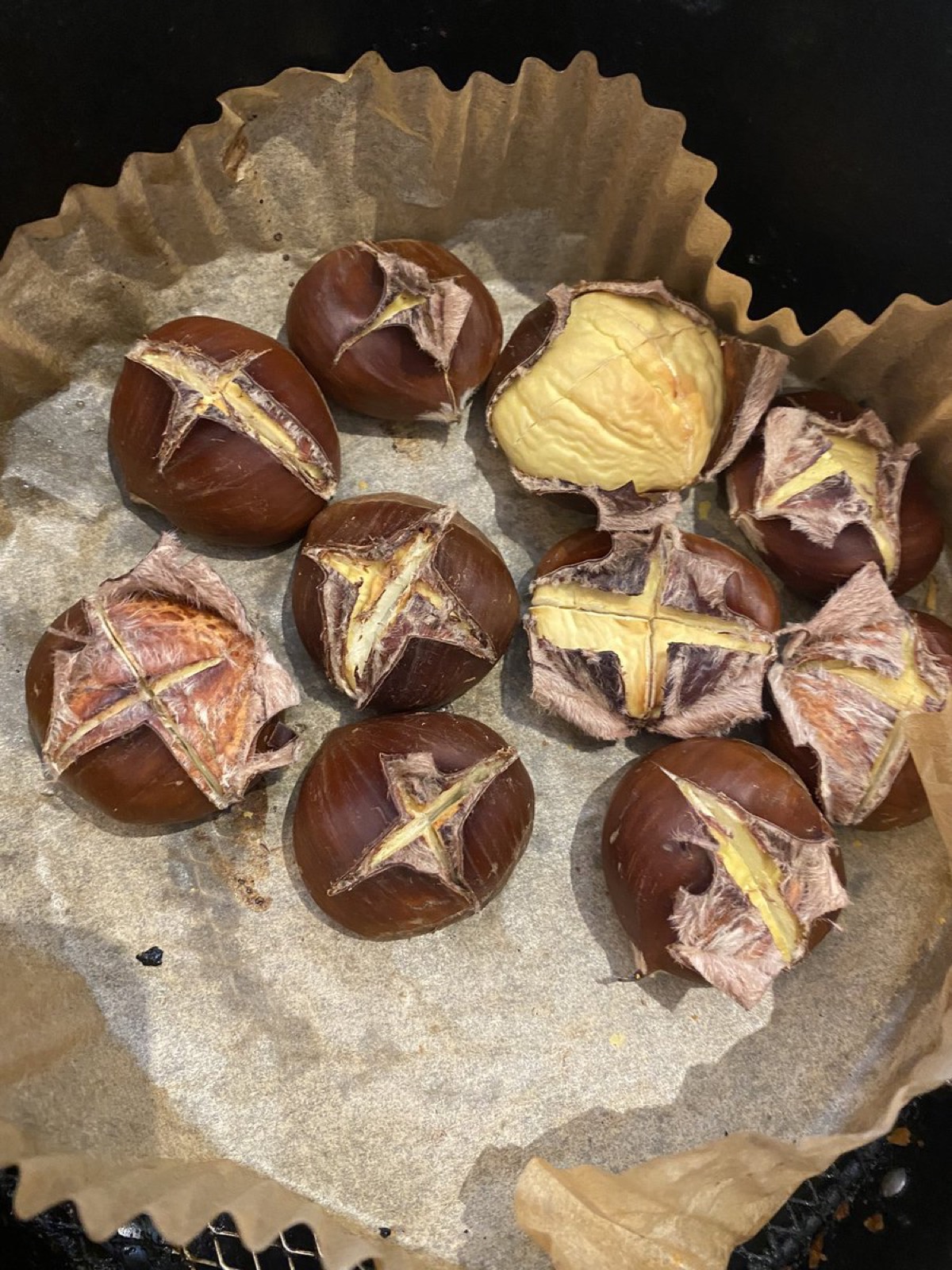
In winter there were sugar-roasted chestnuts. I never bargained with the chestnut seller, because he looked like a pirate, with a black patch over one eye, and I believed he had lost the eye roasting chestnuts for people like me. It seemed rude to argue with a man who had given an eye for my snack. Many years later it occurred to me that the patch was a costume.
Partway through my series about my grandfather, I stopped and made an announcement. Until then I had been calling him zufu, the formal written word for a paternal grandfather. From now on, I said, I would call him yeye, Grandpa, because I was only chatting with friends and did not need the language of documents.
It was a small change. I did not think about why I made it at that point in the story. Looking back, it came right after the two trains he did not take, and right before I started digging into how he got rich. Somewhere around there, he stopped being a capitalist in a family file and became the old man who made me fill in my own forms.
Chapter 3
Black Five
The summer of 1966 in Shanghai: smashed bowls, a three-day house search, a diamond hidden in a ball of wool, and a grandfather sweeping the street in his best suit.
The sound I remember from the summer of 1966 is the sound of bowls.
Our family had a set of rice bowls and dishes in red, green and yellow, with the words Long Life Without End glazed around the rim. They had been in the house as long as I could remember. That summer we carried them out into the middle of the road along with the household Buddhas and the statues of Guanyin, the goddess of mercy, and smashed them. Everybody on the street was doing the same thing. I can still hear that sound, a high crack and then a scatter, over and over. It is not loud in memory. It is sharp.
It was a summer day when it began, and it felt as if the weather had changed all at once. Overnight the streets of Shanghai filled with Red Guards in army uniforms that had no collar tabs and no cap badges. The old men and women and children who sat outside in the evenings to catch the cool air could all tell that something was wrong.
The Red Guards shouted Destroy the Four Olds, build the Four News. Old ideas, old culture, old customs, old habits. They called on everyone to bring out anything feudal or superstitious or Western. People smashed Buddhas and pianos in the street. Gramophone records burned. It looked like a war film.
Nobody knew exactly what counted as one of the Four Olds, so the Red Guards decided on the spot. They were the judges, and everyone accepted that they were.
A man in gold-rimmed glasses would be stopped, his glasses pulled off and stamped on. I watched people beg to keep the lenses, which had done nothing wrong. Then a very short-sighted man could still walk home holding two pieces of glass up to his eyes.
There were rules about trouser legs, too. Men's could not be narrower than six inches at the hem, women's not narrower than four. Anyone whose trousers were too tight had them cut open where they stood, and for a while the streets were full of men and women in split trousers. Shanghai people are quick. Office workers phoned each other with the news, and before they went home they unpicked their own seams so nobody could cut them.
My grandfather watched all of this with a very heavy face. I thought I saw in his eyes the end of the world. I did not expect it to turn out to be the end of his world.
Black Five
The Cultural Revolution sorted people into colours. There were the Red Five categories, the good classes: workers, poor peasants, revolutionary soldiers and cadres, and so on. And there were the Black Five: landlords, rich peasants, counter-revolutionaries, bad elements, rightists. Capitalists were not technically in the original list, but in the street nobody was making fine distinctions, and my grandfather was treated as one of them.
My parents in Sichuan were intellectuals, the Stinking Ninth. Going back to them would have been no better. So I stayed in Shanghai, a small boy in a Black Five household.
The grain shop and the coal shop stopped delivering to families like ours. Somebody had to fetch the rice and the coal. I was not yet ten. I took a board and four ball bearings and made a little flat cart that I could pull heavy things on.
Then we lost the right to buy the ready-made honeycomb coal briquettes that everyone else used. We had to buy raw coal, smash it into dust, and mix it with yellow mud to press into balls by hand. My hands were too small and too weak. The balls I made fell apart and did not burn well. Shanghai winters are damp and cold, and my hands went red and swollen and covered in chilblains.
At the time I thought suffering was what we deserved. This was how Grandpa had "exploited" others back then.
— October 14, 2023
What I could not stand, small as I was, was not the cold. It was walking in the street pulling rice or coal behind me, and the looks and the words from strangers. Not from the neighbours, who knew us. From strangers, who only knew what we were.
We saved everything. The paper caps from the daily milk bottles were kept to start the coal fire. When my grandfather took leftovers home from a restaurant, he took the little dishes of soy sauce and vinegar too. Once a manager told him he could not. My grandfather argued: "If we ate here, you'd give us the soy sauce and vinegar, wouldn't you?"
The street sweeper
My grandfather now had work. Every morning he swept the street.
He dressed for it. He made himself up, deliberately, as the old Shanghai dandy, and he hummed little tunes while he swept. I passed him on my way to and from school. I remember a pale suit and a pair of pointed shoes in three colours, trimmed with crocodile skin.1
In the afternoons he had a second job. The lane committee did not want the Red Guards to write the revolutionary slogans for the walls. They wanted the capitalist, because his calligraphy was better than anybody's. My job was to fold and cut the paper for him before he wrote.
So the two of us made slogans together, the old man who was the target of them and the boy who would be the next target if anyone thought about it.
Two things that kept me awake
There was a saying everywhere then: Father is dear, mother is dear, but not as dear as Chairman Mao. I was never completely sure of it, because of two things I saw.
A neighbour of ours, also from a capitalist family, went on an outing to the countryside and took along a big plastic-covered copy of the Little Red Book of quotations. After it rained, she laid it on a rock and sat on it.
And my grandfather once pointed at the portrait of Chairman Mao on the wall and said, "I'm a good man. He's a bad man."
Because of "reactionary" words and deeds like these, I often lay awake at night, a boy of that age.
The house search
In Shanghai the Cultural Revolution had its own speciality, which was the house search. A group of people came to your home, turned everything inside out, and carried away anything of value. The constitution said private property was sacred and inviolable. Nobody mentioned the constitution.
I heard that a group of children of high officials from Beijing came to Shanghai and searched the houses of famous people as they pleased, and that they were the ones who first beat people with the iron buckles of their belts. I did not see that. I only heard it.
What I did see was the rubbish bin in the middle of our compound. In those weeks it often had jewellery boxes in it, and mahjong boxes. Some people moved their gold elsewhere. Some threw it away.
In another house nearby lived an old man and his maid. The Red Guards found that she had hidden valuables for her employer. They made her stand on a stool and beat her with a bamboo pole until the pole split. She wept and screamed the whole time.
Our family's turn came last. My grandfather had been dismissed from his business so long before that nobody remembered him as a capitalist. When the Red Guards finally came, carrying a tall paper dunce's hat, they spent a long time looking for our house. When they found my grandfather they had to check that he really was the person they were supposed to struggle against.
My grandmother called me by my baby name. "Come here," she said, "and bow your head."
I had never exploited anyone in my life.
A neighbour spoke up for me. "His father's a Communist Party member!" It was true. My father had joined before I was born.
They searched our house for three whole days. They were quite polite. Perhaps they did not know much about this long-ago boss, or perhaps they had heard he had been good to his workers.
They were also efficient. They found what my grandfather had hidden in the bamboo poles we hung washing on, and in the coal paste used to bank the stove overnight. By then those were the most popular hiding places in Shanghai, and the Red Guards had learned where to look.
My grandmother soon handed over all the jewellery she had hidden. They had a good method. "The old man has already confessed," they told her. "Are you going to go to prison for him, while he's outside finding another woman?"
The ball of wool
Before the search began, the family had divided up the valuables and given each person something to hide. My task was a diamond.
Every Shanghai household in those days had a drawer full of leftover balls of coloured wool from knitting sweaters. I wound the diamond into the middle of one of them.
Each time the Red Guards pulled out the wool drawer and tipped it over, I went and picked up the balls one by one and put them back neatly. Nobody suspected me.2
Those few days were the liveliest of my whole life. The house was turned upside down, and nobody stopped me from playing anywhere I liked.
— April 12, 2023
That is the truth as a child felt it. I was not pretending when I wrote it. For three days the adults were too frightened to watch me, the doors stood open, strangers filled the rooms, and I was in charge of a secret.
What I did not say then is what the adults were doing while I was playing. I can see them now. On the last night the Red Guards sat around a big round table with a small scale, the kind used for gold, and weighed every piece of jewellery. They wrote a list, with the number and the weight of everything, as if it were all going to the national treasury. My grandparents sat and watched their life being weighed in grams.
The diamond was the only valuable that survived. After the Cultural Revolution, friends from the countryside, who had a good class background and could do such things without questions, took it to a second-hand shop and sold it cheaply. With the money the whole family "got rich" one more time and went on trips to Suzhou and Hangzhou, eating well and enjoying themselves. In one telling I said the money would not buy a fast-food meal today. Both things are true. It was very little, and it was everything.
Much later the government returned what had been confiscated in the searches. But you were not allowed to keep it. You had to sell it to the state, at prices that were a joke.
What the Red Guards were
I want to be careful here. It would be easy to write the Red Guards as monsters. The ones who came to our house had been told that people like my grandfather were the enemy, and who were polite to him anyway. The maid in the house nearby was beaten by people who believed they were punishing a crime. The neighbour who shouted that my father was a Party member was protecting me with the only shield she had, which was the same system that had sent the Red Guards.
I do not know what most of them became. They would be old now, like me. Some of them, I suppose, are somebody's grandparents now.
What I know is what I did. I picked up balls of wool and put them back in the drawer. I was a good boy. I was helping the adults. I was helping them hide something from other people who also thought they were good.
That is the part I find hardest to explain. It is not that there were bad people. It is that almost everybody, that summer, thought they were the good ones.
Chapter 4
Three Cents for a Flatbread
My grandfather's stroke, my father's big-character posters, a goodbye at the mouth of the lane, and a telegram on the lunch table in Sichuan.
For a while in Shanghai, everyone was injecting chicken blood.
It was one of those crazes that sweep through a frightened city. You raised a young rooster, drew blood from it, and had the blood injected into your own body. People believed it cured almost anything. Our neighbours all started keeping chickens. Their kitchens were too crowded, so the coops ended up in ours, the only private kitchen in the house. I grew up for a time among other people's chickens.
I asked my grandmother why we didn't get chicken-blood injections too.
"We don't have a clinic," she said.
It was true. Ordinary families went to the clinic of a work unit. Our whole family had no medical care of any kind.
Three cents
My grandfather had high blood pressure for years. Nobody treated it. Then he had a stroke, and half of his body stopped working.
After the stroke, when he was hungry, he would slap his thigh with his good hand and shout, in Shanghainese, Three cents for a flatbread!
That is the closest I can come in English. What he shouted was a street-seller's price, the kind you heard in the mornings when a dabing, a round baked flatbread, cost three cents. He did not ask for food. He called out its price, the way a hawker would. I have never fully understood why. Maybe the stroke had left him only the oldest words. Maybe a man who had once fed half his household out of a warehouse could not bring himself to beg in his own house, so he advertised instead.
When he was hungry he slapped his thigh and shouted: "Three cents for a flatbread!"
— October 16, 2023
I used that line as the heart of the last post in my series about him. I am using it again as the title of this chapter because, of all the things he said in his life, it is the one I hear most clearly.
The family spent everything it had rather than give up on him. In the end they could only find a barefoot doctor, one of the peasant medics trained in a few months and sent out to places that had no proper ones. He covered my grandfather's whole body in circles drawn with a ballpoint pen. Beside some of the circles he wrote the names of acupuncture points.
My grandfather was a tall, heavily built man. There was no wheelchair. Moving him at all was a struggle. Getting him to the toilet at night was the hardest part of every day. Every night they tied a rope around one of my uncles' wrists, so that a tug from my grandfather would wake him.
A capitalist pup
In Sichuan, my father was under attack.
At his university the walls were covered with big-character posters, those huge handwritten sheets that anyone could paste up to denounce anyone else. A good number of them were about him. His crime, as written there, was raising his son as a capitalist pup in a bourgeois household.
That son was me.
Letters kept arriving from my parents. They wanted me back in Sichuan as quickly as possible. My father could not take much more.
But a child my age could not travel alone across half of China. The train went west to Xi'an and stopped there for a night before going south. We waited several months before somebody finally agreed to take me with them.
The mouth of the lane
On the day I left, my grandfather's illness was no better. He still dragged himself, limping on his bad side, as far as the mouth of the lane, to see me off.
We both knew it was the last time we would see each other.
Grandpa and grandson both knew this was the last time.
— October 16, 2023
I had not liked him when I was small. He had not liked me. Somewhere in the years of sweeping and slogans and coal balls and folding paper for his brush, that had turned into something neither of us had a word for. At the mouth of the lane I did not have a word for it either.
I have since been to a great many airports and said goodbye to a great many people I loved. None of them has felt as final as that one.
The telegram
Not long after I got back to Sichuan, I came home from school for lunch one day and found a short telegram on the table.
Nobody in the family said a word.
I looked at my father. Inside my head I said: If you cry, I'll cry. My tears were ready. I was only waiting for permission.
My father did not cry.
That is not true. He did cry. The tears just went inward. People in those days could do that; I still do not know how they learned it.
Sorry, Grandpa. All I could manage was to make no sound.
— October 16, 2023
The telegram said he had died. He had finally been taken into a hospital near the end, but he did not qualify for a bed on a ward. He lay on a stretcher in a corridor. His sons and daughters stood around him in a ring to block the draught.
The date was November 30, 1971. When I first wrote about it I worked out that he died younger than I am now.
He loved everything about Shanghai. And Shanghai, in the end, was the place whose ghosts tormented him and cut his life short.
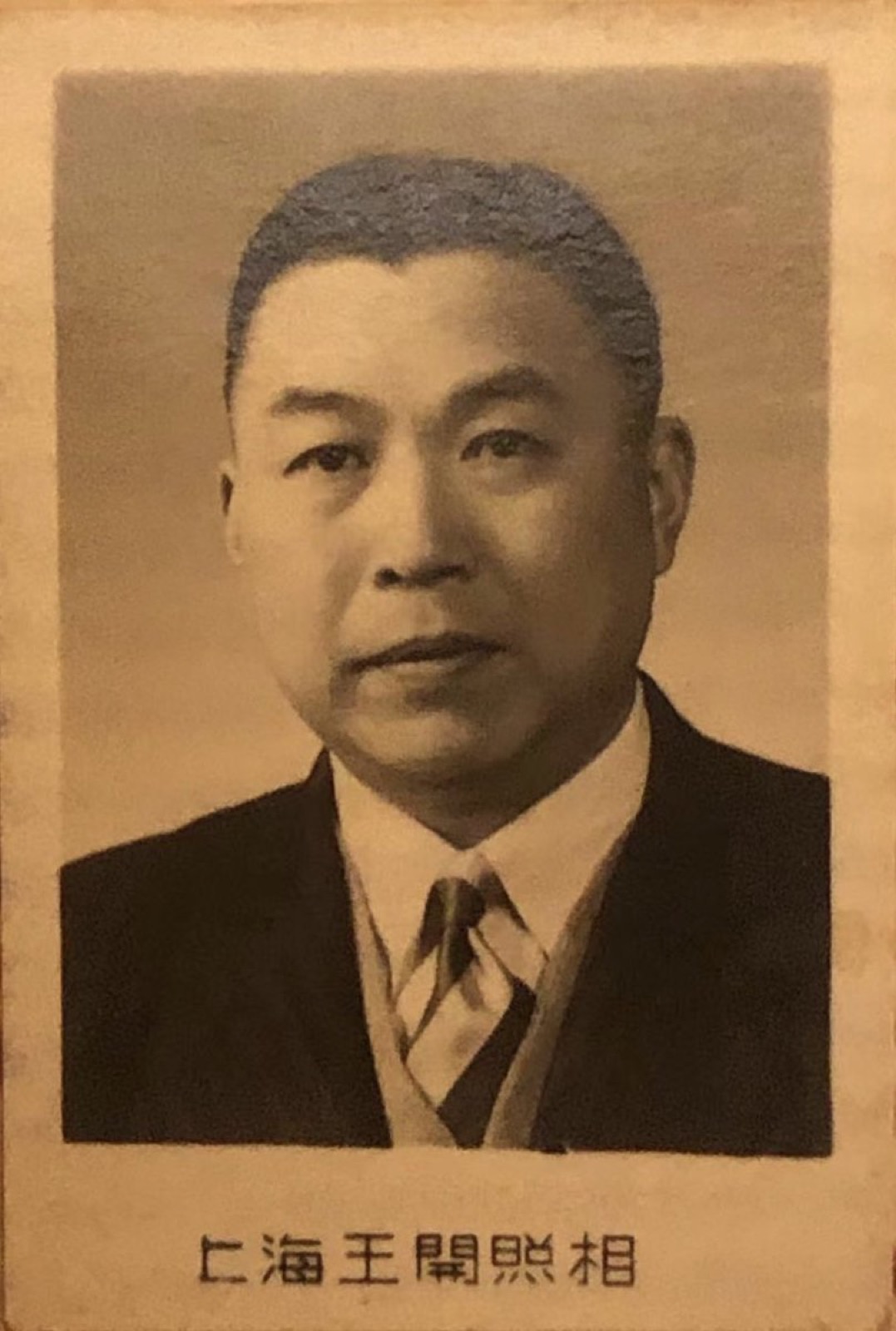
He was a good man
The story did not end with the telegram. It ended years later, in a village in Zhejiang.
After the Cultural Revolution, I went with one of my uncles to visit a family who had once worked for ours. We took a long-distance bus to the county town. Then each of us rode on the back of a bicycle for the better part of an hour.
My uncle had grown up with a boy from that family whom everyone called Shuiniu, "Water Buffalo". In the old days Shuiniu's father had been in charge of a few hired hands who looked after the Wong household, everything from the meals to the chamber pots. Shuiniu met us at the entrance to the village and took us home.
So I finally met someone who had been directly exploited by my grandfather. I had been taught all my life what that person would say.
Shuiniu's father asked my uncle, "How is the young master these days?"
My uncle told him that my grandfather had died long ago.
The old man fell from where he stood by the stove onto the floor. "He was a good man!" he cried. Then he told us one story after another about my grandfather.
This was the verdict of an exploited man on the man who exploited him. I could not believe my own eyes, and I could not believe my own ears.
— October 15, 2023
I had already seen some of what Shuiniu's father was talking about. In the worst years in Shanghai, there were refugees from Anhui all over the city, fleeing hunger in the countryside. My grandfather gave them whatever clothes or bedding the family had left that would not sell. A young cobbler with a baby face sat near our door; he had a great many children and was very poor, and my grandfather would send me out to him with small things from the house. When other Shanghai boys fought crickets, which was the great entertainment of the time, my grandfather told me it was a cruel game.
Nobody would be his friend in those years. Getting close to him could make you politically suspect. So he made friends with stray cats. At night he brought them in to eat our leftovers. I am an old man now, and when I think of those cats' eyes glowing green in the dark, I am still frightened.
I wrote the whole series to answer the question in its title: is a capitalist a cadre? I did not answer it. I ended with this instead:
Grandpa, whether you were a capitalist or a cadre, I miss you.
— October 16, 2023
Sandbags
Back in Sichuan, I found that the Cultural Revolution there was a different animal.
In Beijing, as I heard it, students beat their teachers with belts. In Shanghai, workers fought each other with iron bars. By the standards of those years, they were the gentle ones. In Sichuan they used real weapons. People said that over the Jialing River in Chongqing the shells flew so thick they hit each other. Some places had armoured cars. Army armouries were thrown open.
Our family lived in the building at the far corner of the university campus. At three storeys it was the tallest around, which made it high ground, and the fighters had long since taken it over. There were sandbags on it and a machine gun.
The university students belonged to one faction, the middle-school students who shared the campus to another. The university students were called conservatives and the middle-schoolers rebels, and both sides fought in the name of the same Chairman Mao. The middle-schoolers were younger. Hardly any of them had girlfriends, and none of them had thought yet about jobs or marriage or a family. So they had more nerve than the university students and usually won.
On a rise in front of the university gate, a pretty spot, many students who had died in the fighting were buried. Before each burial there was a ceremony called Give Us Back Our Comrades.
In the staff dormitories, people had started making homemade guns that fired iron shot. Those did not just wound you; they could blind you for life.
The children copied the adults. Everything was to be settled with fists. My best friend and I, and a few other boys, formed a gang. We called ourselves the Shrimp Squad, which in Sichuanese means cowards. Wherever there was a fight, we were there. The moment it came to blows, we vanished.
The Sichuanese have a phrase for a friend like that, a friend from the time when your hair was still soft: mao gen'r pengyou. My wife taught me the northern word for it, faxiao. Decades later, when that friend came to see me, I had to explain the Sichuan word to my Twitter followers. In my head it is still the Sichuan one.
Chapter 5
Do You Speak Chinese?
A secret grandfather in Hong Kong, a teacher from Yale who wanted violin lessons for her son, a small mirror for learning English sounds, and the borrowed bicycle that taught me the difference between a mistake and a crime.
I found out I had a second grandfather in the middle of a quarrel.
I was walking home from school with the other children from the campus, and one of them and I got into an argument about something I no longer remember. He ran out of ordinary insults and reached for a big one.
"Your grandpa on your mum's side is an American-Chiang Kai-shek spy," he said. "They've stationed him in Hong Kong."
I said that was impossible. Nobody in my mother's family existed.
Then, on the way home, I thought about it. You cannot have a mother without a mother's father. I went in and asked her.
"Do I have a grandfather? On your side?"
"Yes."
"Where is he?"
"In Hong Kong."
I burst into tears and howled. My father's family were capitalists who had exploited people. Now my mother's family turned out to have secret connections abroad. Heaven, I thought, what kind of luck is this.
My mother kept explaining. Everything had been kept from me to protect me. The other boy's parents, she said, must have seen something in a personnel file they were not supposed to see.
We lived on the grounds of a university in the interior. It was full of intellectuals, but relatives overseas were still rare there. For a boy, finding out you had one was like finding out you had a disease.
Colour
Then President Nixon went to China, and the doors began to open, slowly, from the top down and from the coast inward.
My mother applied for permission to visit her family in Hong Kong. I could not understand why. She had no feelings for this father of hers. Why would she want to go to that place where, as we had been told all our lives, people were eaten without even the bones being spat out?
She went. She came back.
People on the campus suddenly found reasons to drop by our flat. They wanted to know what Hong Kong was like. My mother had a talent I have only seen in a few people since. She could stop someone getting what they came for, protect herself and her family, and leave them without any feeling of having been refused. She did not offend anybody.
And there were photographs. Colour photographs, which nobody we knew had. Our family pictures were small and black and white; these looked like giants beside them. In them my mother wore lipstick and high heels. She stood next to an aeroplane, on the deck of a cruise ship, in front of tall buildings.
The woman I saw every day looked, in these pictures, like the wife of a foreign head of state.
Learning English with a mirror
After Nixon, English mattered in daily life in a way it had not before. People my age started giving up Russian.
My father, I have said, had studied in English all the way through a church secondary school in Shanghai. You would think he would teach me. He refused to teach me pronunciation. He said he had a Shanghai accent and I should not copy it.
Instead he looked around his department for someone who could. He found a woman from Guangdong who had come back to China from abroad. She had degrees from Yale and from Cambridge.
How could we ask a person like that to give up her time for a boy? It turned out her youngest son wanted to learn the violin. So twice a week I went to her home. She taught me English. I taught her son violin.
From that arrangement I learned a rule I have used for everything since: find the best teacher, not the second best.
In those days you learned English by learning the forty-eight symbols of the International Phonetic Alphabet first. She told me to bring a small mirror to every lesson. The reason was simple: if your mouth is not in the right shape, the sound cannot be right. It took me months just to learn the sounds. To this day, when my son corrects my pronunciation, I find myself working out which IPA symbol he means.
The word I think of most is thank.
The first consonant: the tip of the tongue touches the ridge behind the upper teeth and you blow out. For the vowel, stretch your mouth as wide as it will go, left and right, so wide it almost hurts. Then put them together and finish with a heavy nasal.
— December 3, 2022
I wrote that fifty years after the lessons, as a reply to people who said pronunciation does not matter. I have heard many Chinese people in Canada say thank you, and you can tell from the first syllable whether they ever learned it properly. A friend once told me he remembered the word by the Chinese syllables san-ke-you, "three grams of oil". No wonder.
The book of mistakes
The thing that freed me was not the mirror. It was a book.
One day my father lent me a beautifully made book that collected the mistakes of famous people. Grammar mistakes, spelling mistakes, pronunciation mistakes, all of them made by people whose names everyone knew.
It opened my head. If they got things wrong all the time, what was I afraid of?
My father told me, too, about his own favourite teacher at the church school, a man with a big beard who looked like Karl Marx. He carried a dictionary every day and told the class: While you are learning, I am learning too. The students would learn one meaning of a word, and he would be learning its other meanings. He said the only reason he could be their teacher was that he made fewer mistakes than they did.
From then on, whenever I met a foreigner, I had a line ready.
"Do you speak Chinese?" If you can't speak my language, at least I can speak some of yours.
— December 3, 2022
That was the turning point. I stopped being afraid of making a fool of myself. I was not fluent. I talked anyway.
I still dictate my tweets by voice now, correct the text, and post them, and people still find mistakes. When they do, I correct them and say thank you. I learned that from a bearded man I never met.
Create a learning environment
Many years later, on a visit to Shanghai, I finally asked my father the question face to face.
"You were teaching foreign languages before I was born. Is there a secret?"
"Yes," he said. "Create a learning environment."
That is what he always told me, and it is what he always did himself.
— October 2, 2023
At the leftmost point of the Cultural Revolution he was sent to labour on an army farm. During the day he read Peking Review, the English-language weekly. At night he hid under his quilt and listened to Radio Peking's English broadcasts.
Somebody reported him for listening to enemy radio. The farm moved a man with a good class background into the bed next to his to catch him. The man listened and found something was wrong: the enemy station was playing "The East Is Red", in the very tune the Chinese satellite had sent back from space. The struggle meeting planned for my father was cancelled. He had been listening to the voice of the Party Central Committee, only in English.
At home we had more than most families. Besides the internal news digest, my father brought home English weeklies and papers, Peking Review and sometimes a Washington Post. I could not read them yet, so I looked at the pictures and the cartoons.
Once the Post ran a cartoon of a tiny Black child standing in front of a huge refrigerator, with a caption saying there was nothing to eat again. I told my father: he should sell the fridge, then he could buy lots of food.
Another time Peking Review printed a photograph of Deng Xiaoping's birthday, not long after he had been rehabilitated. There was an enormous three-tier cake. I said, out loud, that I wondered how much he would have to embezzle to afford a cake like that.
My physics teacher explained voltage by comparing it to water pressure: the faster the water flows, the higher the pressure, and electricity is the same. I asked him why, in that case, the lights on the first floor and the third floor were equally bright.
Around me this was considered a defect. In the West, I learned much later, they call it thinking outside the box, and it is a virtue.
Seven cents a thousand
After China took its seat at the United Nations, a great many documents had to be translated, and teachers like my father did a lot of the work. I typed for them, unpaid. I had already taught myself a little typing. I heard that every thousand words earned the country seven US cents in foreign exchange.
I did not earn the seven cents. I earned speed. In Hong Kong, a few years later, that speed would matter.
Comrade, we have reached Suzhou
In the later years of the Cultural Revolution I spent time in Shanghai again, studying the violin.1 My teacher was the concertmaster of the Shanghai Film Orchestra. He was half Cantonese and half German. Nobody in those days took money for teaching music; it was pure dedication to art. He was very strict. While I was working on basic technique he would not let me attempt any bouncing bow strokes or any vibrato. Things came in their proper order. I practised until my sweat dripped onto the floor.
I went to his home twice a week by bus. Shanghai buses cost five cents for one to five stops and ten cents for five to ten. To save money I would ride five stops, walk a few, then ride another five.
Once I fell asleep and rode all the way to the end of the line. A conductor in uniform woke me up.
"Comrade," he said, "we've reached Suzhou."
I broke out in a cold sweat. Suzhou was another city entirely. Then I understood it was a joke. People rarely made jokes like that in those days. Even at their poorest, people kept their sense of humour.
At school we were all supposed to learn from the workers, the peasants and the soldiers, which mostly meant heavy labour. I was usually assigned to the performing troupe instead. We rehearsed and performed for things like "support the army, love the people" events. That got me out of the work, and after a performance there was sometimes a proper meal. I played the red songs so many times that I could still hum most of them. Getting them out of my head took years.
Once, though, I was sent to help with the harvest. The student kitchen served half-cooked rice every day. I fainted from hunger on top of a threshing machine. Luckily I fell backwards, not forwards into the machine, or I would not be here to write this.
The wrong bicycle
The other thing I learned in those years was the difference between a mistake and a crime.
I went to Suzhou by myself once, as a tourist, and somehow managed to borrow a bicycle. In those days the family fortune was "three that turn and one that sings": a bicycle, a sewing machine, a watch, and a radio. Lending someone your bicycle was a serious thing. This one was quite new, in a colour I remember as unusual. Whether it was a Phoenix or a Forever I cannot recall. It was made in Shanghai.
There were very few buses during the Cultural Revolution, so I rode from sight to sight, and at each one I parked in a sea of bicycles.
When I came back to leave, the lock would not open, whatever I did. I thought about breaking it. It would be cheaper to pay for a lock than for a bicycle.
At that moment a man caught me in the act. It was his bicycle. It was not the one I had borrowed.
Within minutes dozens of people had gathered, and then hundreds. There were no films or television to speak of in those years. This was entertainment. Before the owner did anything, I knew the choices: a beating on the spot, or a trip to the police.
By great luck I found the right bicycle nearby, the one I had actually borrowed. My hands were shaking so hard I almost could not open that lock either.
Shanghai people say that men and women in Suzhou talk the same way, softly. Even at his angriest, the owner spoke gently. He kept repeating one sentence in Suzhou dialect: Open it and show me!
I did make a mistake. I did not commit a crime. It was one of the few "thefts" of my life, and I will remember it as long as I live.
— July 25, 2023
I wrote that after a post of mine explaining that a crime needs two things, the intention and the act. I had the act without the intention. On that day in Suzhou, in front of a few hundred people, the gap between those two was the width of one bicycle lock.
I would need that understanding soon. In a few years I would be standing in a new city, unable to understand anyone, and almost everything I did would look like a mistake to someone.
Chapter 6
Hall Chief
My first two days in Hong Kong: a taxi I could not pay for, a grandfather who was not rich, a loaf of bread called Life, and a job I did not deserve.
Part Two: Hong Kong and the Computer Years
The taxi went through the harbour tunnel very fast. The driver kept looking at me in his mirror. I could see him wondering where this passenger had come from, a grown man who could not talk.
I could talk. I just could not talk Cantonese.
He took a long way round. The fare that should have been covered was no longer covered. By the time we stopped I owed him ten-odd dollars more than I had. I put my twenty Hong Kong dollars, everything I owned in that currency, into his hand. He grabbed me by the collar and started shouting that he would call the police and have me arrested, this fare-dodging illegal immigrant.
Where was my grandfather? How had I managed to get into trouble the moment I arrived?
He was there. He had been told to wait for me downstairs with money, and he had been waiting, but on a double yellow line, where taxis are not allowed to stop. He and the driver argued in Cantonese. I understood nothing. I worked out later that it was about the tunnel toll. It was five dollars each way. A taxi based on Hong Kong Island should not have charged me for its own trip back through the tunnel.
My only twenty dollars were gone, just like that. I had spent days going to different offices and getting red stamps to exchange for them.
— July 13, 2023
That was the end of the twenty dollars. I had spent days collecting stamps for them, carried them across a border and held them tight all the way to Kowloon, and they lasted a few minutes on Hong Kong Island.1
Two strangers
So I met, for the first time in my life, my mother's father.
He had seen a tiny black-and-white photograph of me. I had seen many huge colour photographs of him. We looked each other over, confirming that we were related. Neither of us looked anything like the other. He looked like a foreigner, if anything.
Before I left the mainland, I had needed a reason to go. Young people in my position went to Hong Kong with a sort of mission: to inherit an estate. A boy from our compound had gone before me; his grandfather owned a rubber plantation in Malaysia, and he was going to inherit it, people said. The police waved such cases through.
My grandfather had sent a letter to the police. In it he introduced himself as a man born at the turn of the century, in 1900. He had graduated from the customs college in Beijing and served as an official in the Chinese customs. He had his own business in Hong Kong and gave generously to charity. The letter was written in the traditional characters and in a stiff, classical style, full of literary particles. It sounded like a rich man.
And his building had a lift. In Hong Kong then, the poor lived in shacks on the hillsides, where it rained heavily outside and lightly inside, or in tiny flats in public housing, or, if they were really poor, in the "cage homes", wire bunks stacked in a room. My grandfather lived in a proper building with its own lift. It was the old kind that you had to work yourself: at every floor you opened and closed a folding gate of iron and bamboo. That was considered more high-class than the kind with an operator.
He was, my mother's family said, a wanku, a playboy, the classical word for a rich man's son in silk trousers. He had travelled the world and spent whatever money he had. His one serious hobby was stamps. He had founded a little firm called the Kowloon Stamp Company, which old Hong Kong people may remember. It operated from a shop the size of a block of dried tofu, in a side street in Causeway Bay.
The company belonged to some international association. Parcels arrived regularly, full of the commonest, cheapest stamps in the world, still stuck to corners of torn envelopes, in bundles of a hundred with a rubber band round each. Our job was to soak them in warm water until they came free, like any family cottage industry. Sometimes people brought in a great rarity to sell or swap: a Penny Black or Penny Red from Britain, or the Chinese stamp from the Cultural Revolution called The Whole Country Is Red. Those stamps are worth millions now. Then, one of them would buy you a colour television.
My grandfather wasn't poor, but he was definitely not rich either. My dream of "inheriting an estate" was gone for good.
— July 14, 2023
Hall Chief
On the first night I learned what my position in the household was. I was the Hall Chief, which is a joke: it sounds like an important official, but it means the person who sleeps in the living room. The Hall Chief goes to bed later than everybody else and gets up earlier than everybody else. I found this out a few hours after I arrived.
I had no money to pay rent. I was a grown man and I was eating and sleeping for free. Even if they had been happy to have me, I could not stand it. But my generation was good at hardship, and I cooked, washed dishes, cleaned, and did the laundry, anything that needed doing.
The first morning I got up early, as a Hall Chief should. Near lunchtime I was trying to work out what to cook when my grandfather said we would go out to eat.
Go out? On the first day? On the mainland then, people ate in restaurants less often than people today go to weddings.
He took me to a typical Cantonese teahouse. Little bamboo steamers came, one after another, each with a few small dumplings inside, food from the land of Lilliput. After several of them my grandfather asked me:
"Enough?"
I could have eaten twenty or thirty more baskets. I said, "Enough, enough."
I looked up. On the wall hung a piece of calligraphy. I can still see it.
Spring ice is thin; human feeling is thinner. Goldthread root is bitter; poverty is more bitter. Climbing to heaven is hard; asking others for help is harder. Rivers are dangerous; the human heart is more dangerous.
I have forgotten the order of the lines. I will remember the words my whole life.2
Life bread
Outside the teahouse I bought a long loaf of Garden brand Life Bread. It cost eighty Hong Kong cents. What a name! Bread for staying alive. My eyes filled with tears. I walked along stuffing it into my mouth.
That was the first time I felt the pressure of money, the pressure of things.
— July 14, 2023
I had never felt it before. I had grown up with two homes. One was my grandparents' house in Shanghai, a decaying capitalist mansion with a dozen households living in it rent-free. The other was my parents' flat in the interior, two teachers with no property at all except, as I remember, two bicycles and the meal tickets for the staff canteen. When I reached secondary school and really needed a desk and a chair, my father made one phone call to the college's general affairs office, and the next day somebody delivered them. A few cents a month came off his salary. Somebody came round now and then to check the wattage of our light bulbs, to work out the electricity charge.
In Shanghai, too, neighbours had sometimes whispered to me that they were only occupying our house and that one day it would be given back, and then we would have a lot of money. Another inheritance.
Money, before Hong Kong, had always been somebody else's arrangement. Now I was walking down a street in Causeway Bay eating bread for life.
People say a distant relative is not as good as a close neighbour. When I wrote about that first day, I turned it round: a close relative is not as good as a distant neighbour. I did not explain it then. I think I meant that the people who owe you nothing are sometimes the ones who can help you most, and that living off your own family, however kind, is its own weight.
The first afternoon
My grandfather, whose estate I had come to inherit, never gave me a cent. I have no reason to blame him. He had not known I existed. He made up the difference on the taxi fare, let me sleep in his living room, and took me out for dim sum. That was already a great deal.
On the first afternoon I started looking for work.
Hong Kong had two "rice papers", the newspapers people read for the job advertisements: the South China Morning Post in English and the Sing Tao Daily in Chinese. I looked at both. Then I went to see a man my father knew. He had studied in America and taken a doctorate in England, and he ran a group of companies from offices in the tallest commercial building in Central. I only wanted his advice. Maybe a little help.
He gave me a job on the spot.
It was less a job hunt than an act of charity. I could not speak properly, I could not find my way anywhere, and he told me I could start whenever I liked.3
I have been grateful to him and his wife my whole life. When he died, years later, I printed his photograph at home and attended his memorial service online.
Wrapping
Other relatives in Hong Kong got together and raised a thousand Hong Kong dollars for me. I knew exactly what to do with it.
Shanghai people say that style starts at the head and ends at the feet. The word for flashy, xuetou, has head in it, and the word for shabby, biejiao, has foot. So: a fashionable haircut, a good pair of leather shoes, a brand-name suit, a shirt, a tie. After that I looked more like a Hong Kong person than the Hong Kong people did.
My first salary would not come for a month. When it came I would rent a room of my own. I wanted my own space and my own time more than anything. I had seen people arrive in a new city and get swallowed by relatives, a dozen aunts and great-aunts using up all their days.
I went back to the bakery and bought seven loaves of Life Bread at once. I hid them at home. On each one I wrote, practising my English: Monday. Tuesday. Wednesday. All the way to Sunday.
Like the blood pressure pills I take today, you must never eat more than one a day. The difference is that eating less was fine.
— July 14, 2023
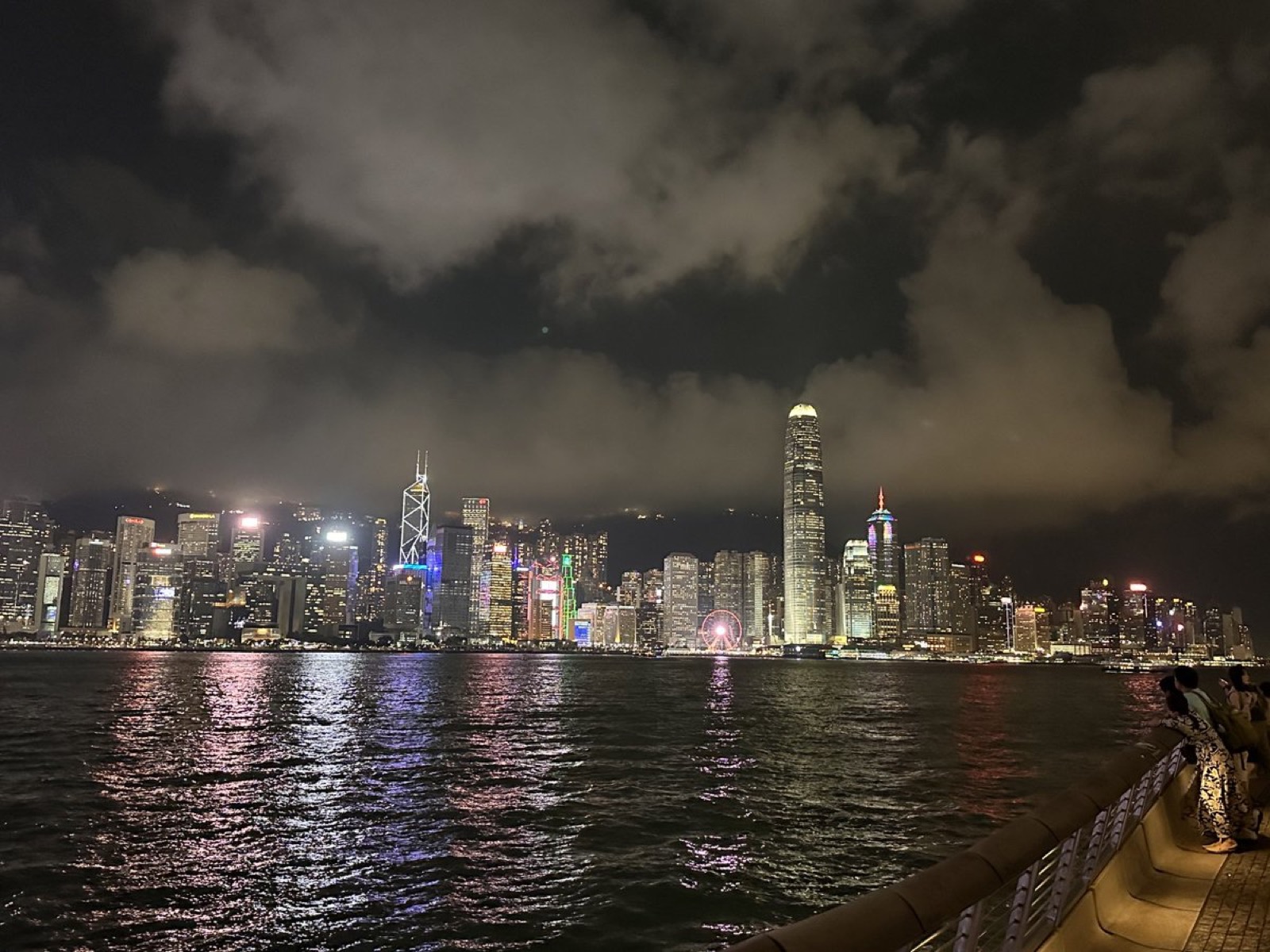
Twenty dollars
People used to say that Shanghai was the paradise of adventurers. Now Hong Kong had taken its place. I had bread and I had a job, and I was full of confidence.
When I finished writing the story of those first days, ten posts long, I added one wish at the end. I am not a man who collects things. But I wish I had kept that twenty-dollar note, the one my grandfather had to make up for, so that I could put it on the table today and look at it.
I don't have it. The taxi driver has it, or the bank, or nobody. What I have instead is the story, and I have now spent it more times than I ever spent the note.
Chapter 7
The Quick Brown Fox
Office boy in the tallest building in Asia: two sugars or one, the telex room, Cantonese tapes on the Star Ferry, a matchbox-sized advertisement for an English partner, and twenty years spent becoming more Hong Kong than Hong Kong.
My first job title in Hong Kong was one word, and it was English: Boy.
As far as I could tell, it meant the male person in an office who fetches and carries. My existence was to make everyone else more efficient.
The building was the tallest in Asia. It was called Connaught Centre then; it is Jardine House now, built by the old British trading house Jardine Matheson. Every window in it was round, and none of them could ever be opened. It stood in Central, the busiest business district on Hong Kong Island, across from the General Post Office and next to City Hall. On my way to work every morning I walked past the branches of every bank and the windows of every famous brand.
The man my father knew ran a group of companies from there: shipping, construction, electronics, trading.
One sugar or two
Every day I made the morning tea and the afternoon tea. I learned who took coffee and who took tea, who took milk, who took sugar, and whether it was one lump or two. I opened envelopes and posted letters. When the secretaries were too busy, I typed for them. Above all, I ran messages and delivered letters around Central.
Hong Kong was a British colony. Apart from the Cantonese ones, its streets were named after British people, British things and British events. So I learned to read a map, and I memorised the common British names, so that I could deliver letters faster.
I had little tricks. If a letter had to be signed for, I held out a pen, ready. Every time the lift stopped at my floor, I pressed the down button before I needed it. All to save seconds. Always one step ahead of everyone else.
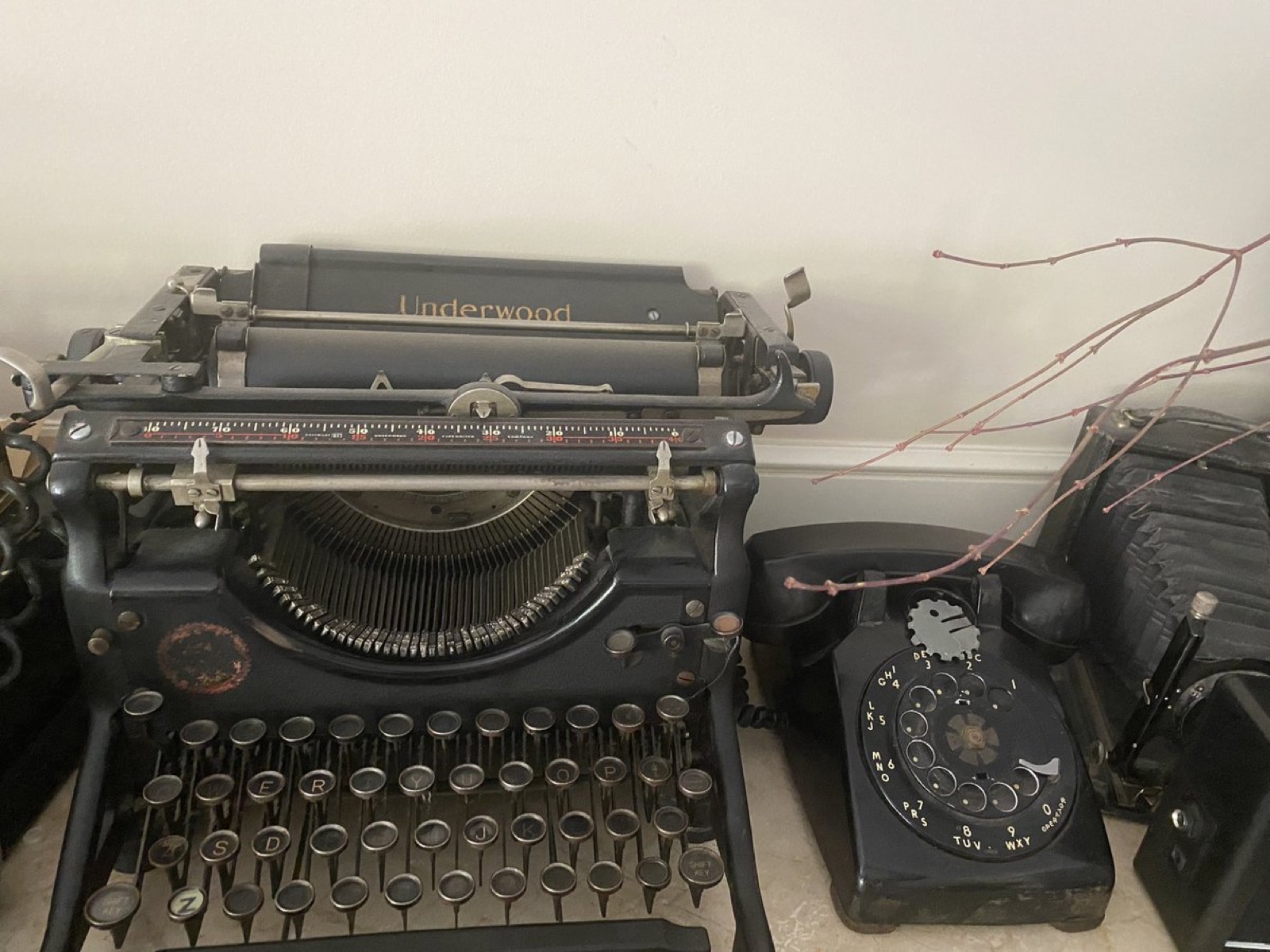
I threw myself into typing like a madman. I already had a base from typing United Nations documents for my father's colleagues. Now I practised the sentence every typist in the world has practised:
The quick brown fox jumps over the lazy dog.
It uses every letter of the alphabet. The secret of speed is to keep your ten fingers resting on the home keys and reach up and down from there, and above all, never look. Touch-typing. If you can't type blind, you will never be fast. I still tell people that.
Telex
Offices by then had stopped using telegrams. Fax machines had not arrived yet. The way companies talked to each other around the world was telex. I did not understand the technology very well. Each user had a unique address somewhere in the world, and two telex machines would be connected so you could type to each other in real time.
You paid by the letter, or by the minute. So abbreviations were everything, and there was a whole new vocabulary to memorise. A phrase everybody uses today started for me there: ASAP. As soon as possible.
The telex room was the communications heart of the whole company. Two professional secretaries worked beside it. I had the feeling that both of them had boyfriends and wanted to leave quickly when work ended to meet them. They were very happy to teach me how to run the machine.
Before long this "mainland boy" could type like the wind and even operate a telex! I'll say it proudly: maybe not in all of Hong Kong, but in that whole enormous building you couldn't find a second one like me.
— July 15, 2023
You could tell from the raises how quickly I became important to the company: how often they came, and how big they were. I did not say this in the tweet, but I will say it here. Nobody gave me those raises out of kindness. A Boy who can type and run the telex saves a secretary's evening. Hong Kong was a place that paid for saved evenings.
Nine tones
But the language that nearly beat me in those years was not English. It was Cantonese.
Mandarin has four tones. Cantonese has nine. Its grammar is closer to English in some ways: the adverb can come after the verb. Even the words for everyday things were different. A bicycle was not a zixingche but a daan che, a "single vehicle". A taxi was a dik si.
I spent a fortune on every Cantonese tape the Commercial Press bookshop sold. I rented a room in Kowloon and crossed to the Island and back every day on the Star Ferry, on the cheap lower deck. With the sea wind blowing, looking out at Victoria Harbour, I talked to myself, a sentence here and a sentence there. Have you eaten yet? Is there going to be a typhoon today? How many younger brothers do you have? The people around me assumed I was mentally ill.
What I learned turned out to be the old-fashioned Cantonese of Guangzhou, not what people were actually saying in Hong Kong. And there was always the last bit of accent I could not get rid of. People around me told me to give up. A Shanghai accent was fine, they said. Shanghai was not the countryside; it would not hold me back. Many of Hong Kong's big bosses in shipping, textiles and the stock market had come from Shanghai.
On weekends I minded my grandfather's stamp shop in its side street in Causeway Bay. I dealt with all sorts of street toughs there and learned a lot of Cantonese swear words. One day a man swore at me with a phrase I had never heard: Go eat chicken-pot shark fin!
I had no idea what it meant. I answered politely: "You eat first."
It turned out to be a euphemism for go die, from a Stephen Chow comedy. Without knowing it, I had hit him right back.
Once the company held a function and invited some guests. A fashionable young woman sat down beside me. I turned to her and asked, courteously, "May I ask the young lady's surname?"
The whole room roared with laughter. She was the reigning Miss Hong Kong. Everybody in the city knew her name. Except me.
I loved her first
For the better part of my first year I worked only on Cantonese. In the end people still thought my Cantonese was only so-so, but they understood me, and I understood them. Eventually strangers would guess I came from somewhere in Guangdong, though they could never say where.
Then I turned to English. Listening, speaking, reading and writing, not two at a time but all at once. Hong Kong helped. It was bilingual, and every official notice and every shop sign had to be in both languages. I trained myself to read only the English first, and to look at the Chinese beside it or underneath only if I really could not understand. On television I watched the evening news on the Cantonese channel and then again on the English channel of the same company, where the stories often came in the same order.
That was the most important trick: someone telling you, in a language you don't know well, a story you already know. You can guess most of it. The first English novels I read were all about China.
I went to a youth group at an English-language church. One evening a week, people stood up and told what had happened to them, confessed what they should not have done, and asked the others for help. I had the chance to speak about myself in English, and everyone around me was eager to help.
I put a classified advertisement the size of a matchbox in the South China Morning Post, looking for someone who wanted to learn Chinese. No money changed hands. Every time we met, half the time was all English and half all Chinese. I brought an English newspaper. He brought a Chinese one.
Even when I went out to drink, I went where English speakers went. Rarely Lan Kwai Fong; mostly Wan Chai. After a few drinks nobody cares about your grammar or your accent. I swam like a fish.
My English took off because I fell in love with "her" first, and only then did "she" start to love me back.
— July 15, 2023
My father, who taught English, thought I had found a foreign girlfriend. I had no time for a girlfriend of any kind. To stop my mother worrying that I was lonely, I would spend a few cents at a newsstand on publicity photos of the same film actress and send them home.
I wrote that "her" in quotation marks, and I meant the English language. Looking at it now, I can see what my mother saw in the envelope: an actress, smiling. She may well have known her son was lying to her, kindly. Most families in those years lied to each other kindly, across borders, by post.
Time, money, manpower
I loved two institutions in Hong Kong. One was the British Council in Wan Chai, where I studied English. The other was the Hong Kong Management Association, which ran business courses taught in the evenings by people who ran companies in the daytime. Their knowledge came from the trenches.
One teacher always wrote the same three words on the blackboard: time, money, manpower. Think of all three before you do anything, he said. Missing any one, you fail. Wasting any one, you fail too.
Hong Kong people judged you by results. They did not care how you had got to Hong Kong, whether by riding on the outside of a train, swimming, or walking over the hills. Once you were there, you were a Hong Kong person. Don't tell them who your father is or where you went to school. Tell them what you can do for their business, their life, their community. A hero is not judged by where he was born, they said. The people they admired had started with nothing, eating rice with soy sauce, and built something.
I fit that rule exactly. It was the first place in my life where my family background did not matter on a form.
More Hong Kong than Hong Kong
I set myself a goal: to be more Hong Kong than the Hong Kong people.
At first that meant the hardware. In those days men permed their hair too, into a big curly mop. Bell-bottoms flared wider than your shoe was long. For formal wear, a pale suit all in one colour. For casual, a black leather jacket in winter or a checked shirt in summer.
The software, the way of thinking, took longer. In Hong Kong it took me twenty full years.
I had no qualifications, no family money, no connections. What I had was an enormous resource: unlimited time. Apart from studying, I used it to make friends, as many and as different from me as I could find.
Other jobs
The first part-time job I found was showing mainland officials around Hong Kong. It paid very little and felt like being a tour guide. They were curious about everything: skyscrapers and slums, nightclubs and certain kinds of films, the mahjong parlours of Happy Valley.
There was one thing they could never understand. Why did a tiny place like Hong Kong reserve parking spaces for disabled people? Why give disabled people so many rights?
Nobody said "political correctness" then. I usually answered, impatiently: without these things, it wouldn't be Hong Kong.
Later, in the early days of personal computers, when only rich people could afford them, I sold computers part time. Most young people selling computers sold the ones with fruit names from California. I sold a German brand called Medfly, which is a fruit fly. Some customers liked the idea: you buy the fruit, I'll buy the fly that eats it. The salesmen's line then, with 1997 coming, was blunt: When the Communists come they can take your flat, but they can't take your computer.
Computers had to be installed by someone who came to the house. I installed them in a great many Hong Kong mansions. It was my first lesson in a certain kind of motivation. The lesson was: it is very nice to be rich.
In my spare time I also bought parts at the Golden computer arcade and soldered together my own Apple II. I taught myself to program in BASIC. I did not know yet that this hobby would be the thing that got me my next job.
Chapter 8
Shanghai Little Friend
A job interview in a permed haircut, the computer company of Dr. Wang An, a meeting between two old men who could not understand each other's Chinese, and a decade of carrying computers into a country that was just waking up.
It was raining a little on the day of the interview. I remember because I carried a long umbrella and used it like a walking stick.
I was wearing a pale suit, all one colour. Under the bell-bottoms I had on pointed leather shoes. My hair was permed into tight curls; it sat on my head like a big hat. I have a photograph in an album to prove it. I was, as the young people say now, completely in.
Clothes mattered. So did the letter. I had read up on the company and knew it valued individuality, so I wrote a letter aimed only at them. I did not use the book of sample application letters from the Commercial Press. Everyone used that book, and using it would ruin you. And I had one more idea in my head going in: while you are choosing me, I am also choosing you.
The company was Wang Laboratories, the wholly owned Hong Kong subsidiary of an American firm. Asians called it Wang Computers. At that time it was the third-largest computer company in the United States.
The man who interviewed me was not a department manager. Nobody from personnel sat in. It was the president of Wang's whole Asia-Pacific region. The interview was in English. Near the end he asked me one question.
"What kind of people really annoy you?"
— July 10, 2023
I said: people who are always asking you what you studied and what diplomas you have.
He said, "Guess what I studied." And then he answered himself. "Drama."
The president of Asia-Pacific for the third-biggest computer company in America had studied acting, not computing.
He had one request, he said. He hoped I would stop looking for other jobs. He had not yet decided which department to put me in.
He had seen in the interview how much I loved computers. My hobby was programming in BASIC, and I bought Apple II parts at the Golden computer arcade and soldered them together myself. And I was stubborn about everything. They liked people like that.
Outside, I found a public telephone and called a friend.
"I got it," I told him.
"How do you know?"
Let me be modest about this. The big boss had grown up in Shanghai. So had I. That settled it.
Then I said: "Oh no. I forgot to ask what the salary is." He had only told me the position and the grade. But it could not be bad. While I was waiting to be called in, I had seen the pantry. It was huge, and it had Nescafé and Coca-Cola and something of everything to eat and drink.1
Dr. Wang
Wang An was Chinese. He had graduated from Jiao Tong University in Shanghai and taken a doctorate at Harvard. In America in those years he was a household name, and his products were everywhere in the world. American embassies abroad ran on his word processors. Forbes put his fortune at 1.6 billion dollars in 1984. We all called him Dr. Wang.
The people around him, and his tens of thousands of employees, loved to talk about two things: how rich he was, and how stingy he was. The truth was that he did not hand his wealth to his staff, and he did not cheat them either.
Wang employees were like one big global family, and the pay and benefits were among the best in the industry, by the standards of forty years ago. Everyone could buy preferred shares, up to ten per cent of their salary every quarter, at the best price, with voting rights. Calls from China to America then cost a fortune by the minute, so the company paid for each of us to call home once a week.
Once a year there was a company convention, somewhere famous: Hawaii, New Orleans. You could bring your family, your fiancée, your girlfriend or boyfriend, and the company paid. The slogans were Catch your wave and Blow your horn. Wherever we went, a motorcycle escort cleared the road, so that every employee, whatever their rank, was treated like the President of the United States. Once the company took over an entire shopping street in some American resort, and every shop put up a sign: No U.S. dollars. Wang Dollars only. Each of us had been issued the company's own currency.
All of it was built to make you feel that this was the greatest company in the world and we were the most remarkable people in it, and that nothing we wanted to do was impossible. I felt that way. I was young.
Shanghai little friend
The Asia-Pacific headquarters was three floors in the building above the Mitsukoshi department store in Causeway Bay. There were a few older colleagues who spoke Shanghainese. I was the youngest. Dr. Wang's wife could not remember my name, so she called me Shanghai little friend.
I never imagined that today the "Shanghai little friend" would be a "Shanghai old man", gossiping about their family.
— July 9, 2023
Senior managers said playing mahjong with the Wangs was the dullest thing in the world, because the Wang household had a cap of twenty US dollars. Nobody could win or lose more than that. Otherwise, Mrs. Wang said, Wang An is gambling.
In Beijing once, Mrs. Wang asked me where she could buy Shaoxing rice wine. I said I would ask colleagues in Shanghai. Then I had a better idea: surely there was Shaoxing wine in Boston's Chinatown.
She answered in Shanghainese. "You little devil, it's far too expensive there."
This from a woman who flew into China on a private jet.
Chicken talking to duck
In 1984, headquarters phoned to say that the big boss was coming to China to meet the top leader. Everybody knew who that meant: Wang An and Deng Xiaoping.
I was in Beijing at the time. The company had printed me a business card with a shiny title, but I was really a foot soldier. Our company had an unofficial policy we called carrying the sedan chair: when dealing with Chinese officials, you raised up your boss, and your boss raised up his boss, so that we could reach whoever really made decisions.
The problems began before Dr. Wang even arrived. The civil aviation authority would not let his foreign-registered plane fly the domestic route from Beijing to Shanghai. He had to fly from Beijing to Hong Kong and then from Hong Kong back to Shanghai.
The Foreign Ministry's protocol department briefed us in detail. There was a precise line on the floor where the handshake would happen for the cameras. Deng would stand on a raised platform, because Dr. Wang was also a small man. Was that really necessary? I wondered.
At the banquet, Dr. Wang was to give his speech in Chinese, and that turned out to be a challenge too. I found that there were many characters he could not read, words like bridge.
When the two men met, Deng Xiaoping spoke Sichuanese and Wang An spoke Shanghainese. It was, as the Cantonese say, a chicken talking to a duck. Even the interpreter could not help.
Deng said to Wang, in a very heavy Sichuan accent, "Your family is big and your business is big. Come back and do some good." I am sure Dr. Wang did not understand a word.
I said to the colleague beside me: Shanghainese into Sichuanese, Sichuanese into Shanghainese, isn't that exactly my speciality? I should be the one sitting in the middle of that photo. (Laughs)
— July 7, 2023
I was joking. I was also, I see now, describing the only real qualification I had. I had grown up between two dialects, two homes, two classes of bad family. In 1984 that turned out to be worth something.
Wubi and locomotives
Wang had a great advantage in China. Its biggest rival, IBM, did not even have a Chinese name yet, and Wang's machines could already take Chinese input and print Chinese output.
A man in Henan had invented a way to type Chinese characters by their shapes, called Wubi, "five strokes". We contacted the Henan science commission quickly and made an agreement to build his method into Wang keyboards.
The main information systems of the State Planning Commission and the State Economic Commission ran on Wang equipment. So did two famous projects: the United Nations-backed population census, and the World Bank's locomotive manufacturing project. I worked on both, and on the second I travelled to the locomotive works in Qingdao, in Zhuzhou, in Beijing, and in a place called Qishuyan. I can still recite the seven Ministries of Machine Building in order: general machinery, nuclear, aviation, electronics, ordnance, shipbuilding, space.
Every Wang employee sent to China, even the foreigners, was expected to speak, read and write Chinese. We based ourselves in the old Friendship Hotel in Beijing, where the foreign experts had lived. Part of our training was learning what a Party secretary does and what a factory director does, and which of them was really in charge.
Other people's dreams
I did a lot of unpaid work in the Beijing and Shanghai offices, and the thing I did most was help university students go to America to study. I changed their money into dollars, made phone calls, sent faxes, booked flights, paid fees for them, arranged for someone to meet them at the airport.
Students then fell into three groups: the mahjong faction, the dancing faction, and the TOEFL faction. The third group knew exactly what they wanted. What they wanted most was a catalogue of American universities. What worried them most was not tuition or English; it was the cost of the stamps to write to so many universities. Many of them got free tuition, some full scholarships. Most of their English, as I remember, was at about the level of a primary school graduate. I watched their excitement and happiness from very close.
Once I took a relative of Dr. Wang's, a senior oil engineer, to the American embassy and the Friendship Store. He told me Dr. Wang had never given any family member a cent. But every Wang descendant who studied in America had their fees paid by the Wang foundation. Even if your relative was one of the richest men in America, the only way to share his money was through education.
The Capitol
Every year the company sent me to America for conventions and training. I used every trip to see the country with a backpack and jeans. I went most often to Washington, D.C. It was dirtier then, but there was so much to see.
One day I asked directions from a veteran who had lost a leg. He had no money but was very hospitable, and he insisted on taking me to lunch. It turned out to be a big church, where we sang hymns with a crowd of strangers and then ate a good meal.
Another day I was sitting on the grass near the White House reading, and a man came over to pick a fight. Was I Korean? You made Americans go and fight over there; a lot of us died. I told him I wasn't. Then you're Japanese. Just as bad. And he used the slur.
About my early feelings for the country I wrote, much later: I fell for it through misunderstanding, and was disappointed through understanding. The people, I added, were as different from each other as heaven and earth.
We Are No Good
Computers broke down easily in those days, and outside China nobody understood why the company was named WANG. So when a customer phoned to complain, we had a joke ready.
"Do you know what WANG stands for? We Are No Good."
I can afford to laugh about it now. The company did not survive. Dr. Wang's machines ran on his own closed system, and when personal computers came, he would not adopt the open standard the rest of the industry was using. By the time Wang changed direction it was too late.
When he was dying, the man who had never said I love you to his children, like a typical Chinese father, wrote those three words on a slip of paper in English. Among the things he told them to remember, one has stayed with me: the world does not need us; we need the world.
His autobiography is called Lessons. I was one of the many thousands of people who learned some.
Chapter 9
Beautiful Music for a Crazy World
From Wang to Sun, from Hong Kong to Shanghai and back, flowers from a rubbish bin on Huaihai Road, a free dinner with an Ontario premier, and the radio station that helped me choose a country.
When I left Wang and joined Sun Microsystems, my relatives on the mainland were not impressed.
"So you've left the Old Wang family," they said, "and gone to work for the Old Sun family." Wang and Sun are both common Chinese surnames. To them I had simply moved from one boss's household to another's. Working for somebody is working for somebody.
They did not know that both were giants of the American computer industry then. SUN stood for Stanford University Network. Most people who work with computers now have never heard of it, though they use its inventions, like Java, every day.
Sun had a slogan I loved: The Network Is the Computer. For years the whole industry had thought in terms of a master and its slaves, one enormous central machine with as many terminals hanging off it as possible. Computer rooms were bigger than basketball courts. Sun said: link thousands of ordinary machines together and they become the computer. Its other slogan was Open Systems for Open Minds.
I came from Wang, which had died of a closed system. Sun was the opposite. You would think I was converted on the first day.
Instead, when I negotiated my employment contract, I made one unreasonable demand. I wanted a Wang personal computer on my desk, because nothing did word processing like a Wang.
My colleagues told me later that it became the company's disgrace: a competitor's product sitting in the middle of the office, reminding everybody every day of the company's weak spot.
— July 10, 2023
I was proud of that when I wrote it. Looking at it now, I can see it the other way too: a man who had just joined the future and insisted on bringing his past with him. I have done that in every country I have lived in. The violin was the first example. The Wang computer was the second.
Steve Jobs's table
People in the California computer business in those days, nearly all of them, disliked Steve Jobs. My colleagues had a trick. Before going out to dinner, they would phone a restaurant twice and book two tables. The big table they booked in the name of Steve Jobs. Then, at their own small table, they listened to the waiters cursing the man who never showed up.
I was the last person in my family to start using Apple products. I resisted for years. After Jobs died I read his biography and decided he was not so bad. At least, I noted, he waited in the queue for his transplant like everyone else.
A company in America
On July 9, 1992, I registered a company of my own in the United States. I know the exact date because years later, in an argument with a friend in Los Angeles who told me I did not understand America, I asked him to look me up online. There it was.
In the nineties I was in and out of Shanghai on business. My office was in one of the big hotels. We ate on Huanghe Road. Recently a friend recommended a television series set in that Shanghai, those offices and those restaurants. I watched two episodes in Mandarin and lost interest. Then I found it in Shanghainese, and I could not stop. It was not the plot. It was hearing my dialect again. Shanghainese counts as one of my mother tongues too.
Three outsiders
More than thirty years ago a Shanghai newspaper ran a story that three thieves from outside Shanghai had been caught. I complained to the paper. You can't say that, I told them. They said it was a fact.
I asked the editor-in-chief: one day will you report that police have caught a murderer with single-fold eyelids?
Unless you can show that Shanghai people never steal, I said, and that nobody with double eyelids has ever killed anyone, the detail does not belong in the story.
He did not understand at all. I believe he understands now. Shanghai papers don't write like that any more.
I tell that story because, thirty years later and on the other side of the world, I found myself having the same argument again, this time with Chinese immigrants in North America who wanted the news to say what colour a suspect was.
Flowers from a rubbish bin
One year in Shanghai, on Valentine's Day, I realised I had stupidly forgotten to buy flowers for the woman I was seeing.
There, on top of a shiny rubbish bin on Huaihai Road, lay a beautifully wrapped bunch of fresh flowers. Some poor disappointed boy must have been turned down and left them there.
I did not hesitate. I picked them up, in front of her, and put them straight into her hands.
She only smiled. I, of course, laughed even harder.
In that instant I knew I could spend the rest of my life with her.
— May 3, 2023
She became my wife.
The English have a saying: one man's trash is another man's treasure. I wrote about the flowers on the morning she and I picked up a little basketball hoop someone had left out on the curb in our neighbourhood in Canada. Decades apart, the two of us were still picking things up off the street and laughing about it.
Some people will not understand this story. I don't insist that they do.
Before 1997
As 1997 came closer, the most serious subject in Hong Kong was whether to emigrate, and where. People passed around a test. Squat by the side of a road and pretend you have a stomach ache. Count how many people stop to ask if you're all right. Then decide whether you want to spend the rest of your life there.
Nobody I knew actually did it. We chose on impressions.
My first worry, before I emigrated, was race. Would we be accepted? Would there be harmony between peoples? I thought about it a great deal. Afterwards it made me, I suppose, permanently sensitive to the subject.
My impression of Canada, for a long time, was of a huge country full of very rural people. At one of the American company conventions, I had got on well with a Canadian colleague, and we spent a weekend together. I had to buy a Jane Fonda aerobics tape for a friend, the kind where you jump up and down. He asked what I wanted that thing for. "My wife weighs over two hundred pounds."
Canadians, I concluded, were rough around the edges. They drank straight from a can without wiping the top first.
A free dinner
Then, one evening, a friend with Canadian connections phoned me. There was a banquet that night and they needed to fill a seat. Would I come? Who says no to a free dinner?
I arrived at a brilliantly lit hall and stopped short. The host was the premier of Canada's largest province, in a suit and casual shoes. It was a promotion by the province of Ontario in Hong Kong, trying to attract investment and help its exporters.
His name was Mike Harris. He was the leader of Ontario's Conservatives and was pushing what he called a Common Sense Revolution: lower taxes, smaller government, less welfare. He came from a small city north of Toronto and had been a ski instructor and a schoolteacher. People liked to tell a story about him. When he was a teacher, the children never wanted to eat the lunches they brought from home, so he encouraged them to swap. Their appetites came back, and the parents started putting more thought into the lunch boxes.1
He was an experienced politician and a first-class persuader. I already had plans to emigrate. I swallowed everything he said.
Besides bringing me an immigrant's life, this shrewd former premier also brought me 170,000 Canadian dollars of debt. I worked it out on my first day: Ontario's public debt divided by the number of taxpayers in the province.
— February 2, 2023
I wrote that as a joke. I also meant it. You don't arrive in a country with a clean sheet. You arrive owing your share.
Full marks
My immigration interview was at the Canadian consulate in New York. The officer and I talked easily. At the end he walked me to the door. He told me I would have a very good future in this new country. Many years later, when I got my file, I found he had given me full marks.
I had worked for American companies for years and set up an American company of my own. In the end we chose Canada, on impressions, with that first worry about race always in my mind.2
96.3
Soon after I arrived in Toronto, somebody interviewed me. They asked what attracted me most about the city.
I said: "96.3."
That is a radio frequency. Classical 96.3 FM plays symphonic music day and night, and between pieces it repeats one line over and over:
Beautiful music for a crazy world!
I liked that Toronto had a whole station for this. I liked that the symphony's advertisements told people to come straight from work, in jeans or overalls, no need to go home and change. Music that had always seemed too high to reach was being handed to anybody who wanted it.
Believe it or not, this became one of the important reasons I emigrated.
— February 5, 2023
That is a strange sentence to write about the biggest decision of your life. People expect you to say something sensible about the biggest decision of your life. But when the interviewer asked, what came out of my mouth was a radio frequency. I had grown up on a balcony in Shanghai, being shouted at by the neighbour downstairs for tapping my foot to the violin. I had played red songs a thousand times in a performing troupe. Now here was a city telling me it would play beautiful music all day long, for free, and did not care what I was wearing.
Somebody on a plane once told me, in Shanghainese, that the people around him in Canada were "them, the Canadians". I asked how long he had lived here. Seventeen years, he said, and a citizen for most of them.
I considered myself Canadian from the first day I arrived. Where I was born was given to me by my parents. Where I emigrated to, I chose.
Chapter 10
Reset Button
Starting over in Toronto: an overpriced insurance policy, a website business in the basement with a baby on my back, a case of beer as a colour chart, and a job selling laptops where customers finally remembered my name.
Part Three: Toronto
In my first week in Canada I bought a car.
You could not drive it away without insurance. So I asked the salesman to drop me at a Chinese shopping mall, and I walked into the first Chinese insurance office I saw. The agent could speak every dialect. He was warm and helpful. The premium was very high, but I thought: long winters, I suppose. I felt I was making my first contribution to the Canadian economy.
Back at the place where we were staying, I had nothing to do, and an insurance company was advertising on television. I called them, mostly to practise my English.
Their quote was forty to fifty per cent of what I had just agreed to pay.
My case was as simple as they come. The car: make, year, engine. The driver: sex, age, address, years of driving, and a clean record from Hong Kong. How could the prices be so far apart? Was service in my own language really worth that much?
There is a Cantonese word for what I was that week: a soft-shelled turtle, the newcomer who gets cooked.
Three goals
My goals were simple. Earn Canadian dollars. Speak good English. Get into the society.
The problem was at home. My wife did not speak English and did not drive. Our children were very small and needed looking after. So I had to find a way to work from home.
The internet was very new then, and most people did not know what it was. If you said open Windows, someone would go and open a window. If you said mouse, they would look around the room for one. Once I was training a group of real estate agents and asked if they had email. One or two said yes. Most said no. One said he had bought one but couldn't remember where he had put it.
Canada was behind. Even big companies printed the same shared email address on everybody's business cards. I told everyone I met: you need your own email, and you need your own domain.
I had registered my own domain in 1996. Ordinary Canadians had no idea where such a thing came from. So I started a business in my house selling domains, selling hosting, building websites. To any lawyer, doctor, accountant or real estate agent, I could say: you can own your-name.com, and your own website. A domain cost a few US dollars. Point it at a simple page and you had a permanent business card that anyone in the world could read, twenty-four hours a day. The margins were ten times, sometimes dozens of times, the cost.
Many prominent Chinese people in Toronto became my customers. By then most English names had been taken. A great many Chinese names were still lying there unclaimed.
It was easy to persuade people. I told them the internet was free land on a new continent. You only had to spend a little money and put in your stake.
The basement
I met clients in our basement. Sometimes I had a baby strapped to my back while I talked to them. It was very moving, if I say so myself; I felt I was earning money for milk powder and diapers. To my surprise, the clients liked it.
The tools were simple. Microsoft had a program called FrontPage, which wrote the web pages for you: what you see is what you get. The friend I traded tips with online was a Canadian boy of eight. For him it was a hobby. For me it was feeding a family.
Building the site was easy. The hard part was finding out what the client liked: which colours, which combinations. I had a secret for that. I bought nearly every brand of beer you could buy in Canada and kept them in the house. When a client came, I lined them up and asked which one they liked. Heineken, for example: mostly green, with a touch of red.
Then I praised them. "Excellent taste! The brewery spent half a million dollars on design and market research for those colours."
One client I remember well was called Paul. He studied the Shaw Alphabet, the new way of spelling English that George Bernard Shaw left money in his will to promote. Halfway through his website, Paul raised the question of the price.
I thought to myself: no wonder people say Jews are stingy. Then he said: would it be all right if I paid you a bit more? I picked up the child beside me and said, "Of course, you're very welcome!"
— December 1, 2023
That little episode did a lot to cure this first-generation coder of his prejudice.
— December 1, 2023
I put both sentences here because the second one only means something if you see the first. I was a man who had been called a capitalist pup, a spy's grandson, a mainland boy. I had spent my life on the wrong end of words like that. And on a weekday afternoon in a basement in Toronto, with a baby in my arms, I caught myself using one.
The endgame
When I was a boy on the university campus in Sichuan, every summer there were Chinese chess games going on everywhere outdoors. The bigger the crowd round a board, the better the players. And there was one iron rule. If you arrived late to watch, you kept your mouth shut. Otherwise you would be chased away. How long you had to stay silent depended on how far the game had gone.
Every immigrant faces an endgame already in progress. How bad a position you inherit depends on your luck.
— December 2, 2023
The commonest mistake new Chinese immigrants made was to think the locals were stupid. They thought so only because they did not understand the place yet: its laws, its rules, its customs. I watched many immigrants from Hong Kong lose a lot of money before they learned that. The statistics then said that half of all new businesses in Canada closed within two or three years, and half of the rest within another two or three.
My immigration category required me to set up a company within two years and hire at least one Canadian who was not a relative. Only then would the conditions on my status be removed. I thought hard about it, and decided the company should be as small as possible and last as short a time as possible. After that I would look for a job, or work for myself. I did not believe I could read this board quickly. I never thought I was smarter than the people already playing.
Canadian experience
The first thing I did after landing was help a local winery sell Canada's speciality, ice wine, to Asia. Young people of Chinese, Hong Kong and Taiwanese background worked with us as interns, paid by the government. We shipped that very expensive wine to China and other Asian countries in temperature-controlled containers, in volumes nobody expected.
Then I started looking for a job, as excited as a new graduate. I wrote a résumé. I prepared for interviews. And I found that Canada, like Hong Kong, kept its doors shut to outsiders. They had a phrase for it.
"You don't have Canadian experience."
"But I have international experience," I said.
That year the American company Best Buy had just bought the Canadian chain Future Shop and needed to hire a lot of people. I had prepared myself to go down a level. The job I got was the lowest there was. They sent me to the shop floor to sell laptop computers.
All my corporate experience was wiped clean. Emigrating is a complete reset button.
— December 2, 2023
I had been in business a long time. I could not walk into a place without looking for things to improve. So I loaded film trailers onto every laptop on display. Dozens of computers, all playing different movies at once. It was quite a sight. The manager asked whether there might be copyright problems. I told him not to worry: as long as the studios didn't charge us for the advertising, we were ahead.
It turned out Canadians had not realised you could watch movies on a laptop. Sales went up for no reason anyone could name. I was voted best employee, and stayed best employee for several months.
There was another reason, which I only worked out later. Many of my colleagues had names customers found hard to remember, like Mohammed. Mine was a Christian name, Vic. Most customers could remember it. When it came time to vote, they voted for me.
I made a lot of friends there from the Middle East, mostly immigrants from Iran who spoke Persian. They took me to their restaurants and taught me about their culture until I was almost one of them. They told me that in front of their parents they never touched pork, but behind their backs they ate everything. I said a devout Buddhist is not allowed any meat at all, so their religion was the friendlier one.
That was the real reason I had taken the job: to learn to get along with people whose backgrounds were completely different from mine, and to learn from them.
The name on the badge
I want to stay a moment on that small fact about my name.
On the bridge at Lo Wu, a loudspeaker called me many times in a language I did not understand, and I did not turn round. In a Hong Kong office I was Boy. Dr. Wang's wife could not remember my name and called me Shanghai little friend. In Canada people introduced me as Mr. Wong, which sounds like Mr. Wrong.
And here, on the floor of an electronics shop in Toronto, at the very bottom of the ladder, with every line of my résumé erased, customers remembered my name and voted for it. Vic. Short for a Russian word my parents chose, worn down by two languages until it fit on a name badge.
The reset button had cleared nearly everything. It had left me that.
Later I taught classes for Canadians, adults learning about computers and the internet, how to register a domain. A friend said I was very impressive, teaching locals. I said: they aren't learning English from me, only computers. I also taught older immigrants from Hong Kong at a Chinese cultural centre in Toronto, so that they could talk more easily with their children and grandchildren. I did it to repay what Hong Kong had once done for me.
Chapter 11
We Paid It
Raising two left-handed boys in Canada: a wife who learned English on an island, a father who went back to kindergarten, candles in the basement, and two words at a graduation.
When my wife came to Canada, she could not get through the twenty-six letters of the English alphabet. English had been her least favourite subject at school.
She had to speak it anyway, because life required it. She carried a mobile phone, and when she could not make herself understood, she used the one English sentence she could say perfectly:
"Could you please speak to my husband?"
— February 1, 2023
Then she handed the phone to the shop assistant.
I tell that story with admiration, not as a joke. She either said nothing, or what she said was pronounced correctly. Short sentences, simple sentences, but right. People understood her, and that gave her confidence.
I could see how serious the problem was, so I created a learning environment, the way my father had taught me. I rented a spot at a trailer park on an island in a lake, a little over an hour's drive northeast of Toronto. There were about eight hundred households on the island. We were the only Asian family. We spent every summer there for more than ten years.
One morning I came back from golf with a friend, and a neighbour told me my wife had been in a quarrel with some fishermen from off the island. She told me later she had only been speaking a bit loudly.
From then on the neighbours agreed that the quiet woman, the only Asian woman on the island, now spoke fluent English.
These days she watches English films most of the time and hardly ever Chinese ones. I won't say she has made progress. I'll let you decide.
Two left hands
When our sons were very small, my wife and I noticed that both of them were left-handed. We worried. Everything would be harder for them. A set of left-handed golf clubs costs more. And what about the violin? There seemed to be no such thing as a left-handed violin.
We read everything and consulted a psychologist. The advice was: don't interfere. You could damage their development.
What convinced me in the end was a list of American presidents who were left-handed: Truman, Ford, Reagan, the first Bush, Clinton, Obama. I joked to my wife: "Well, if all else fails, they can be President of the United States."
Before long I saw the advantage. They never did homework at the proper time. They did it at dinner, pen in the left hand and chopsticks in the right. Nobody else could even dream of that. Later, on sports teams, coaches went looking for left-handers, because they could attack from the other side. The weakness turned out to be a strength.
Back to kindergarten
When we arrived in Canada I made a decision. I would go to school alongside my children, from junior kindergarten all the way through Grade 12.
I found a free website, with pictures and video and audio. You chose the grade and then the state. I chose California. Nobody made me do maths or science. I only read the language arts, and the history and geography in the higher grades. That way what I knew kept pace with what they knew. I learned who Rosa Parks was, the Black woman who refused to give up her seat on a segregated bus and helped start the civil rights movement.
Can an immigrant parent keep pace with the next generation's knowledge? Share their values? I can honestly tell you it is a very happy thing.
— July 6, 2023
Friends ask me why I get along so well with my children. That is my answer. I went to school with them, quietly, on a website meant for American kids.
I once attended a parenting course where the speaker said a child's growth rests on three pillars: school, family and society. I was alarmed. That meant a third of the job was mine. From then on I took every parent-teacher meeting, every report card and every school event seriously, and I signed up as a school volunteer.
Grade Zero
One of our sons learned four instruments and never took a single graded music exam. Because of that I called him Grade Zero.
He was like me: he could not live without music. Whenever his eyes were open, there was more time with music playing than without. He did his homework with headphones on.
Around us in Toronto, many Chinese parents drove their children through exam after exam. I had heard too many sad stories. A former colleague's daughter reached performance level on the piano and won prizes in Britain representing Canada; when she went to university, she pointed at her parents and said, you will never make me practise again. Plenty of our friends had grand pianos at home, long out of tune, that nobody touched.
When parents of small children asked me for advice, I answered in Sichuanese: play music, play sports. Those two raise a child's intelligence. Not learning things meant for older children.
I'm not proud of Grade Zero. I'm proud that without any grades, without any medals, he still loves music.
— September 16, 2022
One weekend he went with his band to a workshop at a university music department in another city, and in June they were to perform at Carnegie Hall in New York. With him away I had a feeling of an empty nest. I was very proud.
Triage
Somebody on Twitter once asked me to write about the bad side of immigrating to Canada. I said the worst thing was the emergency room. People wait all night with a headache, and by the time they see a doctor they feel fine and want to go home.
Once, when one of our sons was very small, he had a fever and I took him to hospital. Before I had even found my footing, a nurse practically snatched him out of my arms and ran inside with him.
I sat down in the waiting room in front of the television. In those two days, three small children in Ontario had died of meningitis.
That is the reality of Canada too. The longer you wait, the less there is to worry about.
Candles
On the night of September 11, 2001, I gathered the family in the basement. I lit every candle we could find, in memory of the thousands of innocent people who had died in America.
I have one picture from that day I will never get out of my head: the people in the towers in their last moments, choosing how to die.
The White House
One Chinese New Year I took the boys to Shanghai to spend the holiday with my father. Our plane was stranded in Vancouver by weather, along with many Toronto families. I negotiated for them with the airline and got the best possible treatment: taxis to and from the airport, meals at the hotel and the airport, even shopping, all paid.
While I was doing this I noticed something. Other people's children were more capable than mine. They translated menus. They handled things like adults.
So I began to train my sons on purpose. I handed things over to them: writing complaint letters, asking for the services we were owed. When Barack Obama was elected, I told them to find the White House telephone number and call on my behalf to congratulate the new President.
They did it. Bit by bit they became more capable, until they were playing the adult's role for me.
The ghost
One Halloween, years ago, I made myself into a ghost.
I really put work into it, to entertain the children. Some of the little ones burst into tears. Thinking about it now, I'm a bit afraid of what I did.
We paid it
In June 2023 one of our sons had two graduation ceremonies in one month, at the same university. He had done a double degree, business and law, and it had taken him six full years. Among that group of new lawyers, he was one of the youngest.
People on Twitter sometimes call me "Professor". Wrong: my old man was the professor. Others call me "Lawyer". Also wrong: my son is the lawyer. In other words, I am nothing at all.
I told him: never study again. If you want to study any more, I'll be furious. Anybody can fight wars on paper. Time to use what you've learned.
Watching him, I remembered taking him to the Royal Bank when he was five to open an account, a joint account really. The bank gave him five Canadian dollars as a reward. Facing a pile of documents about law and money, he was dead serious, his face bright red, and the way he signed his name is still in front of my eyes.
As my wife and I walked out of the ceremony hall, each of us holding one of his diplomas, a volunteer was standing there with a sign. Besides congratulations, he said something else.
Him: "You made it." Me: "We paid it."
— June 23, 2023
I wrote underneath: Thank you, kind man. All we did was pay the tuition.
That was a joke, and it was not a joke. We had paid in money. We had paid in other ways, too, which I don't put in tweets: a wife who arrived unable to count the alphabet, summers on an island so she could learn, years in a basement with a baby on my back, a father on the other side of the world who saw his grandsons when weather and airlines allowed. You made it was true about our son. We paid it was true about us.
Nine to one
After business school, one of our boys went to Europe for more study. He did not study how to make companies more money. He studied how to make them more sustainable.
One day he invited me to lunch, and we talked about the life of a single cotton T-shirt, from the cutting table to the incinerator. On average it lasts about two years, because people like to change their clothes. Cotton needs more water to wash, and hotter water, so it does more harm to the planet than some newer materials.
In Paris he had a small photography exhibition in the hall of the Canadian house at an international student residence. I posted a few of his photographs and asked my followers to remember they were the work of an amateur, a university student.
When he was little, I felt the ratio of what I taught him to what he taught me was nine to one. Today it is the other way round. Why shouldn't we learn from the next generation?
— May 4, 2023
Today, when he corrects my English pronunciation, I still stop and think: which of the forty-eight symbols does he mean? I learned them with a mirror, from a woman who had studied at Yale and Cambridge, in exchange for violin lessons. He learned them by being born here.
Chapter 12
Join the Majority
My father in his nineties, a goodbye at the door of a care home in Shanghai, a camper van and a dog, and the photograph on a Greek island that started me talking to strangers on the internet.
My father has a favourite English expression for dying. He likes it better than all the others.
To join the majority.
He likes it because it is accurate. The dead will always outnumber the living. Sometimes, being a man of his generation, he says instead that he is going to see Marx.
On March 22, 2023, he very nearly joined the majority.
The iron box
When my father retired, he told me he would never in his life have anything to do with "the iron box", meaning a computer. I said fine. I had a spare one anyway. He could keep it at home as a piece of furniture.
Not long after, I noticed he was playing Hearts on it. A few years later he was a computer fanatic. He told me how lucky he felt to have caught the last train. Once he asked whether I would like a photo of myself shaking hands with the President of the United States. He had been learning Photoshop at a university for the elderly.
He came to Canada often and went to America often. He has been to more places in North America than many people who live here. The one thing he could never understand was why Canadians call electricity hydro. Because ours comes from water, I told him.
Now you understand
Some years ago, near Chinese New Year, I took him to the Peace Hotel in Shanghai to hear the old men's jazz band. It was long past midnight when we came out. We took a taxi. The driver wanted two or three times the normal fare.
He put us out at the entrance to an expressway in the middle of the night. I will not forget it as long as I live.
I seized the chance to turn a bad thing into a good thing. I said to my father: Now you understand why I emigrated. And I added: if Canada ever becomes a place like this, I'll emigrate again.
— September 8, 2023
That is how my parents made me. What can you do?
The ICU
When he fell ill, there were very few flights into China. We had to go the long way round through Europe, which added hours.
By the time I reached him, he was out of danger. He was in an intensive care ward, and he was the only patient there who could talk. In the beds around him, everyone had tubes in them. They all seemed to be struggling at the edge of death.
One day a nurse who had worked on that ward for three years told me something that had never happened before. In the night, singing had come from the ward. In a foreign language.
From that day I knew my father would get better every day. Later he moved to a rehabilitation hospital, and then a care home in Shanghai.
The care home required residents to walk ten metres on their own to move up a level of care. He walked at least thirty.
A little later he told me he wanted to start an English class in the care home. What a born teacher. He was teaching before I was born. The children of schoolteachers can't escape the habit either, and I hope my readers will forgive me for it.
The door
In September 2023 I flew from Shanghai to Taipei. The day before, I said goodbye to my father. He insisted on walking me to the door of the care home. Then he stood up and gave me a very strong hug.
Every time this happens, neither of us says it out loud. We live on opposite sides of the earth. That is the price you pay for emigrating.
— September 22, 2023
The one good thing is that he knows my world very well, and I know his. Between father and son we have one important rule. He respects my choices and I respect his. Well water does not interfere with river water.
Once he suddenly told me he was going to the Philippines to visit a pen pal. He had pen pals all over the world. Was that really necessary? This one, I gathered, was almost like a son to him. I worried about his safety.
"I have no money and no looks," he said. "What are you worried about?"
When he got there he phoned me. "He took a whole week off work to look after me. He treats me better than you do."
He will not come to Canada again. Every insurance company has turned him down. He has finally admitted he is old; he is past ninety. He cannot visit me any more. Only I can visit him.
I wrote something else in that post that some readers argued with. I said I was a filial son, but not in the old sense. I am filial to my son, to my own children. For a first-generation immigrant, raising your children and educating them well is a real contribution to the family line. I have said this to my father's face. Every decision like emigrating has gains and losses. What matters is to make the gains as big as you can and the losses as small as you can.
I still believe that. I also notice that I wrote it the day after the hug.
On my next visit I brought him two things from Amazon: a walking cane with handles on both sides, so he could push himself up from a chair, and a belt like a parachutist's harness with six cloth handles, so his carers would have something to hold. There was once a short IMAX film about how our goals change at each stage of life. First a good school, then a good job, a good partner, a good house; then a promotion, the children's education, a small house traded for a bigger one. My goal for this stage of my life is none of those. It is my father's health.
When I left Shanghai that time, I recorded a short video of him. I have watched it again and again.
The van
I retired in stages, from part-time to full.
For more than twenty years I had lived part of the time in a recreational vehicle. Now I could do it properly. Mine is a small Class B camper, not much bigger than a contractor's van. People ask me where they can park. I tell them: anywhere that doesn't have a sign saying you can't. Isn't the law the same? Whatever isn't forbidden is allowed.
Technology has changed this kind of nomad life completely: satellite navigation, LED lights, lithium batteries, satellite radio, the internet. Now people go dry camping, with no water, sewer, power or cable hook-ups. The van runs on its own for a long time. You stop where you like, with no booking to make or cancel, and it costs nothing. Once, in a Walmart car park in a tourist area, I counted sixty-five RVs. In California there are more and more people who live and work in them full time. There is a word for them now: digital nomads.
A couple on a roof
In October 2022 my wife and I were on a small Greek island watching the sun go down. On a rooftop nearby, a couple had climbed up to watch it too, with a bottle, to celebrate their wedding anniversary. I caught them in one frame.
Thanks to technology, I could AirDrop the photograph to them from where I stood. Then I posted it to a Twitter group. More than ten thousand people saw it.
It struck me as extraordinary. I could share what I saw and what I thought with that many people, right away. From then on I stopped lurking on Twitter.
— October 13, 2023
In the first post I kept saying sunrise. It was sunset. I corrected myself underneath: Look at me, not even old yet and already muddled.
So that is how I began. A man past sixty, who had been called by half a dozen names in four languages, started writing his life down in short pieces for strangers. I dictate every tweet by voice, then read it back and correct it. No post longer than ten minutes. There are always mistakes. When someone points one out, I fix it and thank them. My father's teacher with the Marx beard taught me that, through my father.
I keep coming back to two subjects, English and the weak. If Chinese immigrants could solve those two problems, I believe their lives here would be very much better. By the weak I mean the groups that history ignored, looked down on, or worse. In North America there is a heritage month for many of them: Black history in February, women in March, Asian heritage in May, Indigenous peoples in November, and others. English, because it is the door. The weak, because I was one of them, more than once, in more than one country, and I know what it means when somebody on the other side of the counter decides to help.
Now
A morning in Greater Toronto, with a glass of milk, a tablet, a violin, and a ledger of what it cost and what it bought.
It is morning in Greater Toronto. I have a glass of milk and the newspaper.
The newspaper is on an iPad. So is the radio, the television, the camera, the map for the camper van, and the sheet music for the violin. I asked my followers once what else it could do that I hadn't thought of.
The German violin with the mother-of-pearl flowers is here. It crossed the bridge at Lo Wu in my arms, went through the tunnel in a taxi I could not pay for, slept in a living room in Causeway Bay, and crossed an ocean. It was never sold. My father's plan, sell the violin and buy a ticket home, was a good plan. I never needed it.
More than ten years ago I started taking violin lessons again, as a grown man. They say it takes twenty years to master an instrument, and that a lifetime is not long enough to understand music. I am somewhere in the middle of the twenty years.
On the radio, if I want it, 96.3 is still playing beautiful music for a crazy world.
The ledger
Here is what it cost.
A grandfather on a stretcher in a hospital corridor. Twenty Hong Kong dollars that lasted a few minutes. Most of a year of Cantonese tapes that still came out sounding like Shanghai. Twenty years to become more Hong Kong than Hong Kong, and then a reset button that wiped it. A wife who arrived unable to count to twenty-six in English. A father in his nineties on the other side of the earth, who hugs me hard at the door of a care home in Shanghai, because neither of us says what we are both thinking.
Here is what it bought.
A son about to sign his name as a lawyer. A son who teaches me about T-shirts. Two boys who can call the White House. A wife whose "quarrel" with fishermen, in English, the whole island heard about. A violin, unsold. A name that fits on a badge.
I have tried to keep the two columns side by side in this book. The day after my father's hug, I wrote that with a decision like emigrating, you make the gains as large as possible and the losses as small as possible. I did not write that you could make the losses disappear. They don't.
The answer
On the bridge, I asked: how long before you hear your own name in a new language and turn around?
The answer, for me, was more than twenty years. It was a shop floor in Toronto, and a customer reading a badge.
Vic.
I turned around.
Then is the boy with the violin, holding his breath at the line. Now is the old man with the milk, dictating into a phone, making mistakes, correcting them, and saying thank you.
Both of them are me. I have stopped asking which one is the real one.